Kategorija: Uncategorized

  • 10 Questions to Ask Before Choosing a Polymer Supplier

    10 Questions to Ask Before Choosing a Polymer Supplier

    In the rapidly evolving world of 2026, selecting a polymer supplier is no longer just about who has the lowest price per ton. With tightening EU regulations, the Bioeconomy Strategy, and the Digital Product Passport (DPP), your supplier is your strategic partner. A weak link here can lead to compliance failures, production halts, or reputation damage.

    Whether you are switching to bio-based materials or auditing your current fossil-based partners, here are the 10 essential questions you need to ask.

    1. „Can You Provide Full Traceability Data for the Digital Product Passport?”

    Why it matters: The EU DPP is now mandatory for many product categories. You cannot sell your final product without proving the origin of your raw materials.
    * Look for: Automated data exchange APIs, blockchain tracking certifications, and readiness to share Tier 2 and Tier 3 supplier data.

    2. „What are Your Sustainability Metrics (LCA and Carbon Footprint)?”

    Why it matters: As we discussed in yesterday’s article on Life Cycle Assessment, you are responsible for your Scope 3 emissions. You need hard data, not just marketing claims.
    * Look for: ISO 14040/44 certified LCA reports and Environmental Product Declarations (EPDs).

    3. „Do You Have Capacity for Scalability?”

    Why it matters: Your pilot project might only need 500kg, but what happens when you go to mass production?
    * Look for: Production capacity figures, warehouse locations, and contingency plans for supply chain disruptions.

    4. „What is Your Batch-to-Batch Consistency Guarantee?”

    Why it matters: Inconsistent MFI (Melt Flow Index) or color stability can ruin entire production runs.
    * Look for: Certificate of Analysis (CoA) for every shipment and defined tolerance levels for key technical properties.

    5. „Do You Offer Technical Support and Application Testing?”

    Why it matters: Bio-polymers often behave differently than traditional plastics. You might need help adjusting your injection molding parameters.
    * Look for: An in-house application lab and accessible technical engineers who can visit your factory if needed.

    6. „Are Your Bio-Materials Certified (OK Compost / USDA BioPreferred)?”

    Why it matters: If you claim your product is biodegradable or bio-based, you must be able to prove it legally.
    * Look for: Official certificates from recognized bodies like TÜV AUSTRIA (OK Compost) or USDA.

    7. „What is Your Return Policy for Defective Material?”

    Why it matters: Mistakes happen. If a batch is contaminated or off-spec, you need a clear path to resolution without lengthy legal battles.
    * Look for: A clear, written Return Merchandise Authorization (RMA) process and warranty terms.

    8. „How Do You Handle Logistics and Lead Times?”

    Why it matters: „Just-in-Time” manufacturing requires reliable delivery.
    * Look for: Stocking programs, local distribution centers, and their track record for On-Time Delivery (OTD).

    9. „What is Your Roadmap for Future Innovations?”

    Why it matters: You don’t want a partner who is stuck in the past. You want someone who will bring you the next generation of materials before your competitors find them.
    * Look for: R&D investment figures and a roadmap of upcoming product launches.

    10. „Can You Provide References from Similar Industries?”

    Why it matters: Social proof is powerful. If they have successfully supplied a competitor or a similar company, they likely understand your specific challenges.
    * Look for: Case studies and contactable references.

    Conclusion

    Your polymer supplier is an extension of your own business. Asking these ten questions will help you filter out mere vendors and find true partners who are ready to navigate the sustainable future with you.

    Tomorrow, we will look at The Future of Biodegradable Polymers, exploring what’s next for the technology that is reshaping our industry.

  • Life Cycle Assessment (LCA): Measuring True Impact

    Life Cycle Assessment (LCA): Measuring True Impact

    Yesterday, we discussed the financial cost-benefit analysis of polymers. Today, we turn our attention to an equally critical metric: the environmental cost. How do we measure the true impact of a product, not just when it hits the shelf, but from the moment it’s extracted from the earth to the moment it returns to it?

    The answer lies in Life Cycle Assessment (LCA).

    1. What is Life Cycle Assessment (LCA)?

    LCA is a standardized methodology (ISO 14040/14044) for assessing the environmental impacts associated with all the stages of the life-cycle of a commercial product, process, or service.

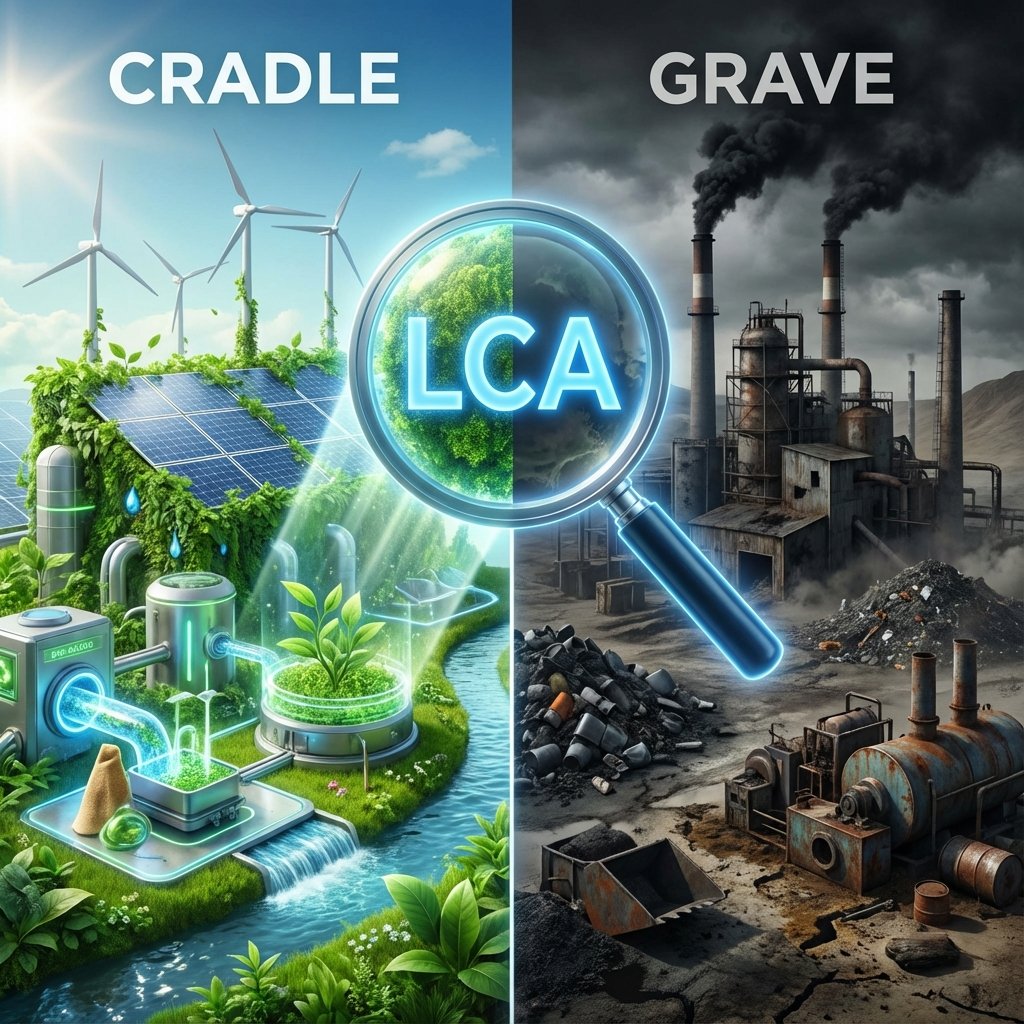
    It is often described as a „Cradle-to-Grave” analysis, though in the circular economy, we strive for „Cradle-to-Cradle”.

    2. The Four Stages of Impact

    When evaluating a polymer product, LCA assesses impact across four key phases:

    Phase 1: Raw Material Acquisition (Extraction)

    • Fossil Polymers: Drilling, refining, and cracking of crude oil. High energy consumption and carbon emissions.
    • Bio-Polymers: Farming and harvesting of biomass (hemp, corn, sugarcane). Potential impacts include land use and water consumption, but often coupled with Carbon Sequestration (plants absorbing CO2).

    Phase 2: Manufacturing (Production)

    • Energy consumed during polymerization and compounding.
    • Water usage and chemical by-products.
    • Note: Some bioplastics require fewer processing steps, reducing the energy footprint here.

    Phase 3: Use Phase

    • Lightweighting: As discussed yesterday, lighter polymer parts reduce fuel consumption in vehicles, creating a „negative” carbon impact during this phase (savings > production cost).
    • Durability: A longer lifespan means fewer replacements.

    Phase 4: End-of-Life (Disposal)

    • Landfill: The worst-case scenario. Methane generation.
    • Incineration: Energy recovery, but releases CO2.
    • Recycling: Keeps material in the loop, offsetting virgin production.
    • Composting: Biological recycling for biodegradable polymers, returning nutrients to the soil.

    3. Why LCA Matters for Your Business

    In 2026, claims of „eco-friendly” are no longer enough. You need data.

    1. Compliance: To meet EU Digital Product Passport (DPP) requirements, you must declare footprint data.
    2. Marketing: Verifiable claims (like „30% lower carbon footprint”) build trust. Greenwashing is legally punishable.
    3. Optimization: LCA reveals hotspots. Maybe your material is green, but your shipping logistics are dirty. LCA tells you where to fix it.

    4. Case Study: PLA vs. ABS

    Let’s compare a standard 3D printed part made from ABS (Acrylonitrile Butadiene Styrene) versus PLA (Polylactic Acid).

    • Global Warming Potential (GWP): Studies typically show PLA has a significantly lower carbon footprint than ABS (often 50-70% less CO2eq/kg), primarily because the carbon in PLA was recently captured from the atmosphere by plants.
    • Non-Renewable Energy Use: PLA production requires less fossil fuel energy.

    5. Moving Forward

    LCA is not just a report; it’s a design tool. By understanding the full lifecycle, we can make engineering decisions that optimize for both profit and planet.

    Tomorrow, we will explore The Certification Jungle, helping you navigate ISO, ASTM, and OK Compost labels to ensure your LCA data is certified and recognized.


    References

    1. ISO: ISO 14040:2006 – Principles and Framework.
    2. European Commission: Joint Research Centre (JRC) LCA standards.
    3. NatureWorks: Eco-profile and LCA data for Ingeo PLA.

  • Įrašas be pavadinimo 2531

    Yesterday, we discussed the financial cost-benefit analysis of polymers. Today, we turn our attention to an equally critical metric: the environmental cost. How do we measure the true impact of a product, not just when it hits the shelf, but from the moment it’s extracted from the earth to the moment it returns to it?

    The answer lies in Life Cycle Assessment (LCA).

    1. What is Life Cycle Assessment (LCA)?

    LCA is a standardized methodology (ISO 14040/14044) for assessing the environmental impacts associated with all the stages of the life-cycle of a commercial product, process, or service.

    It is often described as a „Cradle-to-Grave” analysis, though in the circular economy, we strive for „Cradle-to-Cradle”.

    2. The Four Stages of Impact

    When evaluating a polymer product, LCA assesses impact across four key phases:

    Phase 1: Raw Material Acquisition (Extraction)

    • Fossil Polymers: Drilling, refining, and cracking of crude oil. High energy consumption and carbon emissions.
    • Bio-Polymers: Farming and harvesting of biomass (hemp, corn, sugarcane). Potential impacts include land use and water consumption, but often coupled with Carbon Sequestration (plants absorbing CO2).

    Phase 2: Manufacturing (Production)

    • Energy consumed during polymerization and compounding.
    • Water usage and chemical by-products.
    • Note: Some bioplastics require fewer processing steps, reducing the energy footprint here.

    Phase 3: Use Phase

    • Lightweighting: As discussed yesterday, lighter polymer parts reduce fuel consumption in vehicles, creating a „negative” carbon impact during this phase (savings > production cost).
    • Durability: A longer lifespan means fewer replacements.

    Phase 4: End-of-Life (Disposal)

    • Landfill: The worst-case scenario. Methane generation.
    • Incineration: Energy recovery, but releases CO2.
    • Recycling: Keeps material in the loop, offsetting virgin production.
    • Composting: Biological recycling for biodegradable polymers, returning nutrients to the soil.

    3. Why LCA Matters for Your Business

    In 2026, claims of „eco-friendly” are no longer enough. You need data.

    1. Compliance: To meet EU Digital Product Passport (DPP) requirements, you must declare footprint data.
    2. Marketing: Verifiable claims (like „30% lower carbon footprint”) build trust. Greenwashing is legally punishable.
    3. Optimization: LCA reveals hotspots. Maybe your material is green, but your shipping logistics are dirty. LCA tells you where to fix it.

    4. Case Study: PLA vs. ABS

    Let’s compare a standard 3D printed part made from ABS (Acrylonitrile Butadiene Styrene) versus PLA (Polylactic Acid).

    • Global Warming Potential (GWP): Studies typically show PLA has a significantly lower carbon footprint than ABS (often 50-70% less CO2eq/kg), primarily because the carbon in PLA was recently captured from the atmosphere by plants.
    • Non-Renewable Energy Use: PLA production requires less fossil fuel energy.

    5. Moving Forward

    LCA is not just a report; it’s a design tool. By understanding the full lifecycle, we can make engineering decisions that optimize for both profit and planet.

    Tomorrow, we will explore The Certification Jungle, helping you navigate ISO, ASTM, and OK Compost labels to ensure your LCA data is certified and recognized.


    References

    1. ISO: ISO 14040:2006 – Principles and Framework.
    2. European Commission: Joint Research Centre (JRC) LCA standards.
    3. NatureWorks: Eco-profile and LCA data for Ingeo PLA.

  • The Complete Guide to Sustainable Polymer Solutions in 2026

    The Complete Guide to Sustainable Polymer Solutions in 2026

    Executive Summary

    The plastics industry is undergoing a seismic shift. As the world moves towards a circular bioeconomy, sustainable polymer solutions are no longer a niche choice—they are a business imperative. This guide explores the landscape of eco-friendly materials in 2026 and beyond, from biodegradable bioplastics to recycled composites, helping you make informed decisions for a greener future.

    Key Metrics

    • EUR 2.7 trillion: The potential value of the European bioeconomy by 2030.
    • 2027: The year bio-based plastic targets under the Packaging and Packaging Waste Regulation (PPWR) are expected to take effect.
    • 14%: Projected annual growth rate for the global bioplastics market.
    • 60 million: The number of jobs the bioeconomy could support globally by 2030.

    Core Content

    The Challenge: Why Transition Now?

    The traditional „take-make-waste” model of plastic consumption is unsustainable. Regulatory pressure from the EU Green Deal, specifically the Biotech Acts and PPWR, is tightening the net on fossil-based plastics. Companies that fail to adapt face not only compliance risks but also reputational damage as consumer demand for eco-friendly products surges.

    Types of Sustainable Polymer Solutions

    1. Bio-based Polymers

    Derived from renewable biomass sources like corn, sugarcane, or hemp (e.g., Hempy), these polymers reduce reliance on fossil fuels.
    * PLA (Polylactic Acid): Common in 3D printing and packaging.
    * PHA (Polyhydroxyalkanoates): Biodegradable in marine environments.
    * Bio-PE/Bio-PET: Drop-in solutions that chemically mimic their fossil counterparts but come from plants.

    2. Biodegradable and Compostable Plastics

    Materials designed to break down into natural elements under specific conditions.
    * Industrial Compostable: Requires high heat in industrial facilities.
    * Home Compostable: breaks down in your backyard compost bin.
    * Supa Flow: Our versatile bioplastic blend designed for easy processing and biodegradation.

    3. Recycled Polymers (rPET, rHDPE)

    Giving a second life to existing plastics. Mechanical and chemical recycling technologies are advancing, allowing for higher quality recycled content that meets strict industry standards.

    Environmental Impact & Benefits

    Switching to sustainable polymers offers measurable benefits:
    * Carbon Footprint Reduction: Bio-based materials can sequester carbon during their growth phase.
    * Waste Diversion: Compostable materials reduce landfill waste.
    * Circular Economy: Designing for recyclability ensures materials stay in the loop, reducing the need for virgin resource extraction.

    Industry Applications

    Sustainable polymers are proving their worth across diverse sectors:
    * Packaging: The largest market, driven by single-use plastic bans.
    * Automotive: Interior components made from hemp and flax composites (like Hemp Hurds) reduce vehicle weight and improve fuel efficiency.
    * Construction: Bio-based insulation and acoustic panels (HempForma) offer superior thermal performance and carbon storage.
    * 3D Printing: A rapid prototyping proving ground for new bioplastic formulations.

    Future Trends: What to Watch in 2027

    • Advanced Recycling: Chemical recycling will unlock the value of hard-to-recycle mixed plastics.
    • Smart Bioplastics: Materials that change properties (color, permeability) in response to environmental stimuli.
    • Algae & Fungi: The next frontier of feedstock, moving beyond food crops to truly regenerative resources.

    Conclusion

    The transition to sustainable polymers is complex, but the path is clear. By understanding the available materials—from bio-based 3D printing filaments to hemp construction composites—businesses can innovate responsibly. The tools for a sustainable future are in our hands; it’s time to build with them.

    Source: EU Bioeconomy Strategy

  • The Complete Guide to Sustainable Polymer Solutions in 2024

    The Complete Guide to Sustainable Polymer Solutions in 2024

    Executive Summary

    The plastics industry is undergoing a seismic shift. As the world moves towards a circular bioeconomy, sustainable polymer solutions are no longer a niche choice—they are a business imperative. This guide explores the landscape of eco-friendly materials in 2024, from biodegradable bioplastics to recycled composites, helping you make informed decisions for a greener future.

    Key Metrics

    • EUR 2.7 trillion: The potential value of the European bioeconomy by 2030.
    • 2027: The year bio-based plastic targets under the Packaging and Packaging Waste Regulation (PPWR) are expected to take effect.
    • 14%: Projected annual growth rate for the global bioplastics market.
    • 60 million: The number of jobs the bioeconomy could support globally by 2030.

    Core Content

    The Challenge: Why Transition Now?

    The traditional „take-make-waste” model of plastic consumption is unsustainable. Regulatory pressure from the EU Green Deal, specifically the Biotech Acts and PPWR, is tightening the net on fossil-based plastics. Companies that fail to adapt face not only compliance risks but also reputational damage as consumer demand for eco-friendly products surges.

    Types of Sustainable Polymer Solutions

    1. Bio-based Polymers

    Derived from renewable biomass sources like corn, sugarcane, or hemp (e.g., Hempy), these polymers reduce reliance on fossil fuels.
    * PLA (Polylactic Acid): Common in 3D printing and packaging.
    * PHA (Polyhydroxyalkanoates): Biodegradable in marine environments.
    * Bio-PE/Bio-PET: Drop-in solutions that chemically mimic their fossil counterparts but come from plants.

    2. Biodegradable and Compostable Plastics

    Materials designed to break down into natural elements under specific conditions.
    * Industrial Compostable: Requires high heat in industrial facilities.
    * Home Compostable: breaks down in your backyard compost bin.
    * Supa Flow: Our versatile bioplastic blend designed for easy processing and biodegradation.

    3. Recycled Polymers (rPET, rHDPE)

    Giving a second life to existing plastics. Mechanical and chemical recycling technologies are advancing, allowing for higher quality recycled content that meets strict industry standards.

    Environmental Impact & Benefits

    Switching to sustainable polymers offers measurable benefits:
    * Carbon Footprint Reduction: Bio-based materials can sequester carbon during their growth phase.
    * Waste Diversion: Compostable materials reduce landfill waste.
    * Circular Economy: Designing for recyclability ensures materials stay in the loop, reducing the need for virgin resource extraction.

    Industry Applications

    Sustainable polymers are proving their worth across diverse sectors:
    * Packaging: The largest market, driven by single-use plastic bans.
    * Automotive: Interior components made from hemp and flax composites (like Hemp Hurds) reduce vehicle weight and improve fuel efficiency.
    * Construction: Bio-based insulation and acoustic panels (HempForma) offer superior thermal performance and carbon storage.
    * 3D Printing: A rapid prototyping proving ground for new bioplastic formulations.

    Future Trends: What to Watch in 2025

    • Advanced Recycling: Chemical recycling will unlock the value of hard-to-recycle mixed plastics.
    • Smart Bioplastics: Materials that change properties (color, permeability) in response to environmental stimuli.
    • Algae & Fungi: The next frontier of feedstock, moving beyond food crops to truly regenerative resources.

    Conclusion

    The transition to sustainable polymers is complex, but the path is clear. By understanding the available materials—from bio-based 3D printing filaments to hemp construction composites—businesses can innovate responsibly. The tools for a sustainable future are in our hands; it’s time to build with them.

    Source: EU Bioeconomy Strategy

  • The Roadmap: Key Actions & Timeline

    The Roadmap: Key Actions & Timeline

    Executive Summary

    A vision without a plan is just a dream. The EU Bioeconomy Strategy concludes with a concrete timeline of actions for 2025-2030. Here is the roadmap for the next five years.

    Key Metrics

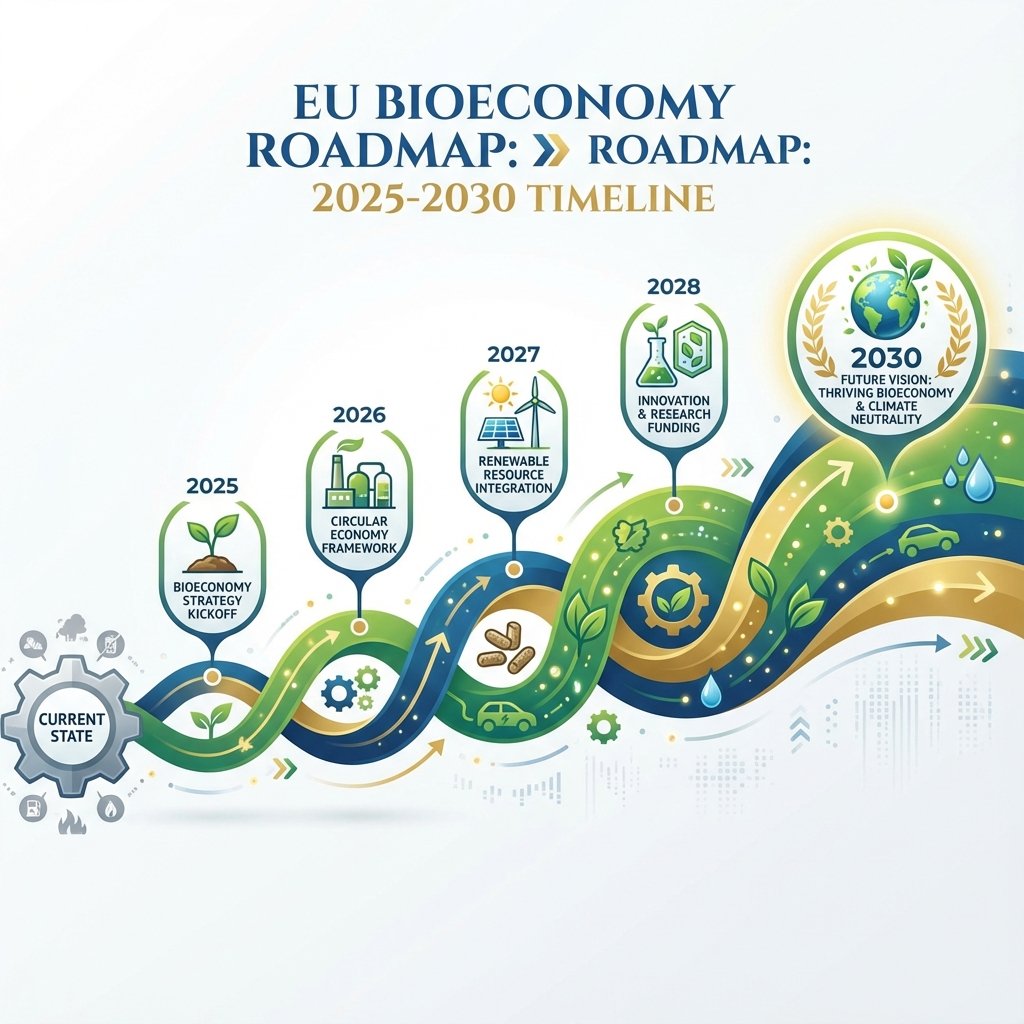
    • 2025: Adoption of Biotech Acts.
    • 2026: Launch of Bioeconomy Investment Deployment Group.
    • 2027: Bio-based plastic targets under PPWR.
    • 2028: Commission report on strategy delivery.

    Core Content

    The Timeline

    • Immediate (2025): The regulatory framework shifts with the Biotech Acts.
    • Short Term (2026): The machinery starts moving. Investment Groups launch, Standardization work begins for construction, and Regulatory Forums open.
    • Medium Term (2027-2028): Market pull kicks in. Textile eco-design rules, packaging targets, and carbon farming markets become operational.

    The Conclusion

    This strategy is a marathon, not a sprint. By 2030, the foundations will be laid for the 2040 vision: a Europe that is competitive, resilient, and living within planetary boundaries.

    The Call to Action

    The roadmap is set. Now, it’s up to investors, innovators, and policymakers to walk the path.

    Source: EU Bioeconomy Strategy

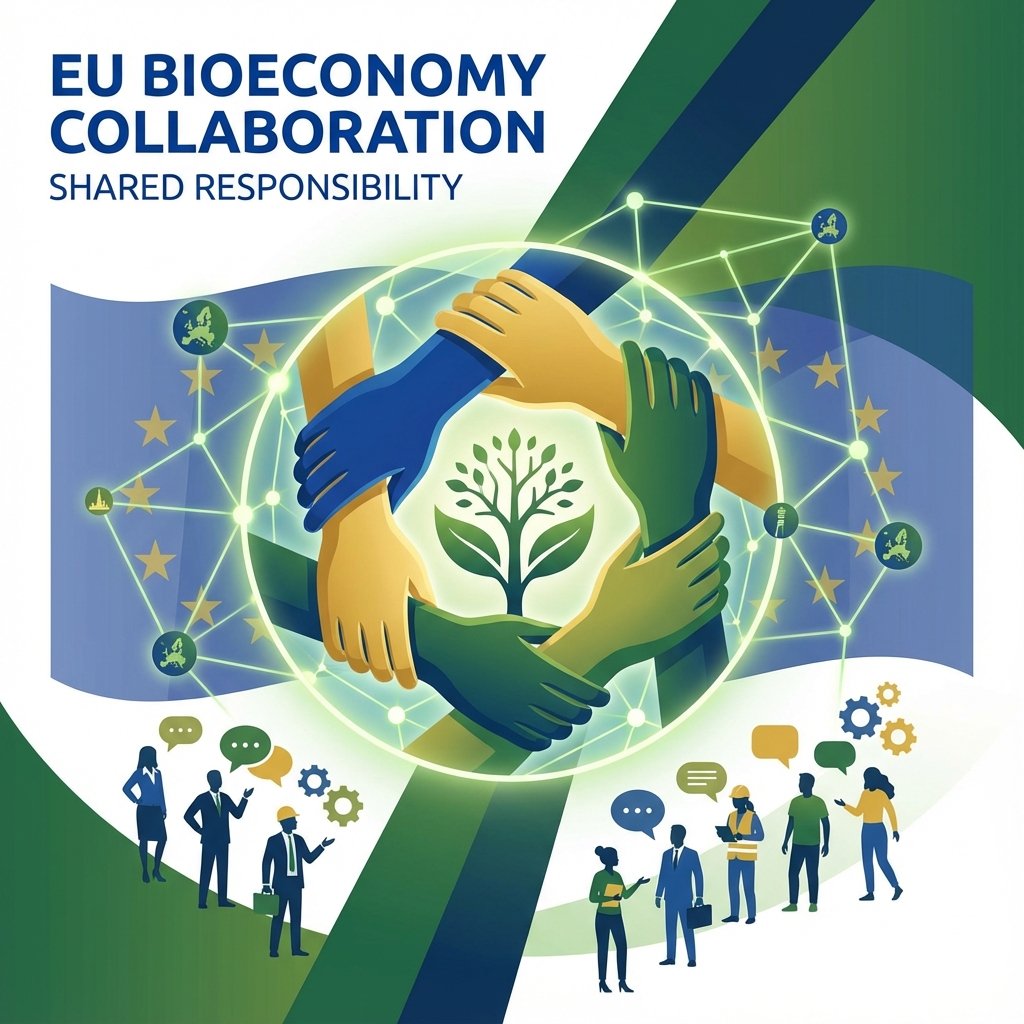
  • Joining Forces: A Shared Responsibility

    Joining Forces: A Shared Responsibility

    Executive Summary

    Brussels can’t build the bioeconomy alone. It happens in regions, municipalities, and on farms. Success depends on a massive collaborative effort involving Member States, industry, youth, and civil society.

    Key Metrics

    • 2027: Launch of the Bioeconomy Policy Support Hub.

    Core Content

    The Challenge

    Europe is diverse. A forestry-based strategy for Finland won’t work for a marine-based one in Greece. A „one-size-fits-all” approach is doomed to fail.

    The Solution

    The strategy calls for Multi-Level Governance:
    * National Profiles: Encouraging Member States to identify their specific strengths (e.g., „Blue Bioeconomy Frontrunner” or „Innovation Hub”).
    * Regional Action: Regions and cities are key for local procurement and waste management.
    * Youth & Skills: Engaging the next generation through the „Bioeconomy Youth Ambassadors” and updating education curricula.

    The Impact

    • Tailored Solutions: Strategies that fit the local context.
    • Public Buy-in: Ensuring citizens understand and support the transition.
    • Workforce: Preparing people for the green jobs of the future.

    Source: EU Bioeconomy Strategy

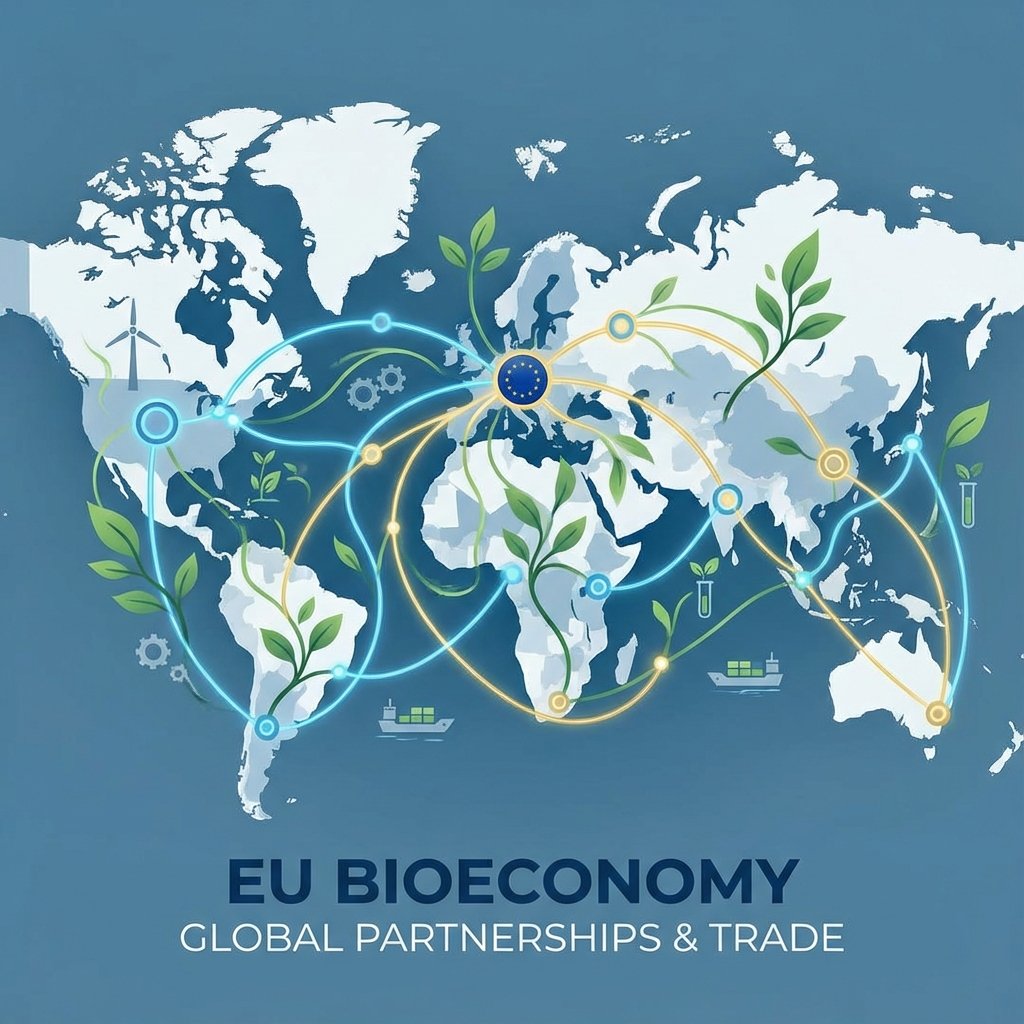
  • Going Global: Partnerships & Trade

    Going Global: Partnerships & Trade

    Executive Summary

    The bioeconomy is a global game. Over 50 countries have strategies, and the race for biomass is on. The EU aims to lead not just by exporting technology, but by setting the standards for a fair and sustainable global market.

    Key Metrics

    • 50+: Countries worldwide that have adopted bioeconomy strategies.

    Core Content

    The Challenge

    Biomass is a finite global resource. There’s a risk that rich countries could „outsource” their environmental impact by importing unsustainable biomass from elsewhere.

    The Solution

    The EU strategy focuses on Strategic Partnerships:
    * Global Gateway: Investing in partner countries (e.g., in Africa) to help them build their own bioeconomy industries, rather than just extracting raw materials.
    * Fair Trade: Using trade agreements to open markets for EU bio-based products while ensuring high environmental standards.
    * International Standards: Working with the FAO and WTO to define what „sustainable” really means globally.

    The Impact

    • Global Leadership: Positioning the EU as the standard-setter.
    • Development: Helping partner countries create jobs and value locally.
    • Security: Diversifying supply chains to avoid over-reliance on any single region.

    Source: EU Bioeconomy Strategy

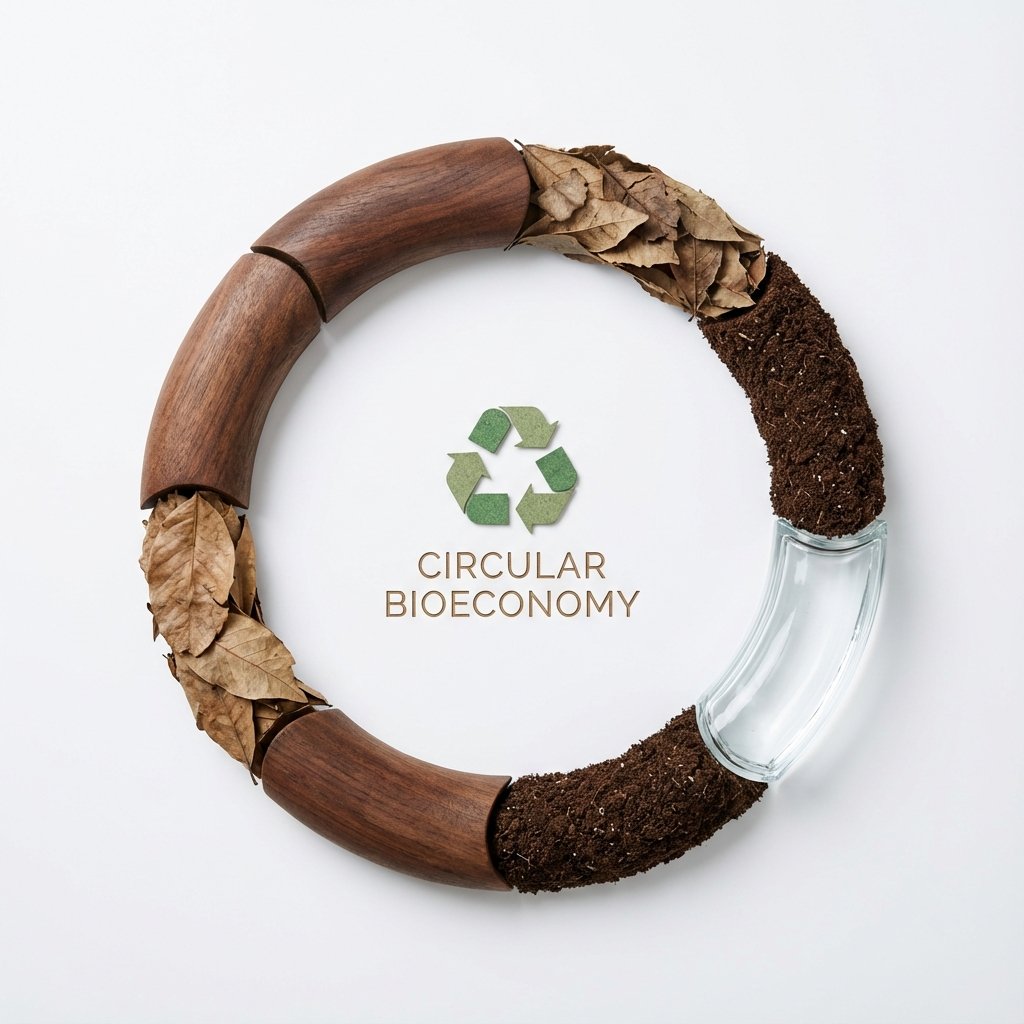
  • Closing the Loop: Circularity & Waste Valorization

    Closing the Loop: Circularity & Waste Valorization

    Executive Summary

    In a true bioeconomy, there is no such thing as „waste”—only resources in the wrong place. By turning agricultural residues, food waste, and processing side-streams into valuable products, we can close the loop and create a circular system.

    Key Metrics

    • 5-12%: Total national GHG emissions from the construction sector (highlighting the need for circularity in all sectors).

    Core Content

    The Challenge

    Linear economic models („take-make-dispose”) generate massive amounts of waste. Even in the bioeconomy, valuable organic matter is often discarded or inefficiently used.

    The Solution

    The strategy promotes Circularity:
    * Valorization: Turning „waste” (like straw, manure, or food scraps) into bio-gas, fertilizers, or materials.
    * Nutrient Cycles: Recovering nutrients like nitrogen and phosphorus from wastewater and manure to return them to the soil.
    * Industrial Symbiosis: Connecting industries so one’s waste becomes another’s feedstock.

    The Impact

    • Resource Efficiency: Getting more out of less.
    • Reduced Pollution: Preventing waste from ending up in landfills or polluting water.
    • Economic Value: Turning disposal costs into revenue streams.

    Source: EU Bioeconomy Strategy

  • Primary Producers: The Heart of the Bioeconomy

    Primary Producers: The Heart of the Bioeconomy

    Executive Summary

    Farmers, foresters, and fishers are the stewards of the bioeconomy. They provide the raw materials that power this green revolution. The EU strategy aims to ensure they are fairly rewarded for their vital role, including through new income streams like carbon farming.

    Key Metrics

    • 450 million: Consumers in the EU single market served by these producers.
    • 17.1 million: People employed in biomass producing and converting activities.

    Core Content

    The Challenge

    Primary producers often face volatile markets and thin margins. They are also on the front lines of climate change. For the bioeconomy to succeed, it must work for them, not just for industrial giants.

    The Solution

    The strategy focuses on fairness and diversification:
    * Carbon Farming: Paying farmers and foresters for practices that store carbon in the soil and biomass.
    * Cooperative Models: Encouraging producers to form cooperatives to process their own biomass and capture more value.
    * Skills: Training and advisory services to help producers adopt new bio-based technologies.

    The Impact

    • Rural Revitalization: New income streams can breathe life into rural and coastal communities.
    • Resilience: Diversified income makes farms and forests more resilient to economic shocks.
    • Stewardship: Incentivizing sustainable practices protects biodiversity and soil health.

           Source: EU Bioeconomy Strategy