Kategorija: Uncategorized

  • The Federated Hemphub Network – Scaling Synergy Through Connectivity

    The Federated Hemphub Network – Scaling Synergy Through Connectivity

    Yesterday, we outlined the 10-year rollout strategy for a single Hemphub node. But the true promise of the regenerative industrial economy isn’t found in isolated islands of efficiency. It is realized through the creation of a Federated Hemphub Network.

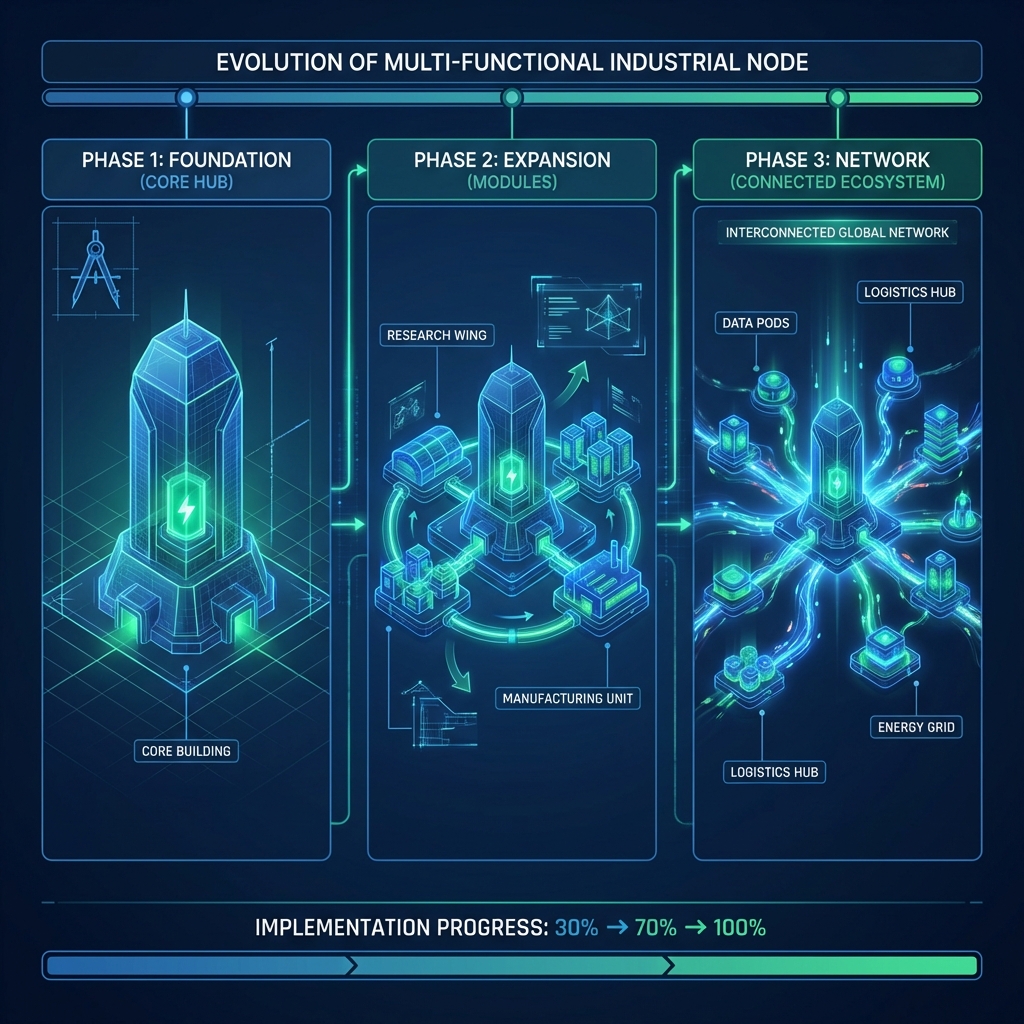
    In Phase 3 of our rollout, individual nodes begin to connect, forming a decentralized infrastructure that mimics the resilience of natural ecosystems. When Hemphubs federate, they unlock a series of „Network Effects” that individual facilities simply cannot achieve alone.

    The Five Pillars of the Federated Network

    1. Shared Knowledge Commons

    A network of Hemphubs acts as a unified brain. Whether it’s a breakthrough in fiber refining in Northern Europe or a new carbon-sequestration protocol in North America, innovations are shared across the network. This „Knowledge Commons” ensures that every node operates at the cutting edge of regenerative technology.

    2. Collective Market Power

    By pooling their outputs and requirements, federated nodes can negotiate on a different scale. This includes bulk purchasing of equipment (reducing CapEx) and unified branding that commands higher prices in global consumer markets. The network prevents the „race-to-bottom” pricing that often plagues fragmented agricultural sectors.

    3. Risk Pooling and Resilience

    Nature thrives on diversity, and so does the Hemphub network. If one region faces a crop failure or a technical downtime, other nodes in the network can provide backup processing capacity. This geographic diversification turns a collection of vulnerable startups into a robust, anti-fragile industrial backbone.

    4. Carbon Credit Aggregation

    This is where the Global Hemp Ledger comes to life. By bundling the verified $CO_2$ sequestration from dozens of nodes, the federation can negotiate high-value carbon offset contracts with major corporate buyers. Small farmers gain access to institutional-grade carbon markets that would otherwise be out of reach.

    5. Policy and Standards Leadership

    A federation speaks with a louder voice. It sets the standards for what truly qualifies as „regenerative” and „traceable,” providing a blueprint for policymakers to follow. This collective advocacy is essential for dismantling the regulatory friction that currently slows the growth of the hemp bioeconomy.

    The Physical Architecture of the Regenerative Economy

    By federating, Hemphubs move beyond being mere factories. They become the physical nodes of a new global operating system—one that treats the planet’s health as its primary capital.

    The transition from „blueprint to network” is the final step in proving that industrial activity can be not just sustainable, but actively restorative.


    Source: This network model is derived from the Hemphub Infrastructure Strategy.

    Image Generation Prompt:

    Prompt: A high-tech, cinematic wide shot of a lush, rolling landscape featuring multiple „Hemphub” industrial structures. The structures are architecturally integrated with green roofs and vertical gardens. Faint, glowing digital lines of connectivity (like a neural network or a fiber-optic grid) pulse between the hubs across the terrain, signifying the „Federated Network.” The lighting is a warm, golden hour sunset, conveying a sense of hope, advanced technology, and ecological harmony. 8k resolution, photorealistic, industrial-organic hybrid aesthetic.

  • The Hemphub Rollout Strategy – From Blueprint to Network

    The Hemphub Rollout Strategy – From Blueprint to Network

    In the previous two days, we defined the Hemphub and peeked inside its anatomy. Today, we address the most critical question: How do we actually build it?

    Building a Regenerative Industrial Node is not a weekend project. It requires a strategic, phased approach that manages risk while scaling impact. Based on the Hemphub Infrastructure Strategy, we can map out a 10-year rollout plan.

    The Three Phases of Evolution

    Phase 1: Foundation (Years 1-2) – Setting the Core

    The first two years are about establishing the physical and legal anchor.
    * Site Selection: Identifying rural zones within a 50km radius of viable hemp farmland.
    * Primary Processing: Installing the core Decortication Line to handle raw stalks.
    * Cultivation Partnerships: Signing long-term contracts with local farmers to guarantee supply.
    * Investment: Securing $5-15M in initial CapEx to get the „Core Building” operational.

    Phase 2: Expansion (Years 3-5) – Adding Complexity

    Once the primary processing is stable, the Hemphub grows its „limbs.”
    * Secondary Manufacturing: Adding modules for textile fiber refining, hempcrete block production, or oil pressing.
    * R&D Commissioning: Opening the on-site laboratory to begin real-time agronomic feedback loops.
    * Product Launch: Moving from selling raw materials to selling value-added products (e.g., branded insulation panels).

    Phase 3: Network Building (Years 6-10) – The Federated Ecosystem

    The final phase isn’t about getting bigger; it’s about getting connected.
    * Replication: Opening second and third nodes in adjacent regions.
    * The Hemphub Federation: Connecting independent nodes via a shared digital platform to pool market power and inventory.
    * Carbon Credit Revenue: Achieving full verification of the carbon sequestered across the entire supply chain, creating a significant new revenue stream.

    Funding the Future: Sustainable Finance

    How do we pay for this? The transition requires moving away from pure private equity toward Synergistic Financing:
    1. Public-Private Partnerships (PPP): Leveraging government grants for rural development to de-risk the initial infrastructure.
    2. Cooperative Models: Allowing farmers to own a stake in the processing facility, ensuring long-term alignment.
    3. Carbon Finance: Using the projected carbon sequestration of the hemp crop as collateral for „Green Bonds.”

    The Goal: A Self-Sustaining Machine

    By Year 10, a Hemphub is no longer a startup; it is a Regenerative Industrial Anchor for its region. It provides stable jobs, restores soil health, and produces the materials needed for a net-zero future.

    Tomorrow: We’ve built the machine. Now, how does it fit into the wider world? Join us for Day 49: The Global Hemp Ledger.


    Source: These implementation phases are detailed in the Hemphub Infrastructure Strategy.

  • Anatomy of a Hemphub – Inside the Machine

    Anatomy of a Hemphub – Inside the Machine

    Yesterday, we defined the concept of the Hemphub. Today, we step inside.

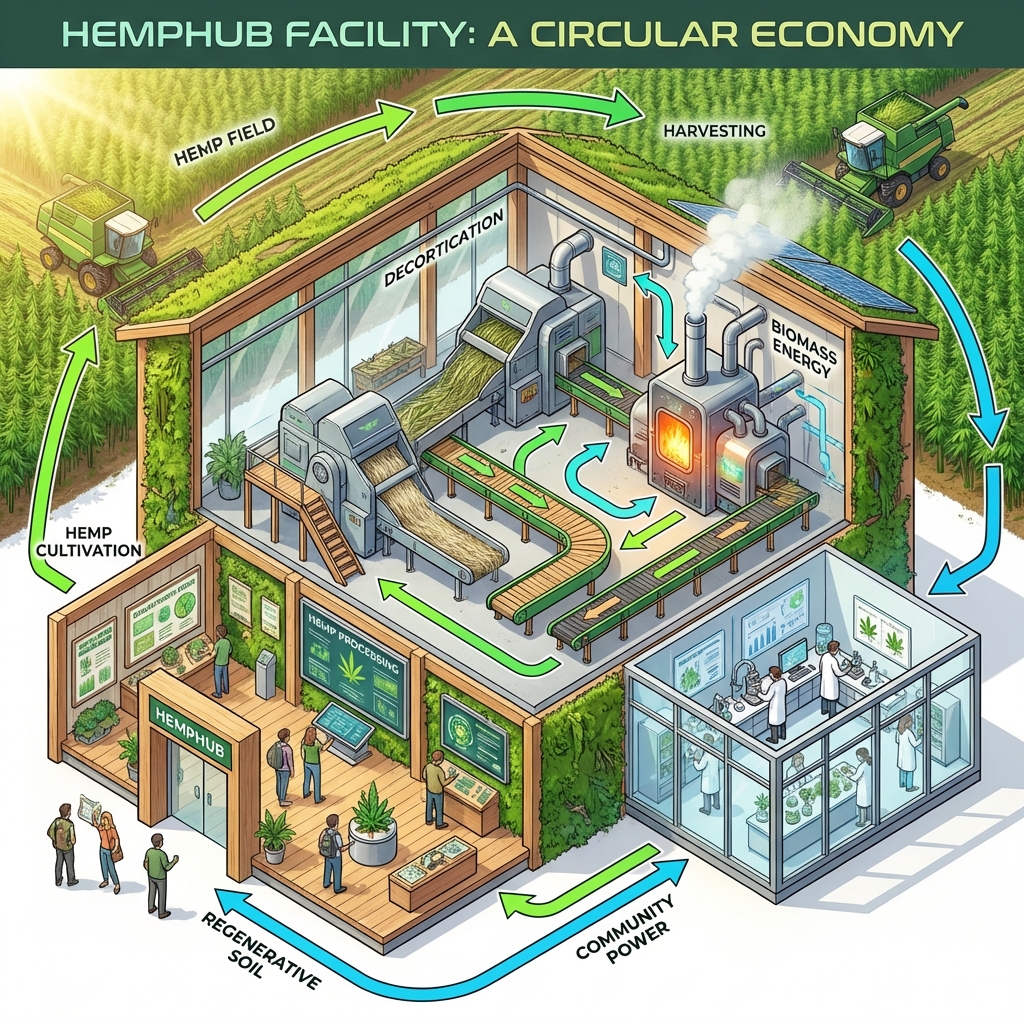
    To understand why a Regenerative Industrial Node yields a „2+2=5” economic synergy, we need to dissect its anatomy. A Hemphub is not just a building; it is a metabolic system where the output of one organ becomes the fuel for another.

    1. The Foyer: Community Interface (The Face)

    The first difference you notice upon arrival is that this does not look like a traditional factory. The entrance is a Community Interface.
    * Function: Public education, showroom for hemp products, and a meeting place for local farmers.
    * Impact: It breaks the „black box” model of industry, integrating the facility into the social fabric of the rural community.

    2. The Processing Core: Cascading Utilization

    Walking onto the main floor, we see the heart of the operation: the Decortication Line.
    * Function: This is where the raw biomass is separated into its constituent value streams.
    * Level 1 (Fiber): Long technical fibers are extracted for textiles and composites.
    * Level 2 (Hurd): The woody core is collected for construction materials (hempcrete) or animal bedding.
    * Level 3 (Fines/Dust): Nothing is discarded. The dust is captured.

    3. The Energy Center: Closing the Loop

    In a standard mill, dust is a fire hazard and a disposal cost. Here, it travels via pneumatic tubes to the Bio-Energy Center.
    * Function: The dust is burned in a high-efficiency biomass boiler.
    * Synergy: The heat generated is piped directly back to the dryers that condition the incoming stalks. The facility powers itself with its own refuse.
    * Metric: >85% Energy Self-Sufficiency.

    4. The R&D Annex: Real-Time Agronomy (The Brain)

    Attached to the processing floor is a glass-walled laboratory.
    * Function: Scientists analyze incoming batches for fiber strength, cannabinoid content, and moisture levels.
    * Impact: This data is not just for Quality Control; it is fed back to the farmers immediately, creating a Real-Time Agronomic Feedback Loop to optimize the next planting season.

    The Economic Result

    By co-locating these functions, the Hemphub achieves what isolated facilities cannot:
    * Zero Waste: Every gram of biomass is monetized or utilized.
    * Reduced CapEx: Shared infrastructure (loading docks, administrative staff, utilities).
    * Resilience: Multiple revenue streams buffer against commodity price fluctuations.

    Tomorrow: Now that we understand the anatomy, how do we build one? Join us for Day 48: The Hemphub Rollout Strategy.


    Source: The principles of cascading utilization and industrial symbiosis are central to the Hemphub Infrastructure Strategy.

  • Defining the Hemphub – More Than Just a Factory

    Defining the Hemphub – More Than Just a Factory

    Yesterday, we diagnosed the „Infrastructure Crisis” fragmentation and waste. Today, we present the cure.

    It is not enough to simply build a hemp processing plant. If we replicate the linear, extractive models of the past, we will get the same results: margin compression and environmental degradation.

    We need a new kind of infrastructure. We need the Hemphub.

    What is a Hemphub?

    A Hemphub is not a factory. It is a Regenerative Industrial Node.

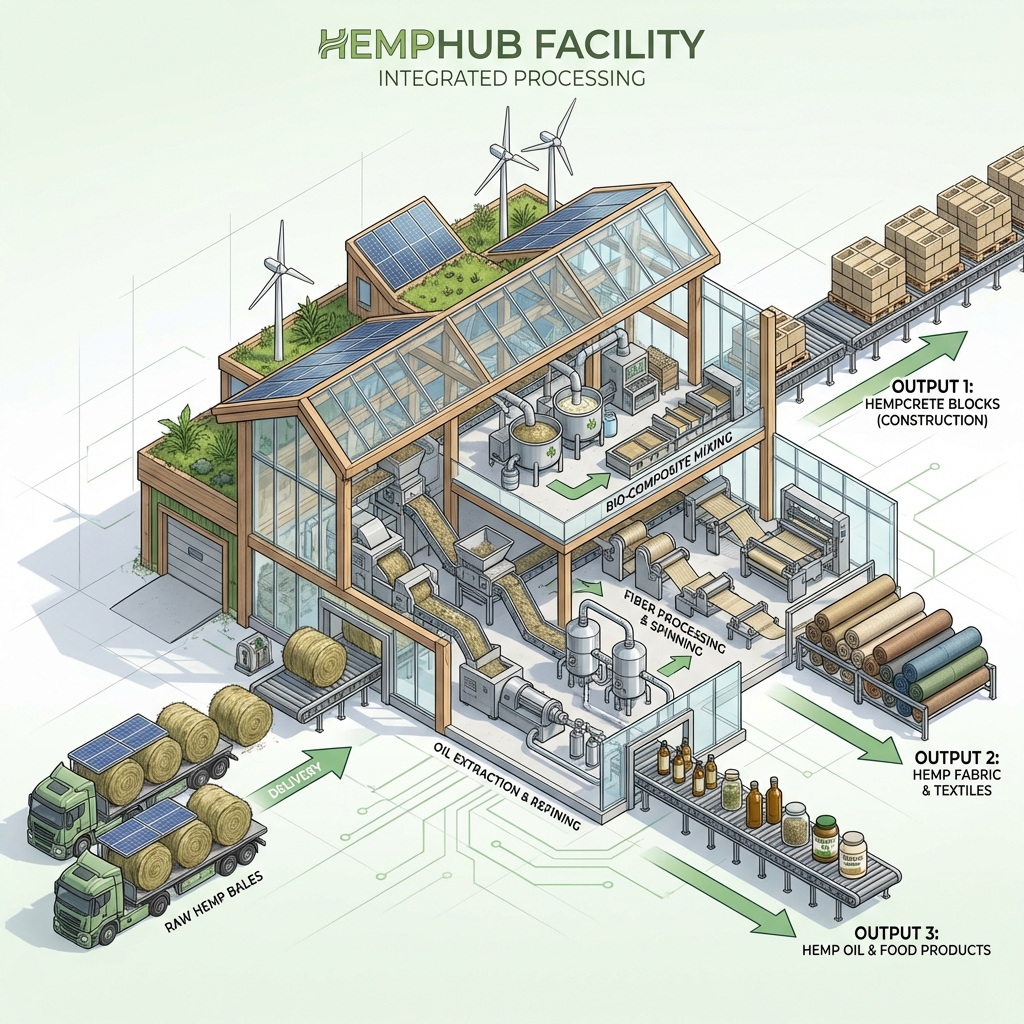
    By definition, it is a facility that co-locates and integrates four distinct functions that are usually separated:
    1. Cultivation: Direct connection to the surrounding 50km radius of farmland.
    2. Processing: Multi-stream manufacturing (fiber, hurd, seed, cannabinoids).
    3. R&D: On-site labs for agronomic and product innovation.
    4. Community: Education centers and public access points.

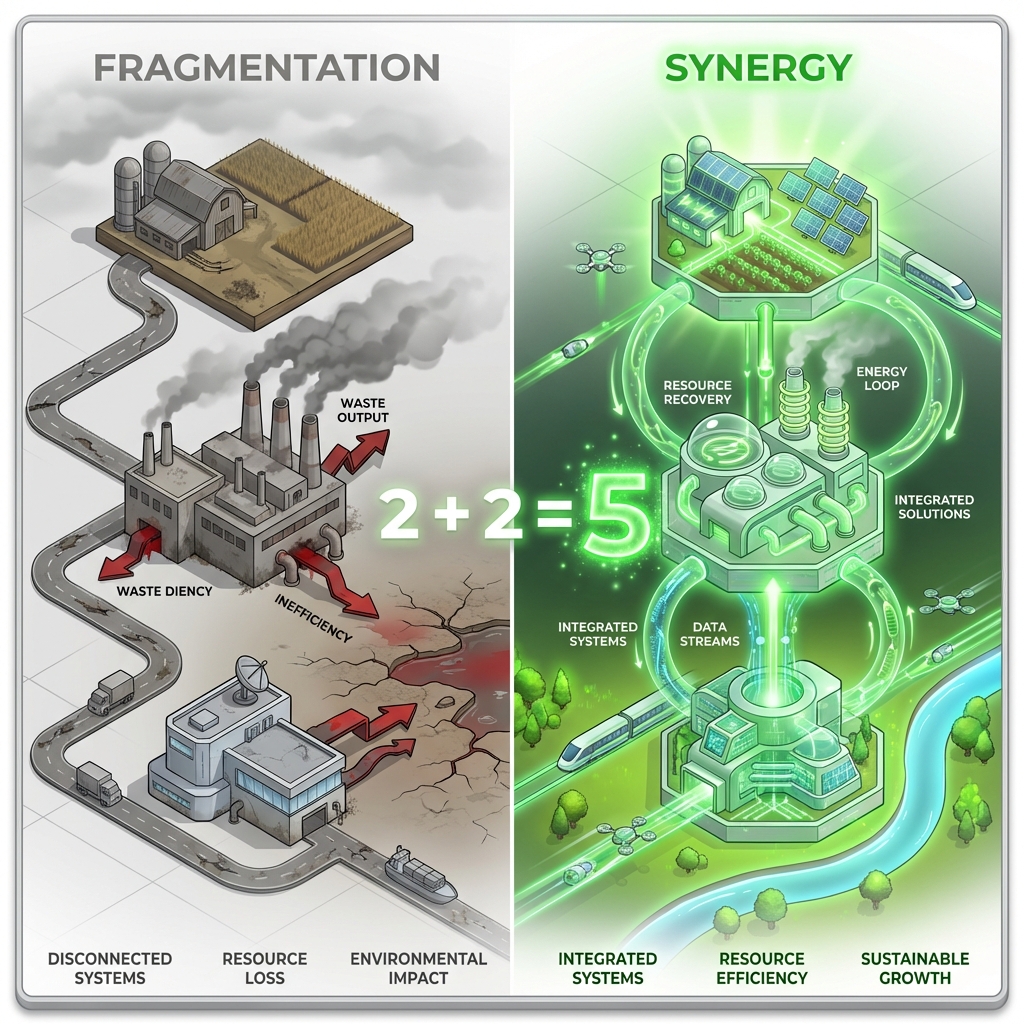
    The 2+2=5 Principle

    The core economic thesis of the Hemphub is simple: Synergy.

    In a traditional model, a fiber mill, an oil press, and a research lab operating separately generate „1+1+1=3” units of value. They each pay their own overhead, transportation, and waste disposal costs.

    In a Hemphub, these functions afford each other Mutualistic Benefits:
    * The waste from the fiber line (dust) powers the boiler for the oil press.
    * The heat from the oil press dries the incoming stalks.
    * The data from the processing line informs the farmers’ next planting cycle immediately.

    This integration reduces costs and creates new revenue streams from what was previously waste. The result is 2+2=5—the system generates more wealth than the sum of its independent parts.

    Cascading Utilization

    The mechanism that drives this synergy is Cascading Utilization.

    Instead of a single-stream process (e.g., „We only want the fiber”), a Hemphub is designed to capture value at every step of the biomass hierarchy:
    1. High Value: Long fiber for textiles.
    2. Medium Value: Hurd for hempcrete blocks.
    3. Low Value: Dust/Fines for pellets or bio-composites.
    4. Chemical Value: Extracted terpenes and waxes.

    Nothing leaves the node until it has been monetized.

    Tomorrow: We will take a walking tour inside the machine. Join us for Day 47: Anatomy of a Hemphub, where we break down the specific functional zones of this facility.


    Source: This strategic framework derives from the Hemphub Infrastructure Strategy.

  • The Synergistic Imperative – Why Our Industrial Infrastructure Needs a Reboot

    The Synergistic Imperative – Why Our Industrial Infrastructure Needs a Reboot

    The promise of the bioeconomy is vast: renewable materials, carbon sequestration, and a shift away from fossil fuels. Yet, despite the buzz around hemp and industrial regeneration, we aren’t seeing the explosive growth predicted. Why?

    The problem isn’t the crop. It’s the architecture of our industry.

    The Synergistic Gap

    We are currently operating in a „Synergistic Gap.” We have the theoretical organizational models (product-market synergy) and the raw biological potential (hemp), but we lack the physical infrastructure to connect them efficiently.

    Our current industrial landscape is characterized by three critical failures:

    1. Fragmented Processing

    Today, a hemp stalk might travel hundreds of kilometers to a decortication plant for fiber, while the seeds are shipped elsewhere for oil pressing, and the „waste” biomass is left to rot or burned. This fragmentation destroys margins. Redundant overhead and transportation costs eat up the profit before the product even hits the shelf.

    2. The Single-Stream Trap

    Most facilities are designed for a single output—optimizing only for fiber or only for CBD. This approach systematically wastes up to 60% of the plant’s potential value. In a regenerative economy, „waste” is just a resource in the wrong place. By ignoring complementary biomass streams, we are leaving money—and carbon credits—on the table.

    3. Knowledge Silos

    Research institutions, farmers, and manufacturers often operate in isolation. This prevents the rapid feedback loops necessary for innovation. A farmer might grow a cultivar that processes poorly, but without direct feedback from the factory, they’ll plant it again next year.

    The Solution: Enter the Hemphub

    To bridge this gap, we need more than just factories; we need Hemphubs.

    A Hemphub is defined as a Regenerative Industrial Node: a geographically distributed, vertically integrated facility that co-locates cultivation, multi-stream processing, research, and market access.

    By consolidating these functions into a single node, we move from a linear, extractive model to a circular, regenerative one. This isn’t just about efficiency; it’s about unlocking the 2+2=5 effect—where the integrated whole produces exponentially more value than the sum of its isolated parts.

    Tomorrow: We will peel back the roof and look inside. Join us as we explore the Anatomy of a Hemphub and the specialized zones that make this machine run.


    Source: This strategic framework derives from the Hemphub Infrastructure Strategy.

  • AI Integration – A Game Changer for Bioeconomy SMBs

    AI Integration – A Game Changer for Bioeconomy SMBs

    The European Union’s Bioeconomy Strategy emphasizes the role of Small and Medium-sized Businesses (SMBs) in driving innovation. However, for many smaller players, the complexity of bio-based value chains can be daunting. This is where Artificial Intelligence (AI) becomes a great equalizer.

    How SMBs Can Leverage AI to Align with EU Strategy

    AI is no longer just for tech giants. Affordable, scalable AI tools are empowering bioeconomy SMBs to optimize operations, reduce waste, and access new markets.

    1. Precision Agriculture and Feedstock Management

    For SMBs involved in biomass production:
    * Satellite Analytics: AI platforms can analyze satellite data to predict crop yields and optimize harvest times, ensuring consistent feedstock quality.
    * Resource Efficiency: Machine learning algorithms help minimize water and fertilizer use, aligning with the EU’s Green Deal goals.

    2. Optimizing Biorefinery Processes

    • Predictive Maintenance: AI sensors can predict when bio-processing equipment needs maintenance, preventing costly downtime.
    • Yield Optimization: By analyzing historical data, AI can suggest adjustments to temperature or pressure in fermentation processes to maximize output.

    3. Market Intelligence and Regulatory Compliance

    • Trend Analysis: NLP (Natural Language Processing) tools can scan global market reports to identify emerging trends in bio-based products.
    • Smart Compliance: AI assistants can help navigate the complex web of EU regulations, ensuring that products meet sustainability standards and certification requirements.

    Case Study: Small-Scale Bioplastics

    Imagine a small startup producing algae-based packaging. By using AI to model different algae strains and processing conditions, they can drastically shorten their R&D cycle, bringing competitive products to market faster than traditional methods would allow.

    The Future is Smart and Green

    Integrating AI doesn’t just improve the bottom line; it accelerates the transition to a sustainable, circular bioeconomy. For SMBs, the message is clear: Digitization is the key to scaling your green impact.

    Tomorrow: We will wrap up this segment of our journey by looking at the broader picture of Bioeconomy 5.0.

  • Digital Tokens in the Bioeconomy – Incentivizing Sustainability

    Digital Tokens in the Bioeconomy – Incentivizing Sustainability

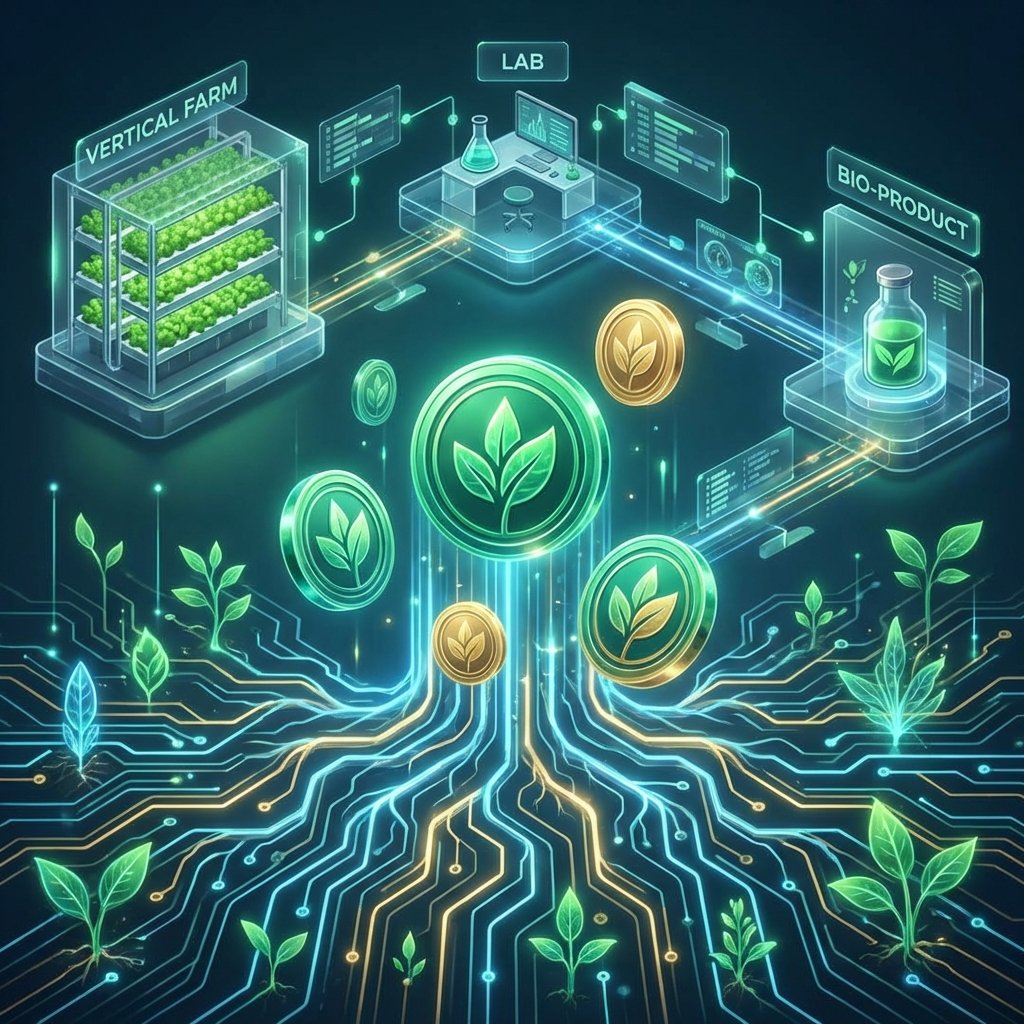
    As we integrate advanced technologies into the bioeconomy, the concept of digital tokens and blockchain is emerging as a powerful tool for transparency and incentivization. Beyond the hype of cryptocurrencies, tokenization offers tangible mechanisms to track sustainable supply chains, verify carbon credits, and reward eco-friendly practices in real-time.

    The Role of Tokenization

    Tokenization allows physical assets—like a ton of sustainably harvested biomass or a verified reduction in carbon emissions—to be represented as digital tokens on a blockchain. This creates an immutable record of ownership and provenance.

    Key Applications

    1. Supply Chain Transparency:

      • Traceability: Each step of a product’s journey, from a bio-feedstock farm to the final bioplastic product, can be recorded. Consumers can scan a QR code to see the entire lifecycle.
      • Anti-Counterfeiting: Ensures that materials claiming to be „bio-based” or „organic” are genuine, preventing greenwashing.
    2. Incentive Mechanisms:

      • Eco-Rewards: Farmers and producers can earn tokens for adopting regenerative agriculture practices. These tokens can be traded or redeemed for discounts on equipment or seeds.
      • Circular Economy Credits: Companies that successfully recycle bio-materials can be issued tokens, creating a financial incentive to close the loop.
    3. Decentralized Carbon Markets:

      • Verified Credits: Bio-projects that sequester carbon (like hemp cultivation or algae farming) can issue carbon credit tokens. These are easier to trade and audit than traditional paper-based credits.
      • Micro-Investments: Small investors can buy tokens representing a fraction of a sustainable forestry project, democratizing access to green investments.

    Challenges and Future Outlook

    While promising, the integration of digital tokens faces hurdles such as regulatory uncertainty and the energy consumption of certain blockchain networks (though newer, eco-friendly consensus mechanisms are MITIGATING this).

    As we move forward, the convergence of Web3 technologies and the bioeconomy will likely spawn new business models where sustainability is not just a corporate responsibility but a built-in economic feature.

    Tomorrow: We explore how AI is helping Small and Medium Businesses (SMBs) align with the EU Bioeconomy Strategy.

  • The 2026 Biotech Outlook: How EU Policy is Shaping the Future of Materials

    The 2026 Biotech Outlook: How EU Policy is Shaping the Future of Materials

    As we settle into 2026, the impact of the EU’s aggressive bioeconomy strategy is becoming tangible. What was once policy „on paper” is now driving capital allocation, R&D priorities, and supply chain restructuring across the continent. For the polymer and materials industry, understanding this policy landscape is no longer optional—it is the baseline for survival.

    The „Biotech Act” Effect

    Building on the foundations laid in previous years, the recent implementations of the EU Biotech Act have streamlined the path from lab to market. Key changes include:
    * Regulatory Sandboxes: Innovative bio-based materials can now be tested in real-world environments with reduced bureaucratic burden, accelerating commercialization by an estimated 18 months.
    * Fast-Track Approvals: Bio-processes that replace hazardous chemical synthesis are receiving priority status for safety assessments.

    Strategic Autonomy and Supply Security

    The geopolitical lessons of the 2020s have not been forgotten. The EU is doubling down on „Strategic Autonomy,” and the bioeconomy is a pillar of this strategy. By shifting reliance from imported fossil fuels to domestically grown biomass (sugar beets, forestry residues, hemp), European manufacturers are insulating themselves from global volatility.

    Investment Trends

    Capital flows are following the policy signal.
    * Public-Private Partnerships: We are seeing record levels of co-investment in pilot biorefineries.
    * VC Pivot: Venture capital is increasingly prioritizing „Deep Tech” bio-materials over software, driven by the tangible asset requirements of the Green Deal.

    What This Means for Manufacturers

    For producers of plastics and polymers, the message is clear: Hybridize or Obsolete. The pure fossil-based model is facing an uphill battle against carbon taxes and extended producer responsibility (EPR) fees. Integrating bio-based content is the most viable bridge to the future.

    Conclusion

    2026 is the year where the „Bio-Revolution” moves from potential to kinetic energy. The regulatory framework is built, the funding is flowing, and the market is ready.


    Stay ahead of the regulatory curve: [Link to Advisory Services]

    EUBioeconomy #BiotechOutlook #PolicyTrends #GreenDeal #SustainableMaterials #EuropeanIndustry #2026Trends

  • Revolutionizing Construction: The Rise of Bio-Polymers in Green Building

    Revolutionizing Construction: The Rise of Bio-Polymers in Green Building

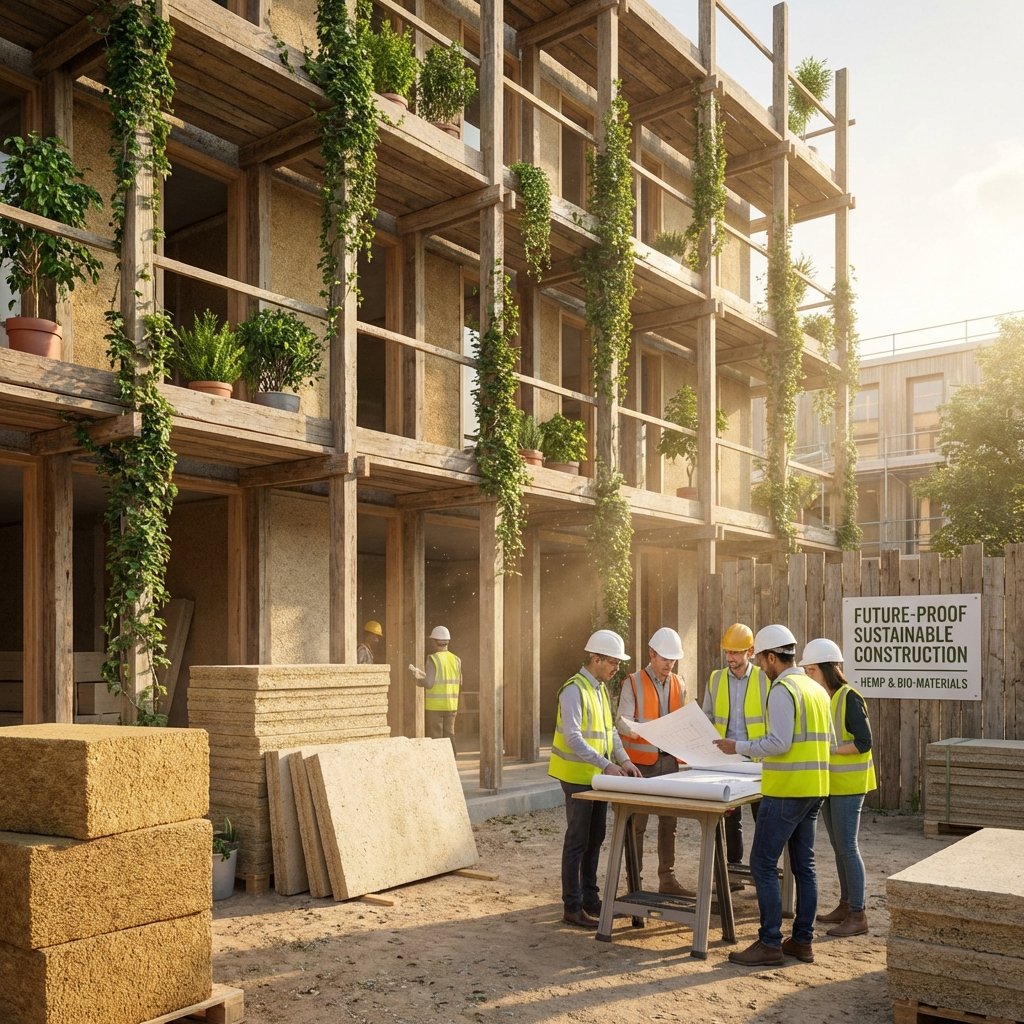
    As the construction industry faces increasing pressure to reduce its carbon footprint, a quiet revolution is taking place in the materials sector. Bio-polymers and bio-composites are moving from niche experiments to viable, scalable alternatives for traditional building materials. For architects, developers, and policymakers, understanding this shift is crucial for meeting the stringent sustainability targets of 2030 and beyond.

    Beyond Timber: The New Wave of Bio-Materials

    While timber has long been the poster child for sustainable construction, the next generation of bio-based materials offers solutions for insulation, cladding, and even structural components.

    • Bio-Foams for Insulation: Traditional expanded polystyrene (EPS) is being challenged by bio-based foams derived from PLA (polylactic acid) or mycelium. These materials offer comparable thermal performance but are compostable and often carbon-negative.
    • Natural Fiber Composites (NFCs): Hemp, flax, and jute fibers embedded in bio-resin matrices are creating lightweight, durable panels for interior and exterior use. These composites reduce dependency on fiberglass and petrochemical resins.
    • Bio-based Binders: The „glue” holding our buildings together is changing. Lignin-based adhesives are replacing formaldehyde-based synthetic resins, significantly improving indoor air quality (IAQ).

    driving Forces: Regulation and Certification

    The push for bio-materials is not just ideological; it is regulatory.
    * The New European Bauhaus initiative is explicitly promoting „beautiful, sustainable, together” living spaces, favoring materials that reconnect humans with nature.
    * EPD (Environmental Product Declarations): are becoming standard. Bio-based materials often show superior Lifecycle Assessment (LCA) results, helping projects achieve LEED and BREEAM certifications more easily.

    Economic Implications

    Historically, bio-materials commanded a significant premium. However, the gap is narrowing.
    1. Carbon Credits: Utilizing carbon-storing materials can generate value in carbon trading markets.
    2. Waste Diversion: Using agricultural by-products (straw, husks) as raw materials creates local circular economies, stabilizing supply chains against global shocks.

    The Future is Grown, Not Mined

    The construction site of tomorrow might look more like a garden than a quarry. From algae-based facades that capture CO2 to mycelium bricks that „grow” into place, the convergence of biology and construction is just beginning.


    Explore our range of sustainable construction polymers: [Link to Products]

    GreenBuilding #SustainableConstruction #BioPolymers #NewEuropeanBauhaus #CircularEconomy #Architecture2026

  • The Strategic Advantage of Bio-based Polymers in the New EU Economy

    The Strategic Advantage of Bio-based Polymers in the New EU Economy

    The European industrial landscape is undergoing a seismic shift, driven by the Green Deal and a suite of ambitious regulations. For manufacturers and brands, the transition to bio-based polymers is no longer just an environmental gesture—it is a critical strategic advantage. As we approach usage targets set for 2030, early adopters are positioning themselves to capture market share, secure supply chains, and leverage significant economic incentives.

    The Regulatory Tsunami

    The regulatory environment in the EU is moving from voluntary guidelines to mandatory compliance. The Packaging and Packaging Waste Regulation (PPWR) and the Ecodesign for Sustainable Products Regulation (ESPR) are setting strict standards for recyclability and bio-based content. Companies that delay their transition risk compliance costs, penalties, and improved barriers to market entry. Conversely, those integrating bio-based solutions now are future-proofing their operations against this regulatory tsunami.

    Economic Incentives & ROI

    Beyond compliance, the economic case for bio-based polymers is strengthening.
    * Carbon Taxes: As carbon pricing mechanisms expand, the lower carbon footprint of bio-based materials (often carbon-negative or neutral) translates directly to reduced tax liabilities.
    * Grants and Funding: The EU Innovation Fund and Horizon Europe are heavily investing in bio-economy projects, offering non-dilutive funding to companies innovating in this space.
    * Price Stability: decoupling from fossil fuel volatility allows for more predictable long-term material costs.

    Consumer Shift & Brand Loyalty

    The market demand for sustainable products is outpacing supply. Consumers, particularly Gen Z and Millennials, are scrutinized supply chains and rewarding transparency. Brands that can authentically claim (and prove via Digital Product Passports) that their products utilize renewable, bio-based materials are seeing increased brand loyalty and the ability to command premium pricing.

    The Case for Early Adoption

    Waiting for 2030 is a risky strategy. Developing new supply chains, validating materials for specific applications, and re-tooling manufacturing processes take time. Early adopters are:
    1. Securing Supply: Locking in contracts with premier bio-polymer suppliers before demand spikes.
    2. Influencing Standards: Participating in industry groups to help shape the very standards they will be judged against.
    3. Leading Innovation: gaining a „first-mover” reputation that is hard to displace.

    Conclusion

    The transition to bio-based polymers is a business imperative. It drives innovation, ensures resilience, and unlocks new growth opportunities in a resource-constrained world. The question is not if your company will transition, but when—and whether you will lead the market or scramble to catch up.


    Learn more about navigating the bioeconomy: [Link to Ekopolimeras Services]

    #Bioeconomy #SustainableBusiness #BioBasedPolymers #EURegulations #GreenGrowth #Innovation #StrategicAdvantage