In the previous two days, we defined the Hemphub and peeked inside its anatomy. Today, we address the most critical question: How do we actually build it?
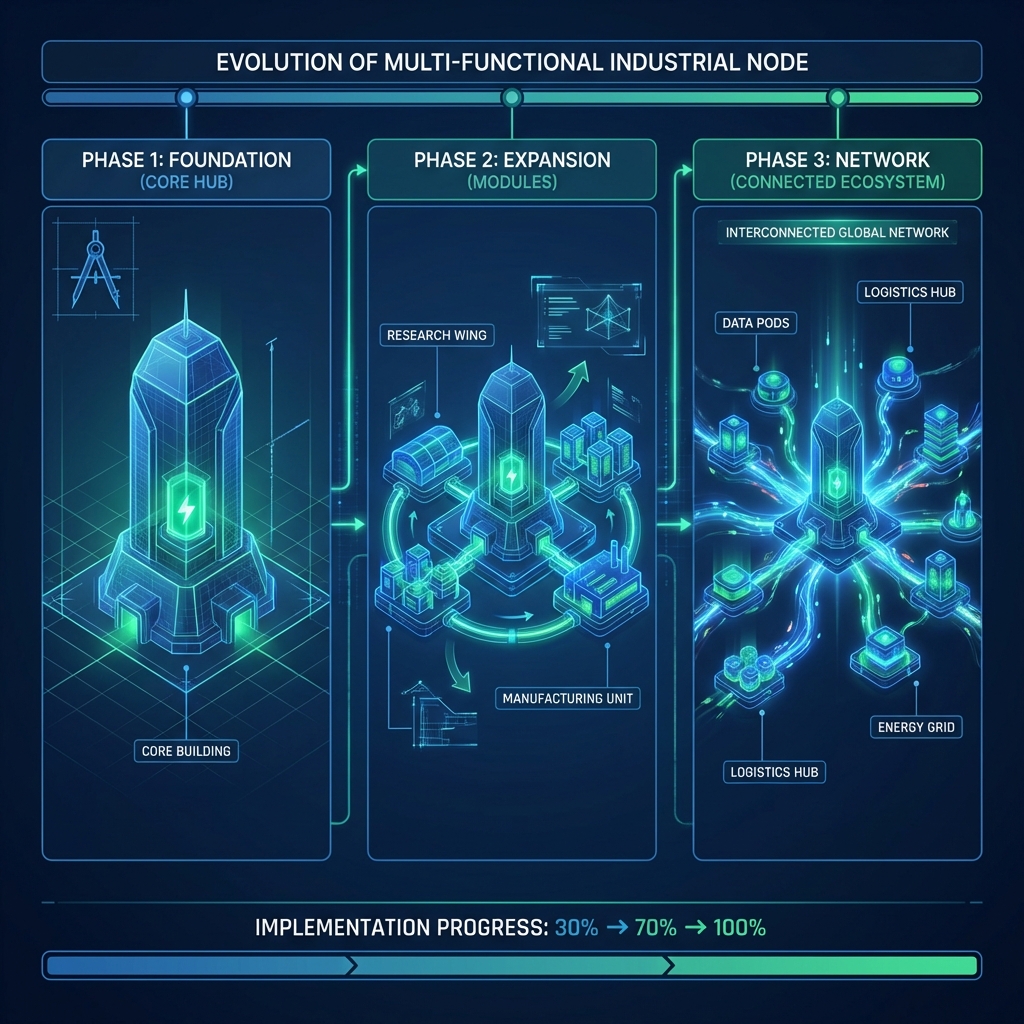
Building a Regenerative Industrial Node is not a weekend project. It requires a strategic, phased approach that manages risk while scaling impact. Based on the Hemphub Infrastructure Strategy, we can map out a 10-year rollout plan.
The Three Phases of Evolution
Phase 1: Foundation (Years 1-2) – Setting the Core
The first two years are about establishing the physical and legal anchor.
* Site Selection: Identifying rural zones within a 50km radius of viable hemp farmland.
* Primary Processing: Installing the core Decortication Line to handle raw stalks.
* Cultivation Partnerships: Signing long-term contracts with local farmers to guarantee supply.
* Investment: Securing $5-15M in initial CapEx to get the „Core Building” operational.
Phase 2: Expansion (Years 3-5) – Adding Complexity
Once the primary processing is stable, the Hemphub grows its „limbs.”
* Secondary Manufacturing: Adding modules for textile fiber refining, hempcrete block production, or oil pressing.
* R&D Commissioning: Opening the on-site laboratory to begin real-time agronomic feedback loops.
* Product Launch: Moving from selling raw materials to selling value-added products (e.g., branded insulation panels).
Phase 3: Network Building (Years 6-10) – The Federated Ecosystem
The final phase isn’t about getting bigger; it’s about getting connected.
* Replication: Opening second and third nodes in adjacent regions.
* The Hemphub Federation: Connecting independent nodes via a shared digital platform to pool market power and inventory.
* Carbon Credit Revenue: Achieving full verification of the carbon sequestered across the entire supply chain, creating a significant new revenue stream.
Funding the Future: Sustainable Finance
How do we pay for this? The transition requires moving away from pure private equity toward Synergistic Financing:
1. Public-Private Partnerships (PPP): Leveraging government grants for rural development to de-risk the initial infrastructure.
2. Cooperative Models: Allowing farmers to own a stake in the processing facility, ensuring long-term alignment.
3. Carbon Finance: Using the projected carbon sequestration of the hemp crop as collateral for „Green Bonds.”
The Goal: A Self-Sustaining Machine
By Year 10, a Hemphub is no longer a startup; it is a Regenerative Industrial Anchor for its region. It provides stable jobs, restores soil health, and produces the materials needed for a net-zero future.
Tomorrow: We’ve built the machine. Now, how does it fit into the wider world? Join us for Day 49: The Global Hemp Ledger.
Source: These implementation phases are detailed in the Hemphub Infrastructure Strategy.




Parašykite komentarą