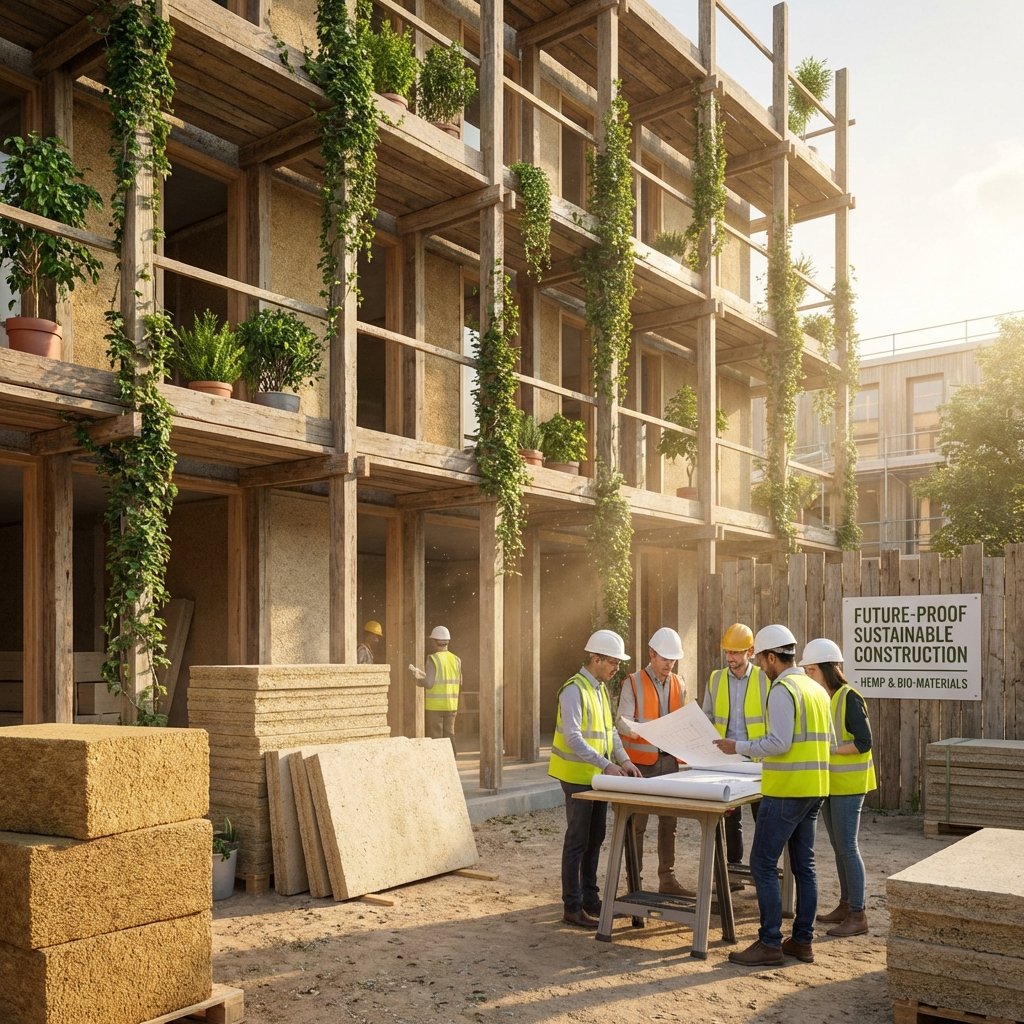
As the construction industry faces increasing pressure to reduce its carbon footprint, a quiet revolution is taking place in the materials sector. Bio-polymers and bio-composites are moving from niche experiments to viable, scalable alternatives for traditional building materials. For architects, developers, and policymakers, understanding this shift is crucial for meeting the stringent sustainability targets of 2030 and beyond.
Beyond Timber: The New Wave of Bio-Materials
While timber has long been the poster child for sustainable construction, the next generation of bio-based materials offers solutions for insulation, cladding, and even structural components.
- Bio-Foams for Insulation: Traditional expanded polystyrene (EPS) is being challenged by bio-based foams derived from PLA (polylactic acid) or mycelium. These materials offer comparable thermal performance but are compostable and often carbon-negative.
- Natural Fiber Composites (NFCs): Hemp, flax, and jute fibers embedded in bio-resin matrices are creating lightweight, durable panels for interior and exterior use. These composites reduce dependency on fiberglass and petrochemical resins.
- Bio-based Binders: The „glue” holding our buildings together is changing. Lignin-based adhesives are replacing formaldehyde-based synthetic resins, significantly improving indoor air quality (IAQ).
driving Forces: Regulation and Certification
The push for bio-materials is not just ideological; it is regulatory.
* The New European Bauhaus initiative is explicitly promoting „beautiful, sustainable, together” living spaces, favoring materials that reconnect humans with nature.
* EPD (Environmental Product Declarations): are becoming standard. Bio-based materials often show superior Lifecycle Assessment (LCA) results, helping projects achieve LEED and BREEAM certifications more easily.
Economic Implications
Historically, bio-materials commanded a significant premium. However, the gap is narrowing.
1. Carbon Credits: Utilizing carbon-storing materials can generate value in carbon trading markets.
2. Waste Diversion: Using agricultural by-products (straw, husks) as raw materials creates local circular economies, stabilizing supply chains against global shocks.
The Future is Grown, Not Mined
The construction site of tomorrow might look more like a garden than a quarry. From algae-based facades that capture CO2 to mycelium bricks that „grow” into place, the convergence of biology and construction is just beginning.
Explore our range of sustainable construction polymers: [Link to Products]




Parašykite komentarą