Blog

  • Conductive Polymers: When Plastic Conducts Electricity

    Conductive Polymers: When Plastic Conducts Electricity

    For most of the 20th century, „plastic” was synonymous with „insulator.” We used it to coat wires to prevent shocks, not to carry the current itself. But what if a plastic could conduct electricity just like copper wire? This paradox became reality with the discovery of Conductive Polymers, a breakthrough that earned its discoverers the Nobel Prize in Chemistry in 2000.

    Flexible Electronic Polymer

    Breaking the Rules of Chemistry

    Typically, polymers are made of long chains of saturated carbon bonds, which hold their electrons tightly. In conductive polymers (like polyacetylene, polyaniline, or polypyrrole), the carbon backbone is „conjugated”—it has alternating single and double bonds. This structure creates a „highway” for electrons to move along the chain.

    When these polymers are „doped” (treated with a small amount of another chemical to add or remove electrons), their conductivity can increase by a factor of a billion, transforming them from insulators to conductors.

    Why Do We Need Them?

    If we already have copper and gold, why use plastic?

    1. Flexibility: Conductive polymers can bend, stretch, and roll without breaking. This is the key to flexible electronics.
    2. Lightweight: They are much lighter than metals, crucial for aerospace and portable devices.
    3. Processability: They can be dissolved in solvents and printed like ink. Imagine printing a circuit board on your home inkjet printer!
    4. Transparency: Some conductive polymers are transparent, making them ideal for touchscreens.

    Powering the Future

    1. Flexible Displays (OLEDs)

    The most famous application is the Organic Light Emitting Diode (OLED). Used in high-end smartphones and TVs, OLEDs rely on thin films of organic polymers that light up when electricity passes through them. Because they are plastic-based, they allow for curved screens and potentially foldable phones.

    2. Organic Solar Cells (OPVs)

    Traditional silicon solar panels are heavy, rigid, and energy-intensive to produce. Organic Photovoltaics (OPVs) use conductive polymers to absorb sunlight and convert it into electricity. While currently less efficient than silicon, they can be printed onto flexible rolls of plastic, allowing for solar-powered tents, backpacks, or even transparent solar windows.

    3. Electronic Skin and Wearables

    Conductive polymers are soft and biocompatible, making them perfect for interfacing with the human body. Researchers are developing „electronic skin”—sensors that can monitor heart rate, temperature, or even muscle movement, all worn as a comfortable patch or woven into clothing (Smart Textiles).

    4. Antistatic Coatings

    On a more mundane but vital level, thin layers of conductive polymers are used to coat electronic packaging to prevent static electricity from frying sensitive computer chips during shipping.

    The Road Ahead

    The next frontier is Molecular Electronics, where single polymer chains act as wires and transistors. We are also seeing the rise of Bio-batteries and Supercapacitors made from conductive polymers that charge in seconds.

    By bridging the gap between the biological world (which is soft and organic) and the technological world (which has been hard and metallic), conductive polymers are paving the way for a future where electronics are seamless, invisible, and ubiquitous.

  • Smart Polymers: The Materials That Adapt and Evolve

    Smart Polymers: The Materials That Adapt and Evolve

    The manufacturing landscape is undergoing a seismic shift. For decades, terms like „injection molding” and „extrusion” dominated the production floor. While these methods remain vital, a new contender has graduated from the prototyping lab to the full-scale production line: 3D Printing, also known as Additive Manufacturing (AM).

    Smart Polymer Illustration

    Unlike traditional materials that are static and passive, smart polymers (also known as stimuli-responsive polymers) are dynamic. They are designed to sense changes in their environment—such as temperature, pH, light, or magnetic fields—and respond in a predictable, useful way.

    How Do They Work?

    At the molecular level, smart polymers are engineered with specific functional groups that react to external triggers.

    • Temperature: A slight rise in heat can cause polymer chains to coil or uncoil, drastically changing the material’s size or phase (from liquid to solid).
    • pH Levels: In acidic or alkaline environments, certain polymers swell or shrink, which is particularly useful for drug delivery systems in the human body.
    • Light: Photosensitive polymers can change color or mechanical properties when exposed to UV or visible light.

    The Superpowers of Smart Polymers

    1. Shape-Memory Polymers (SMPs)

    These materials can be deformed into a temporary shape and then, upon a specific trigger (usually heat), „remember” and return to their original permanent shape.
    * Application: Self-deploying solar panels for satellites or minimally invasive surgical stents that expand only when they reach the correct artery.

    2. Self-Healing Materials

    Inspired by biological healing (like skin closing a wound), these polymers contain microcapsules of healing agents or have reversible chemical bonds. When a crack forms, the capsules rupture or the bonds reorganize, sealing the damage.
    * Application: Scratch-resistant phone screens, self-repairing automotive paint, and longer-lasting infrastructure.

    3. Color-Changing (Chromogenic) Polymers

    These change color in response to stimuli.
    * Application: Smart food packaging that changes color if the food spoils, or windows that darken automatically in bright sunlight to save energy.

    Revolutionizing Industries

    Healthcare: The Targeted Strike

    One of the most promising areas is Smart Drug Delivery. Conventional medication floods the entire body, often causing side effects. Smart polymer nanoparticles can carry a drug through the bloodstream and release it only when they encounter the specific pH or temperature of a tumor. This maximizes efficacy while minimizing harm to healthy tissue.

    Soft Robotics

    Traditional robots are rigid and jerky. Smart polymers are enabling Soft Robotics—artificial muscles that contract and expand silently and smoothly. These robots can handle delicate objects (like fruit) or navigate tight spaces where rigid robots would get stuck.

    Aerospace and Defense

    In aerospace, every gram counts. Smart morphing wings could change their aerodynamic profile in mid-flight without the need for heavy hydraulic systems, optimizing fuel efficiency for different flight phases.

    The Future is Adaptive

    We are moving away from the era of „dumb” materials that simply hold a shape, towards an era of „intelligent” materials that interact with the world. As research advances, we can expect smart polymers to become more sensitive, faster-acting, and integrated into everything from our clothes to our cities.

    The future of manufacturing isn’t just about building stronger things; it’s about building smarter things.

  • The Rise of 3D Printing with Advanced Polymers: Revolutionizing Manufacturing

    The Rise of 3D Printing with Advanced Polymers: Revolutionizing Manufacturing

    The manufacturing landscape is undergoing a seismic shift. For decades, terms like „injection molding” and „extrusion” dominated the production floor. While these methods remain vital, a new contender has graduated from the prototyping lab to the full-scale production line: 3D Printing, also known as Additive Manufacturing (AM).

    Specifically, the combination of AM technology with advanced high-performance polymers is unlocking possibilities that were previously deemed impossible. It’s not just about making plastic trinkets anymore; it’s about creating flight-critical aerospace components, patient-specific medical implants, and ultra-durable automotive parts.

    From Prototyping to Production

    Historically, 3D printing was the domain of rapid prototyping. Engineers would print a rough model to test fit and form, then switch to traditional tooling for the final product. Today, that gap is closing.

    Advancements in printer accuracy, speed, and—most importantly—material science, have enabled direct digital manufacturing. We can now print end-use parts that rival, and sometimes exceed, the mechanical properties of their injection-molded counterparts.

    The Stars of the Show: High-Performance Polymers

    Standard PLA and ABS plastics are great for hobbyists, but industrial applications demand more. Enter the super-polymers:

    • PEEK (Polyether Ether Ketone): Known for its exceptional thermal stability and chemical resistance. It’s often used as a lightweight replacement for metal in aerospace.
    • ULTEM (Polyetherimide): Offers high strength-to-weight ratio and is flame retardant, making it ideal for aircraft interiors and electrical components.
    • Carbon Fiber Reinforced Nylon: By embedding carbon fibers into a nylon matrix, manufacturers achieve parts with incredible stiffness and tensile strength, perfect for custom jigs, fixtures, and structural components.

    Unmatched Design Freedom

    The true power of 3D printing lies in geometric complexity. Traditional manufacturing is „subtractive” (machining away material) or formative (using molds). Both have strict limitations—you need draft angles, you can’t have undercuts without complex sliders, and internal hollow structures are nearly impossible.

    3D printing builds layer by layer, freeing designers to create:
    * Lattice Structures: Internal honeycombs that reduce weight by 60% while maintaining structural integrity.
    * Consolidated Assemblies: Printing a gear system or a nozzle assembly as a single piece, eliminating the need for weak joints and fasteners.
    * Topology Optimization: Using AI software to generate organic, bone-like shapes that place material only exactly where stress loads require it.

    Real-World Impact

    Aerospace

    Boeing and Airbus have been pioneers, using printed polymer parts to shave hundreds of kilograms off aircraft weight. Every kilogram saved translates to significant fuel savings over the plane’s lifetime.

    Medical

    The medical field utilizes biocompatible polymers to print patient-specific guides for surgery, custom prosthetics that fit perfectly, and even porous implants that encourage natural bone growth.

    Automotive

    Companies like Ford and BMW use high-performance polymer printing not just for parts, but for the factory floor itself—printing custom tools and robotic grippers overnight to adapt to new assembly lines.

    The Road Ahead

    As we look to the rest of 2026 and beyond, the convergence of AI, material science, and automation will further accelerate this trend. We are moving towards a future of distributed manufacturing, where digital files are sent globally and printed locally, reducing shipping costs and carbon footprints.

    The revolution isn’t coming; it’s already here, layer by layer.

    Are you leveraging advanced polymers in your manufacturing process? The future might just be one print away.

  • The Invisible Resolution: A Global Pledge Against Microplastics

    The Invisible Resolution: A Global Pledge Against Microplastics

    As the sun rises on January 1st, 2026, millions of resolutions are being made worldwide. We vow to exercise more, eat healthier, or learn a new skill. But this year, we invite you to add one more commitment to your list—one that extends beyond personal improvement to planetary healing.

    Join us in a pledge to investigate, understand, and combat microplastics.

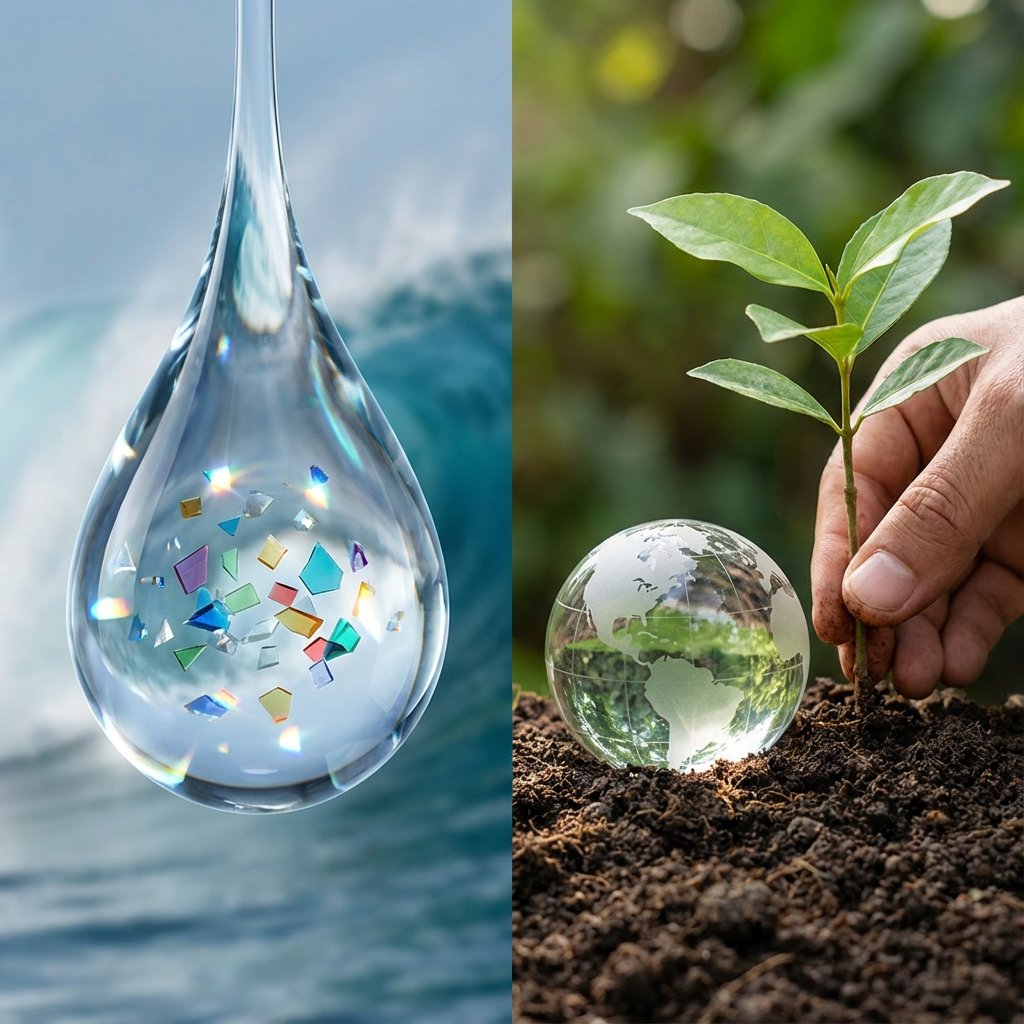
    These tiny particles, less than 5mm in size, have infiltrated every corner of our globe, from the deepest ocean trenches to the summits of the highest mountains, and even into our own bodies. Information is power, and the first step to solving this crisis is understanding it.

    The Pledge: „I Will Look Closer”

    This New Year’s resolution isn’t about immediate perfection; it’s about persistent awareness. By taking the pledge, you commit to:

    1. Questioning the lifecycle of the products you buy.
    2. Reducing reliance on single-use items that degrade into microplastics.
    3. Supporting science and policies that aim to filter and remove these pollutants.

    Investigating Causes: Where Do They Come From?

    Microplastics are generally categorized into two types:

    • Primary Microplastics: These are intentionally manufactured small particles, such as those found in some facial scrubs (microbeads) or the raw resin pellets (nurdles) used in plastic manufacturing.
    • Secondary Microplastics: These form when larger plastic items—bottles, fishing nets, and bags—break down due to exposure to sun, wind, and waves.

    However, some sources might surprise you. Synthetic textiles shed thousands of microfibers with every wash, and car tires release dust as they wear down on roads, which then washes into waterways.

    Understanding Effects: The Invisible Impact

    Why does size matter? Because their small scale allows microplastics to be ingested by marine life, from zooplankton to whales. They can block digestive tracts, reduce the urge to eat, and leach toxic chemicals into tissues. These toxins then travel up the food chain, eventually reaching our dinner plates.

    Recent studies have even detected microplastics in human blood and lungs. While the long-term health implications are still being studied, the consensus is clear: plastic does not belong in our biology.

    Seeking Solutions: A Roadmap for 2026

    The situation is serious, but not hopeless. Innovation and collective action are turning the tide.

    • Advanced Filtration: New washing machine filters are being developed to trap microfibers before they enter the sewage system.
    • Bio-benign Materials: Research into biodegradable alternatives that break down harmlessly in natural environments is accelerating.
    • Global Policy: International treaties are beginning to address the full lifecycle of plastics, holding producers accountable for the end-of-life of their products.

    Your First Step

    Today, on day one of 2026, take a moment to look at the materials around you. Choose natural fibers when you can. Carry a reusable bottle. Support brands that are transparent about their supply chain.

    Let this be the year we not only see the problem but become part of the solution. Happy New Year! Here is to a cleaner, clearer future.

  • New Year, New Materials: A Toast to Sustainable Innovations

    New Year, New Materials: A Toast to Sustainable Innovations

    As the final hours of December 31st tick away, the world prepares to welcome another year. Lighting fireworks, popular champagne, and gathering with loved ones are traditions that mark this transition. However, amidst the celebration, it’s a perfect moment to reflect on the materials that make our festivities possible and the quiet revolution happening in the world of polymers.

    New Year’s Eve has historically been a night of single-use excess—plastic glitter, disposable cups, synthetic streamers, and novelty eyewear worn for a few hours and then discarded. But as we stand on the threshold of 2026, the narrative is changing. The polymer industry, often scrutinized for its environmental footprint, is increasingly becoming a driver of sustainable solutions that allow us to celebrate without compromise.

    The Ghost of Plastics Past vs. The Spirit of Innovation

    We are moving away from the „take-make-dispose” model that characterized holidays of the past. This year, we’ve seen a surge in biodegradable glitter made from cellulose, replacing the microplastics that once washed into our oceans after the party was over. These plant-based alternatives shimmer just as brightly but return to nature harmlessly.

    Similarly, the decor industry is embracing bioplastics derived from corn starch and sugarcane. Imagine party favors that can be composted along with your food scraps, rather than lingering in landfills for centuries. This shift isn’t just about consumer guilt; it’s about material science unlocking new possibilities.

    2026: A Year of Sustainable Resolutions

    As we look forward to the new year, the polymer industry is making its own set of resolutions.

    1. Closing the Loop: The focus is shifting from merely „recyclable” to „actively recycled.” Chemical recycling technologies are maturing, promising to turn complex mixed plastics back into virgin-quality feedstocks.
    2. Smart Materials: 2026 promises the rise of polymers that do more. We are seeing research into packaging that can detect spoilage or materials that heal themselves, extending product lifespans and reducing waste.
    3. Bio-based Feedstocks: The move away from fossil fuels continues. Algae, fungi, and even agricultural waste are becoming the building blocks of the future, reducing our carbon footprint before the product is even made.

    A Toast to a Greener Future

    Tonight, as we raise our glasses, let’s appreciate the science that is making our world cleaner and more efficient. The transition to a circular economy is a marathon, not a sprint, but every innovation brings us closer to the finish line.

    Whether you are celebrating with a reusable cup made from recycled content or wearing an outfit spun from sustainable fibers, you are part of this change.

    Happy New Year! Here’s to a 2026 filled with breakthrough innovations, sustainable solutions, and a brighter, greener future for all.

  • Day 30: Saving Our Soil – The Science of Biodegradable Mulch Films

    Day 30: Saving Our Soil – The Science of Biodegradable Mulch Films

    Modern agriculture adheres to a difficult contract: we need to produce more food for a growing population, but the very methods we use to boost yields are slowly destroying the foundation of farming—the soil itself.

    Nowhere is this paradox more evident than in „plasticulture.” The use of polyethylene (PE) mulch films has revolutionized farming by suppressing weeds, conserving water, and increasing yields. But it has come at a terrible cost. We are coating our arable land in a layer of plastic that never truly leaves.

    For Day 30, we are stepping away from abstract innovation to dig into a literal „close-to-earth” problem: The accumulation of microplastics in agricultural soil and the scientific imperative for certified soil-biodegradable alternatives.

    The „White Pollution” Crisis

    Walk through an intensively farmed field after harvest, and you will likely see tattered fragments of plastic film partially buried in the dirt. This is often referred to as „White Pollution.”

    Conventional PE mulch films are thin (often 10–25 microns). When removed after a growing season, they tear easily. It is estimated that 10-20% of the film remains in the field even after retrieval efforts. Over decades, this accumulation reaches a tipping point.

    The Real-World Impact on Soil Physics

    Plastic residues are not inert bystanders. They actively degrade the physical properties of the soil:
    1. Water Transport Blockage: Plastic fragments create impermeable barriers within the soil profile, disrupting the capillary movement of water and nutrients to plant roots.
    2. Reduced Bulk Density: High levels of microplastics alter the soil structure, making it looser but less able to anchor roots effectively.
    3. Yield Drag: Research has shown that residual plastic pollution can reduce crop yields by 10% to 25% in severely contaminated fields, negating the very benefits the plastic provided in the first place.

    The Solution: Soil-Biodegradable Mulch Films (BDM)

    The industry’s answer to this crisis is Soil-Biodegradable Mulch (BDM). However, this sector is rife with greenwashing and confusion. To understand the substance of this solution, we must look at the chemistry and the standards.

    How It Works: Mineralization vs. Fragmentation

    The most critical distinction for any buyer or policymaker is the difference between biodegradable and oxo-degradable.

    • Oxo-degradable (The False Solution): These are conventional plastics with additives that cause the plastic to brittle and shatter into invisible microplastics when exposed to UV light. They do not biodegrade. They simply become impossible to see and impossible to clean up.
    • True Biodegradable (The Science): True BDMs (made from polymers like PBAT, PLA, or PHA blends) are designed to be food for soil microbes. Bacteria and fungi in the soil release enzymes that depolymerize the film’s long molecular chains into smaller monomers. These monomers are then consumed by the microbes, resulting in Mineralization.

    The equation for true biodegradation is:
    $$ Polymer + O_2 + Microbes \rightarrow CO_2 + H_2O + Biomass $$

    There is no microplastic residue left behind—only basic elements and organic matter that enriches the soil.

    The Gold Standard: EN 17033

    For years, the market lacked clear rules. „Biodegradable” was a marketing term without technical backing. That changed with the introduction of EN 17033, the first European standard specifically for biodegradable mulch films.

    If a product claims to be soil-biodegradable but does not cite EN 17033, it should be viewed with skepticism. This standard requires:
    1. 90% Biodegradation within 24 months in absolute soil conditions (not industrial composters).
    2. Ecotoxicity Testing: Proving that the breakdown residues have zero negative effect on earthworms, plants, or soil microorganisms.
    3. Heavy Metal Limits: Strict caps on the chemical composition of the film.

    The Economic Reality

    Farmers operate on thin margins, and BDM films are currently 2-3 times more expensive than conventional PE mulch. Why would a farmer switch?

    The „sticker price” is deceptive because it ignores the labor and disposal costs.

    Cost Factor Conventional PE Film Biodegradable (BDM) Film
    Material Cost Low High
    Installation Same Same
    Removal Labor High (Labor intensive to pull up) Zero (Tilled into soil)
    Disposal Fees High (Landfill or washing lines) Zero
    Soil Health Cost Cumulative degradation Regeneration

    When the elimination of retrieval labor and disposal fees is factored in, the total cost of system (TCS) for biodegradable films is becoming competitive, especially for crops like tomatoes, peppers, and melons where retrieval is difficult.

    Conclusion

    The problem of agricultural plastic is a ticking time bomb directly beneath our food systems. We cannot simply continue to mix conventional plastic into the earth and expect our soil to remain fertile.

    Switching to certified soil-biodegradable polymers is not just a „nice-to-have” eco-trend; it is a technical necessity for preserving the arable land we rely on. For producers, the future lies in polymers that know when their job is done—materials that return to the earth as gracefully as the plants they protected.

  • The Economics of Polymer Production

    The Economics of Polymer Production

    Analysis of cost factors, optimization strategies, and the business case for sustainable polymers.

    In the transition to a sustainable bioeconomy, the economic viability of polymer production is just as critical as its environmental impact. For manufacturers and businesses, understanding the cost structure of polymer production—and how to optimize it—is essential for maintaining competitiveness while adopting greener materials.

    This article delves into the economics of polymer production, exploring key cost factors, strategies for optimization, and the long-term ROI of investing in sustainable solutions.

    The Cost Structure of Polymer Production

    The cost of producing polymers is influenced by several interconnected factors, ranging from raw materials to energy consumption and processing efficiency.

    1. Raw Material Costs

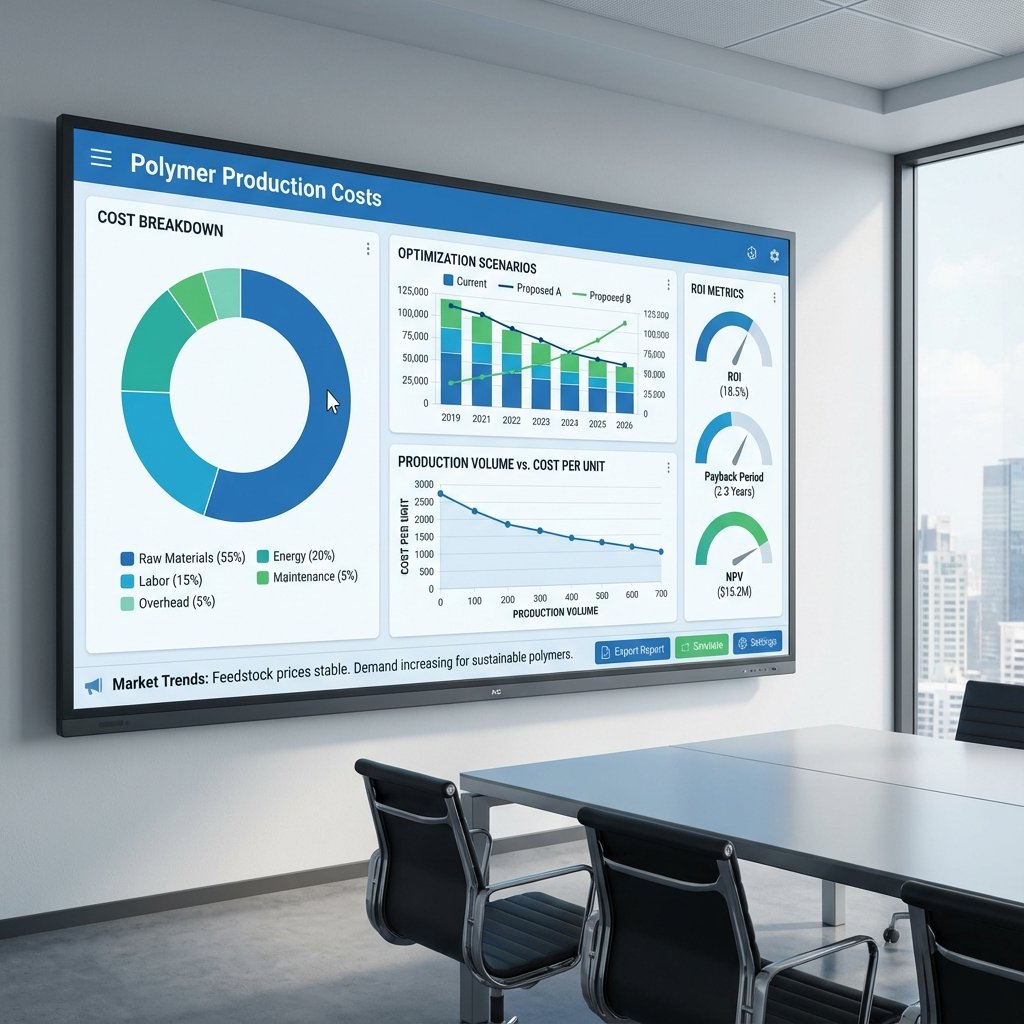
    Raw materials typically account for the largest portion of production costs, often ranging from 40% to 70% of the total expense.
    Traditional Polymers: Prices fluctuate with crude oil markets.
    Biopolymers: Costs are influenced by agricultural feedstock availability (e.g., corn, sugarcane) and processing technologies. While currently often higher than fossil-based alternatives, economies of scale are narrowing this gap.

    2. Energy Consumption

    Polymer processing—whether extrusion, injection molding, or thermoforming—is energy-intensive. Energy costs can represent 5% to 15% of total production expenses.
    Optimization Opportunity: Switching to energy-efficient machinery and renewable energy sources can significantly reduce operational costs.

    3. Capital Equipment and Maintenance

    Investment in machinery (CAPEX) and ongoing maintenance (OPEX) are significant drivers. High-quality equipment ensures precision and reduces waste but requires substantial upfront capital.

    4. Labor and Overhead

    Skilled labor for operating complex machinery, quality control, and general facility overheads also contribute to the final cost per unit.

    Strategies for Cost Optimization

    To remain competitive, especially when integrating newer, potentially more expensive sustainable materials, manufacturers must focus on efficiency and waste reduction.

    1. Material Efficiency and Waste Reduction

    • Precision Dosing: Advanced gravimetric feeding systems ensure exact material usage, minimizing giveaway.
    • Scrap Recycling: Implementing closed-loop systems to regrind and reuse sprues and runners can recover up to 20% of material costs.
    • Design for Manufacturing (DFM): Optimizing part design (e.g., reducing wall thickness without compromising strength) uses less material and cools faster, shortening cycle times.

    2. Energy Efficiency Improvements

    • Variable Frequency Drives (VFDs): Installing VFDs on motors and pumps adjusts power usage to demand, reducing energy waste.
    • Barrel Insulation: Insulating extruder barrels prevents heat loss, lowering the energy required to maintain processing temperatures.

    3. Process Automation

    Automating repetitive tasks (like part removal and packing) increases speed, consistency, and safety, while reducing labor costs per unit over time.

    The Business Case for Sustainable Polymers

    While the initial cost per kilogram of biopolymers may be higher, the broader economic picture often favors sustainability when indirect costs and value are considered.

    ROI beyond the Price Tag

    1. Regulatory Compliance: Early adoption of sustainable materials avoids future costs associated with plastic taxes (e.g., the EU Plastic Tax) and stricter waste regulations.
    2. Brand Value and Premium Pricing: Consumers and B2B clients are increasingly willing to pay a premium for eco-friendly products. Sustainability can be a key differentiator in a crowded market.
    3. Supply Chain Resilience: diversifying feedstocks away from volatile fossil fuels can provide long-term price stability.

    „Cost optimization in polymer production isn’t just about cutting corners; it’s about maximizing value through efficiency, innovation, and strategic material choices.”

    Economic Analysis Models

    Businesses often use specific models to evaluate production economics:

    Metric Description Application in Polymer Production
    Total Cost of Ownership (TCO) Includes acquisition, operation, and end-of-life costs. Crucial for comparing durable bioplastics vs. cheaper single-use alternatives.
    Cycle Time Analysis The time to produce one part. Reducing cycle time by seconds can increase output by thousands of units per day, diluting fixed costs.
    Scrap Rate Analysis Percentage of defective parts. Lowering scrap rates directly improves the bottom line and reduces material waste.

    Conclusion

    The economics of polymer production are evolving. As technology advances and the bioeconomy matures, the cost disparity between traditional and sustainable polymers will continue to shrink. By focusing on process optimization, energy efficiency, and total value rather than just raw material price, manufacturers can build a profitable and sustainable future.

    For Day 30, we will look at the Future of Polymer Innovation, exploring the cutting-edge R&D that will shape the next decade of materials.

  • Polymer Design Principles: Creating Effective Polymer Products

    Polymer Design Principles: Creating Effective Polymer Products

    Designing for plastics is fundamentally different from designing for metals or wood. The unique properties of polymers—their shrinkage, flow behavior, and thermal sensitivity—require a specific set of design rules to ensure the final product is both functional and manufacturable.

    Whether you are creating a consumer gadget or an industrial component, sticking to these core polymer design principles will help you avoid costly tooling errors, reduce cycle times, and improve product aesthetics.

    1. Wall Thickness & Uniformity

    The golden rule of plastic design is strict adherence to uniform wall thickness.

    • Why it matters: Uneven walls cause uneven cooling. Thicker sections cool slower than thinner ones, leading to internal stresses, warping, and sink marks (depressions on the surface).
    • Best Practice: Keep walls constant throughout the part. If you must transition from a thin to a thick section, do so gradually with a ramp or radius, not a sharp step. Typical wall thicknesses range from 2mm to 4mm for general applications.

    2. Draft Angles

    Draft refers to the taper applied to the faces of the part that are perpendicular to the direction of mold pull.

    • Why it matters: Without draft, the part will drag against the mold surface as it is ejected, creating scratch marks (drag marks) or causing the part to stick in the mold.
    • Best Practice: Apply a minimum draft angle of 1° to 2° for all vertical walls. Textured surfaces require more draft (often 1° per 0.025mm of texture depth) to release cleanly.

    3. Ribs for Stiffness

    Instead of increasing the entire wall thickness to make a part stronger (which invites sink marks and long cooling times), use ribs.

    • Why it matters: Ribs increase the bending stiffness of a part without adding significant mass or wall thickness.
    • Best Practice:
      • Rib thickness should be 50-60% of the nominal wall thickness.
      • Rib height should generally be no more than 3x the wall thickness.
      • Add draft to ribs to ensure ejection.

    4. Radii and Fillets

    Sharp corners are stress concentrators in plastic parts.

    • Why it matters: Flowing plastic dislikes sharp turns; they restrict flow and create weak points where the part is likely to crack under load.
    • Best Practice: Add a radius (rounded edge) to all corners.
      • Internal Radius: At least 0.5x wall thickness.
      • External Radius: Internal radius + wall thickness.
        This maintains a constant wall thickness around the corner.

    5. Boss Design

    Bosses are cylindrical protrusions used for mounting screws or accepting inserts.

    • Why it matters: Like ribs, thick bosses can cause sink marks on the opposite show-face.
    • Best Practice:
      • Connect bosses to the main wall with ribs or gussets for stability.
      • Keep the boss wall thickness to about 60% of the nominal wall thickness.
      • Leave a gap between the boss and the outer wall if possible to isolate thick sections.

    6. Managing Undercuts

    Undercuts are features that prevent the part from being ejected directly from the mold (e.g., a side hole or a snap-fit latch).

    • Why it matters: Undercuts require complex mold mechanisms like side-actions or lifters, which significantly increase tooling costs.
    • Best Practice:
      • Design simply to avoid undercuts if possible.
      • Use shut-offs (pass-through cores) where a hole in the side of a part is created by the interaction of the two main mold halves, eliminating the need for a side-action.

    7. Material Selection in Design

    Design cannot exist in a vacuum; it must be paired with the right material.

    • Shrinkage: Different polymers shrink at different rates (e.g., Nylon shrinks more than ABS). Your mold dimensions must be scaled to account for this specific material shrinkage.
    • Environment: Design for the end-use environment. If the part will be exposed to UV light, design for thicker sections or choose a UV-stable polymer to prevent brittleness over time.

    Common Mistakes to Avoid

    1. Sink Marks: Caused by thick sections (ribs, bosses) pulling the surface inward as they cool. Fix: Generally reduce feature thickness.
    2. Warping: Caused by non-uniform cooling or internal stresses. Fix: Ensure uniform walls and balanced gate locations.
    3. Weld Lines: Visible lines where two flow fronts meet. Fix: Adjust gate locations or modify wall thickness to move weld lines to non-critical areas.

    Conclusion

    Effective polymer design is a balancing act between aesthetics, functionality, and manufacturability. By respecting the physics of molten plastic—focusing on uniform cooling and easy ejection—you can design products that are not only beautiful but also economical to manufacture and reliable in service.

    Start with these principles, prototype early (using 3D printing where applicable), and collaborate closely with your mold maker to refine the design for the specific production process.

  • 12 Essential Polymer Terms Every Professional Should Know

    12 Essential Polymer Terms Every Professional Should Know

    Navigating the world of polymers can sometimes feel like learning a new language. Whether you are a procurement manager, a product designer, or a business owner looking to optimize your supply chain, understanding the technical jargon is crucial for making informed decisions.

    In this glossary, we break down 12 essential polymer terms that every industry professional should know. These concepts form the foundation of material selection, processing, and quality control.

    1. Thermoplastic vs. Thermoset

    Definition:
    Thermoplastics are polymers that become pliable or moldable above a specific temperature and solidify upon cooling. They can be remelted and reshaped multiple times.
    Thermosets are polymers that irreversibly cure during heating. Once set, they cannot be melted or reshaped without degrading the material.

    Context:
    Understanding this distinction is the first step in material selection. Thermoplastics (like PE, PP, PET) are ideal for recycling and high-volume production, while thermosets (like epoxy, phenolic resins) offer superior heat resistance and structural stability.

    2. Polymerization

    Definition:
    Polymerization is the chemical process of reacting monomer molecules together in a chemical reaction to form polymer chains or three-dimensional networks.

    Context:
    The type of polymerization (addition vs. condensation) affects the purity, molecular weight distribution, and immense properties of the final material. It dictates whether a material will be brittle, flexible, or transparent.

    3. Melt Flow Index (MFI)

    Definition:
    MFI is a measure of the ease of flow of the melt of a thermoplastic polymer. It is defined as the mass of polymer, in grams, flowing in ten minutes through a capillary of a specific diameter and length by a pressure applied via prescribed alternative gravimetric weights.

    Context:
    MFI is critical for molders. A high MFI indicates a material that flows easily (good for injection molding of complex parts), while a low MFI indicates a viscous material (better for extrusion or blow molding).

    4. Tensile Strength

    Definition:
    The maximum stress that a material can withstand while being stretched or pulled before breaking.

    Context:
    This is a key mechanical property for structural applications. If you are designing packaging straps or load-bearing components, you need a polymer with high tensile strength to ensure durability and safety.

    5. Elongation at Break

    Definition:
    The ratio between changed length and initial length after breakage of the test specimen. It expresses the capability of a material to resist changes of shape without crack formation.

    Context:
    High elongation indicates flexibility and ductility (like LDPE used in plastic bags), whereas low elongation suggests stiffness and brittleness (like PS used in disposable cutlery).

    6. Glass Transition Temperature (Tg)

    Definition:
    The temperature range where a polymer substrate changes from a rigid, glassy material to a soft, rubbery material.

    Context:
    Tg tells you the service temperature range of a product. Below Tg, the material is hard and brittle; above Tg, it is soft and flexible. For example, knowing the Tg is vital for products that will be used in freezing conditions or high-heat environments.

    7. Masterbatch

    Definition:
    A solid additive used for coloring plastics (color masterbatch) or imparting other properties to plastics (additive masterbatch). It is a concentrated mixture of pigments and/or additives encapsulated during a heat process into a carrier resin which is then cooled and cut into a granular shape.

    Context:
    Using masterbatches allows processors to color raw polymer economically during the manufacturing process without handling messy powders. It’s the industry standard for consistency in aesthetics and UV protection.

    8. Compound

    Definition:
    A mixture of a polymer with other ingredients (fillers, plasticizers, stabilizers) to produce a material with specific properties.

    Context:
    While a „resin” is the raw polymer, a „compound” is the ready-to-use formulation. For instance, a PVC compound for cable insulation already includes the necessary flame retardants and flexible plasticizers.

    9. Biodegradability vs. Compostability

    Definition:
    Biodegradable: Capable of being decomposed by bacteria or other living organisms.
    Compostable: A subset of biodegradable that breaks down into non-toxic components (water, CO2, biomass) under specific composting conditions within a set timeframe.

    Context:
    Not all biodegradables are compostable. Distinguishing these helps to avoid „greenwashing” and ensures you choose the right material for your sustainability goals and waste management infrastructure.

    10. Viscosity

    Definition:
    A measure of a fluid’s resistance to flow. In polymers, it refers to the thickness or internal friction of the molten plastic.

    Context:
    Viscosity is the inverse of MFI. High viscosity (low MFI) materials are needed for processes like pipe extrusion where the material must hold its shape before cooling. Low viscosity materials are better for filling thin-walled injection molds.

    11. PCR (Post-Consumer Recycled)

    Definition:
    Material generated by households or by commercial, industrial, and institutional facilities in their role as end-users of the product which can no longer be used for its intended purpose.

    Context:
    PCR is the holy grail of circular economy. Incorporating PCR into your products reduces reliance on virgin fossil fuels and appeals to environmentally conscious consumers, though it may require careful quality control to maintain consistency.

    12. Regrind

    Definition:
    Scrap material (sprues, runners, defective parts) from the molding process that is ground up and mixed back with virgin material to be reused.

    Context:
    Using regrind is a primary way manufacturers reduce waste and cost. However, because the polymer has been heated twice, its properties (like tensile strength) might be slightly degraded compared to 100% virgin material.

    Connecting the Dots

    Knowing these terms allows for better communication across the supply chain. When a supplier asks about your MFI requirements or whether you need a compound versus a masterbatch, you can answer with confidence.

    For example, if you are designing a new outdoor bench, you might specify a Thermoplastic (like HDPE) with high UV resistance (via an additive Masterbatch) and decent Tensile Strength, possibly incorporating 30% PCR content to meet sustainability targets.

    Usage Context

    • Procurement: Use these terms to specify exact requirements in RFQs (Request for Quotation).
    • Quality Control: Use MFI and Tensile Strength data to verify incoming batches.
    • Sales: Explain the benefits of „Bio-based” or „High Tg” materials to clients effectively.

    Conclusion

    The polymer industry is vast, but these 12 terms cover the essentials of material properties, processing, and sustainability. Mastering this vocabulary not only helps you navigate technical datasheets but also empowers you to innovate and optimize your product lines effectively.

  • The Day After: Understanding Why Plastic Products Fail

    The Day After: Understanding Why Plastic Products Fail

    It is a familiar Boxing Day scene: the wrapping paper is cleared away, the festive meals are eaten, and somewhere in the corner lies a brand-new plastic toy, already snapped in two.

    „They don’t make them like they used to,” we say. But from an engineering perspective, why did it break?

    Welcome to the world of Failure Analysis. While frustrating for consumers, studying how and why polymers fail is crucial for engineers improving future designs. Let’s diagnose some common holiday casualties.

    1. Brittle Fracture (The „Snap”)

    The Scene: You step on a plastic LEGO brick or drop a hard plastic dinosaur, and it snaps cleanly into sharp pieces.

    The Cause: This is a classic brittle fracture. It happens when a polymer lacks the ability to absorb energy (toughness) and deform plastically before breaking.
    * Material Choice: Glassy polymers like Polystyrene (PS) or unmodified PMMA (acrylic) are naturally brittle at room temperature.
    * Temperature: Plastics get more brittle in the cold. If a toy was left in a freezing delivery truck overnight and then played with immediately, its „glass transition temperature” might have made it as fragile as glass.

    2. Environmental Stress Cracking (The „Crumble”)

    The Scene: You pull last year’s plastic outdoor decorations out of storage, and they crumble in your hands.

    The Cause: This is often Environmental Stress Cracking (ESC) or UV degradation.
    * UV Damage: Ultraviolet light from the sun breaks the chemical bonds in polymer chains (photodegradation). This lowers the molecular weight of the plastic, turning a once-flexible material into a chalky, weak mess.
    * Chemical Attack: Cleaning certain plastics with harsh solvents (like using acetone on ABS) can cause microscopic crazing that eventually leads to catastrophic failure under stress.

    3. Creep (The „Sag”)

    The Scene: You hung a heavy wreath on a plastic hook yesterday. Today, the hook hasn’t snapped, but it has bent downwards so much that the wreath fell off.

    The Cause: This is Creep (deformation under constant load).
    * Unlike metals, polymers are „viscoelastic”—they have properties of both solids and fluids. Under a constant weight, molecular chains slowly slide past each other over time. The hook didn’t break; it literally flowed into a new shape.

    4. Fatigue (The „Wiggle”)

    The Scene: A toy has a moving part—a hinge or a button—that kids have pressed a thousand times. Suddenly, it snaps.

    The Cause: This is Fatigue failure.
    * Repeated stress cycles, even if they are well below the material’s breaking point, eventually cause microscopic cracks to initiate and grow. Once a crack reaches a critical size, the part fails suddenly. High-quality designs use materials like Polypropylene (PP) for „living hinges” because of their exceptional fatigue resistance.

    The Takeaway

    When a product fails, it’s rarely just „bad plastic.” It’s usually a mismatch between the material selection, the design, and the environment it was used in.

    So, if you are gluing a toy back together today, you are not just doing repairs—you are conducting your own forensic engineering investigation!