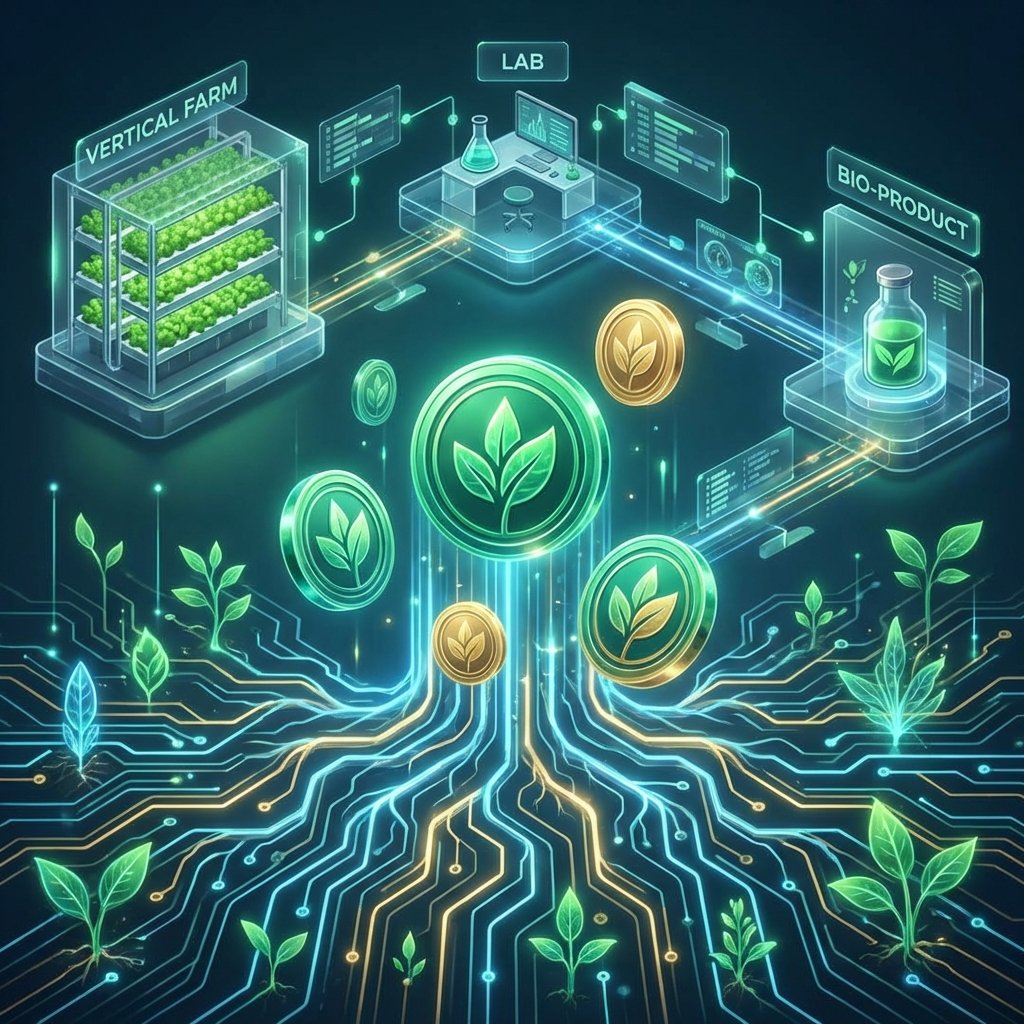
As we integrate advanced technologies into the bioeconomy, the concept of digital tokens and blockchain is emerging as a powerful tool for transparency and incentivization. Beyond the hype of cryptocurrencies, tokenization offers tangible mechanisms to track sustainable supply chains, verify carbon credits, and reward eco-friendly practices in real-time.
The Role of Tokenization
Tokenization allows physical assets—like a ton of sustainably harvested biomass or a verified reduction in carbon emissions—to be represented as digital tokens on a blockchain. This creates an immutable record of ownership and provenance.
Key Applications
-
Supply Chain Transparency:
- Traceability: Each step of a product’s journey, from a bio-feedstock farm to the final bioplastic product, can be recorded. Consumers can scan a QR code to see the entire lifecycle.
- Anti-Counterfeiting: Ensures that materials claiming to be „bio-based” or „organic” are genuine, preventing greenwashing.
-
Incentive Mechanisms:
- Eco-Rewards: Farmers and producers can earn tokens for adopting regenerative agriculture practices. These tokens can be traded or redeemed for discounts on equipment or seeds.
- Circular Economy Credits: Companies that successfully recycle bio-materials can be issued tokens, creating a financial incentive to close the loop.
-
Decentralized Carbon Markets:
- Verified Credits: Bio-projects that sequester carbon (like hemp cultivation or algae farming) can issue carbon credit tokens. These are easier to trade and audit than traditional paper-based credits.
- Micro-Investments: Small investors can buy tokens representing a fraction of a sustainable forestry project, democratizing access to green investments.
Challenges and Future Outlook
While promising, the integration of digital tokens faces hurdles such as regulatory uncertainty and the energy consumption of certain blockchain networks (though newer, eco-friendly consensus mechanisms are MITIGATING this).
As we move forward, the convergence of Web3 technologies and the bioeconomy will likely spawn new business models where sustainability is not just a corporate responsibility but a built-in economic feature.
Tomorrow: We explore how AI is helping Small and Medium Businesses (SMBs) align with the EU Bioeconomy Strategy.




Parašykite komentarą