Executive Summary
The 21st century presents a unique opportunity to reshape our economy. The EU’s new bioeconomy strategy envisions a future where biological resources replace fossil fuels, driving green growth, competitiveness, and resilience across Europe.
Key Metrics
- EUR 2.7 trillion: Estimated value of the EU bioeconomy in 2023.
- 17.1 million: People employed in biomass producing and converting activities (8% of EU jobs).
- EUR 863 billion: Value added generated by the bioeconomy (5% of EU GDP).
- EUR 23.2 billion: R&D investment in bioeconomy-related sectors in 2023.
Core Content
The Challenge
Europe faces the dual challenge of decarbonizing its economy while maintaining industrial competitiveness. Reliance on imported fossil-based products threatens our strategic autonomy and contributes to climate change. We need a shift that supports economic prosperity without compromising planetary boundaries.
The Solution
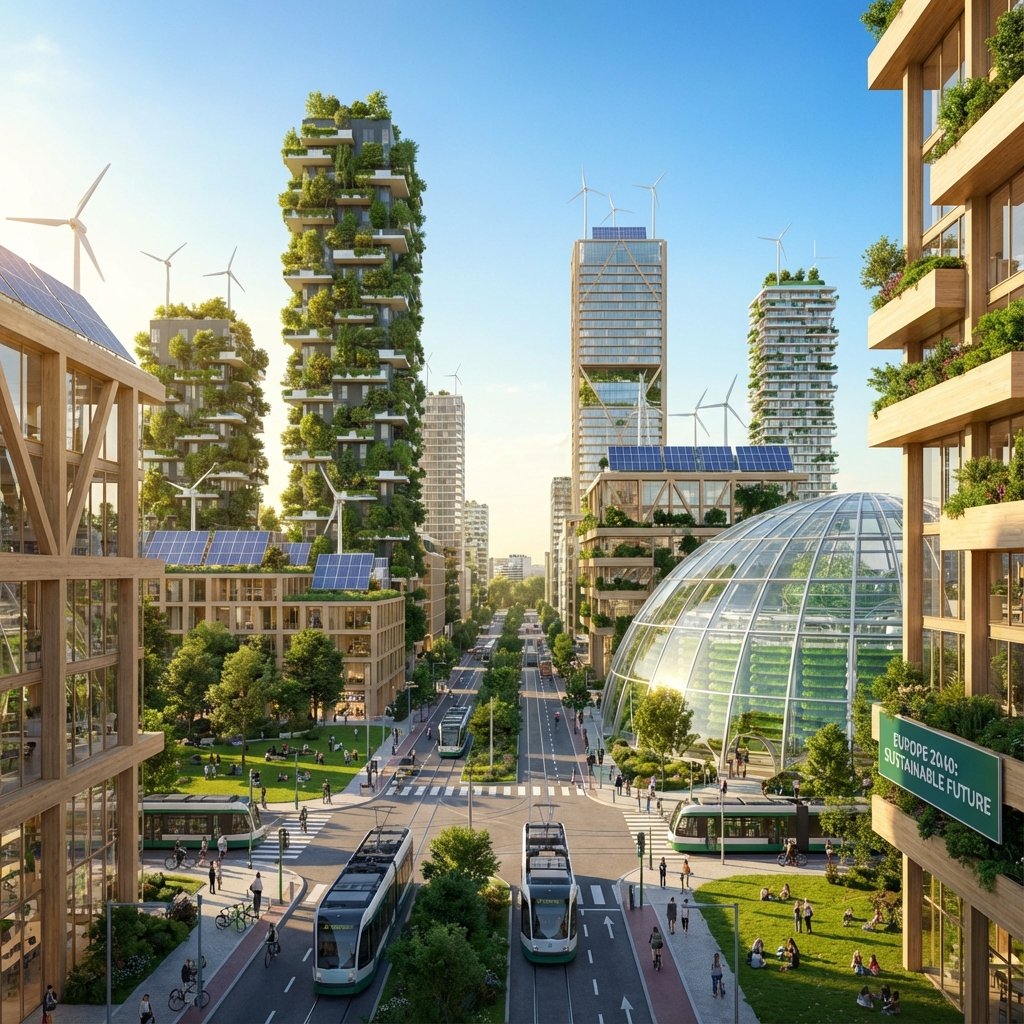
The „Strategic Framework for a Competitive and Sustainable EU Bioeconomy” proposes a comprehensive shift towards using renewable biological resources. This isn’t just about agriculture; it spans forestry, fisheries, biomanufacturing, and biotechnologies. The vision for 2040 is a Europe where sustainable bio-based materials—from construction timber to bio-plastics—are the norm, not the exception.
The Impact
By 2040, this transition aims to:
* Create stable income streams for rural and coastal communities.
* Reduce dependence on fossil fuels and imported raw materials.
* Position Europe as a global leader in sustainable technologies.
* Ensure that economic growth goes hand-in-hand with ecosystem restoration.
Source: EU Bioeconomy Strategy






Parašykite komentarą