Executive Summary
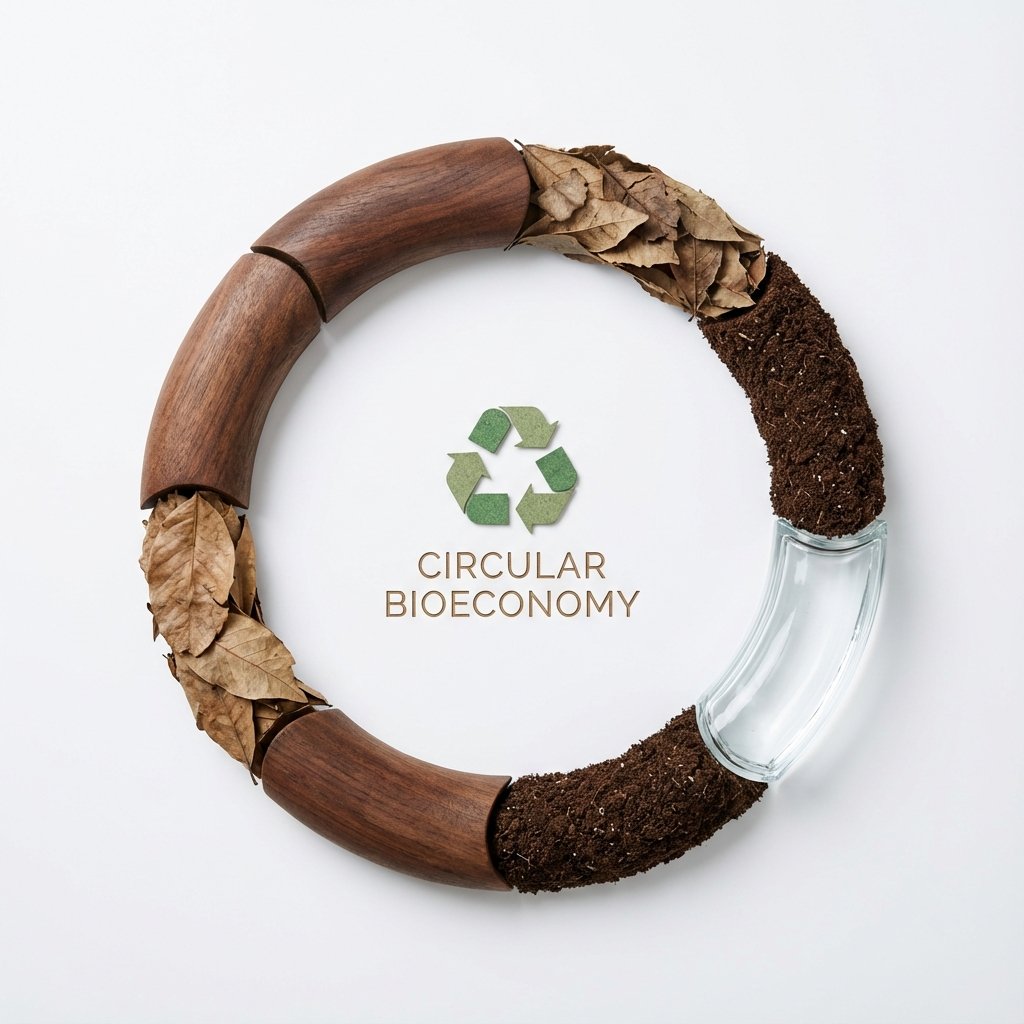
In a true bioeconomy, there is no such thing as „waste”—only resources in the wrong place. By turning agricultural residues, food waste, and processing side-streams into valuable products, we can close the loop and create a circular system.
Key Metrics
- 5-12%: Total national GHG emissions from the construction sector (highlighting the need for circularity in all sectors).
Core Content
The Challenge
Linear economic models („take-make-dispose”) generate massive amounts of waste. Even in the bioeconomy, valuable organic matter is often discarded or inefficiently used.
The Solution
The strategy promotes Circularity:
* Valorization: Turning „waste” (like straw, manure, or food scraps) into bio-gas, fertilizers, or materials.
* Nutrient Cycles: Recovering nutrients like nitrogen and phosphorus from wastewater and manure to return them to the soil.
* Industrial Symbiosis: Connecting industries so one’s waste becomes another’s feedstock.
The Impact
- Resource Efficiency: Getting more out of less.
- Reduced Pollution: Preventing waste from ending up in landfills or polluting water.
- Economic Value: Turning disposal costs into revenue streams.
Source: EU Bioeconomy Strategy




Parašykite komentarą