Executive Summary
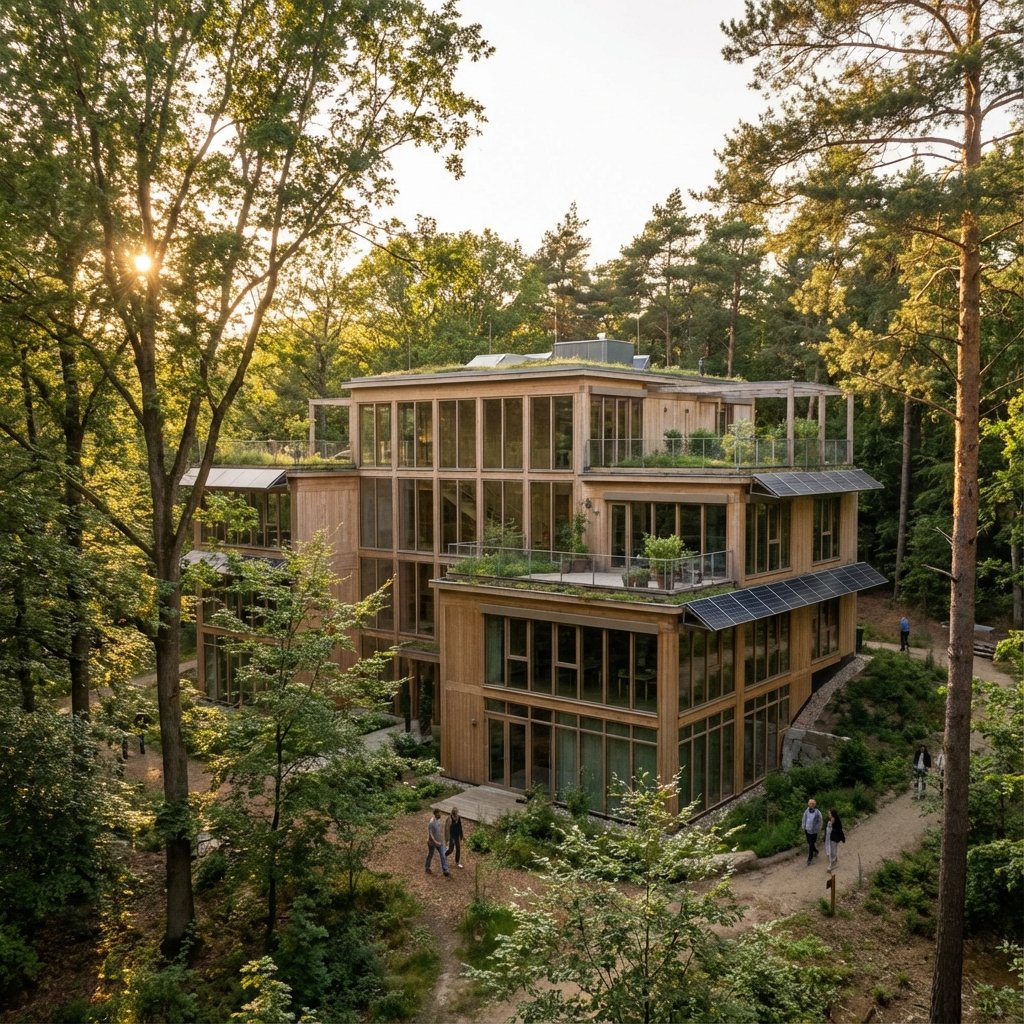
Buildings are major carbon emitters. The bioeconomy offers a solution: constructing with wood, straw, and hemp. These materials don’t just reduce emissions; they turn buildings into long-term carbon storage vaults.
Key Metrics
- 35%: Share of EU waste generation from the construction sector.
- 40%: Potential reduction in embodied carbon and energy demand by using bio-based products.
Core Content
The Challenge
Construction is resource-hungry and polluting. Traditional materials like concrete and steel have high „embodied carbon.” To reach climate goals, we need to change how we build.
The Solution
The strategy champions bio-based construction materials—timber, insulation (hemp/straw), and fibre composites.
* Standardization: Ensuring bio-based products can be fairly compared with conventional ones (e.g., fire safety standards).
* Certification: Developing a methodology to certify the carbon stored in buildings under the Carbon Removal Certification Framework.
* New European Bauhaus: Supporting demonstration projects like school renovations and social housing.
The Impact
Bio-based construction is a triple win:
1. Lower Emissions: Less energy to produce than concrete/steel.
2. Carbon Storage: Trees absorb CO2; using wood in buildings locks that carbon away for decades.
3. Regional Jobs: Supports local forestry and processing industries.
Source: EU Bioeconomy Strategy
Discover Sustainable Materials
Support eco-friendly innovation.
❮
❯
Hempy
Discover Hempy's biodegradable PLA and hemp bioplastic, the perfect sustainable materials for 3D printing and injection molding. Strong, natural, and eco-friendly options for your projects.
Shop Now
Supa Flow
Discover our versatile biodegradable bioplastic designed for 3D printing and injection molding. Made from wood and natural binders, this certified biodegradable material is perfect for eco-friendly applications.
Shop Now
Spaliai
Discover the versatility of hemp hurds (chaff) as a natural material for construction, animal bedding, and soil improvement. Explore sustainable building materials that benefit the environment.
Shop Now
Pluoštas
Discover the benefits of natural hemp fibers for textiles and various industrial applications. Explore how hemp fibers are revolutionizing industries with their sustainability and versatility.
Shop Now
Kanapbetonis
Discover Hemplime, a natural and sustainable building material made from hemp. Explore the benefits of hempcrete and how it contributes to healthy, long-lasting construction solutions.
Shop Now
SeaWeed Foam
Discover the benefits of seaweed foam, a non-toxic and biodegradable packaging filler made from natural seaweeds. Perfect for sustainable packaging solutions!
Shop Now
HempForma
Discover Hempforma, the innovative acoustic panel made from hemp and natural binders. With exceptional and programmable acoustic properties, it’s perfect for climate conscious design seeking excellence in sound quality.
Shop Now
View All Products →







Parašykite komentarą