Autorius: antanasvalciukas@gmail.com

  • Future of AI (2026-01-15)

    # The AI Horizon: What to Expect by January 15, 2026

    Artificial intelligence. It’s no longer a futuristic fantasy confined to science fiction. It’s here, it’s now, and it’s rapidly evolving. But where will it be in just a few short years? Let’s peer into the (admittedly hazy) crystal ball and explore the likely landscape of AI by January 15, 2026. We’ll delve into key advancements, potential disruptions, and the ethical considerations shaping the future of this transformative technology.

    ## The AI Revolution: A Quick Recap

    Before we jump into the future, it’s helpful to understand the current state of AI. We’ve witnessed remarkable progress in recent years, particularly in areas like:

    * **Natural Language Processing (NLP):** AI can now understand and generate human language with impressive fluency, powering chatbots, virtual assistants, and automated content creation.
    * **Computer Vision:** AI can analyze images and videos with increasing accuracy, enabling facial recognition, object detection, and autonomous driving.
    * **Machine Learning (ML):** AI can learn from data without explicit programming, allowing for personalized recommendations, fraud detection, and predictive analytics.
    * **Robotics:** AI is enabling robots to perform complex tasks in various industries, from manufacturing and logistics to healthcare and agriculture.

    These advancements are already impacting our lives, but the next few years promise even more significant changes.

    ## Key Trends Shaping the AI Landscape by 2026

    Several key trends are poised to accelerate AI’s development and adoption in the coming years:

    ### 1. The Rise of Edge AI

    Currently, much AI processing happens in the cloud, relying on remote servers to analyze data and make decisions. However, this approach can be slow, expensive, and raise privacy concerns. Edge AI brings AI processing closer to the data source, on devices like smartphones, smart appliances, and industrial sensors.

    **By January 2026:**

    * **Faster Response Times:** Real-time applications like autonomous vehicles and industrial automation will benefit from the lower latency of edge AI.
    * **Enhanced Privacy:** Sensitive data can be processed locally, reducing the need to transmit it to the cloud.
    * **Improved Reliability:** Edge AI will continue to operate even when internet connectivity is unreliable or unavailable.
    * **Wider Adoption:** Expect to see edge AI integrated into a wider range of devices and applications, from smart homes to healthcare wearables.

    ### 2. Generative AI Becomes Mainstream

    Generative AI, which can create new content such as text, images, music, and even code, is already making waves. Tools like DALL-E 2 and GPT-3 are demonstrating the incredible potential of this technology.

    **By January 2026:**

    * **Content Creation Revolution:** Generative AI will become an indispensable tool for marketers, designers, and artists, automating content creation tasks and boosting productivity.
    * **Personalized Experiences:** AI-generated content will be tailored to individual preferences, creating more engaging and relevant user experiences.
    * **New Forms of Entertainment:** Expect to see AI-generated movies, music, and games that push the boundaries of creativity.
    * **Automation of Code Development:** AI will be able to write and debug code, freeing up developers to focus on more complex and strategic tasks.
    * **Ethical Considerations:** The rise of generative AI will raise important ethical questions about authorship, copyright, and the spread of misinformation.

    ### 3. AI-Powered Cybersecurity

    As cyber threats become more sophisticated, AI is playing an increasingly important role in protecting our digital assets. AI-powered security systems can detect and respond to threats in real-time, identify vulnerabilities, and automate security tasks.

    **By January 2026:**

    * **Proactive Threat Detection:** AI will be able to predict and prevent cyberattacks before they happen.
    * **Automated Incident Response:** AI will automate the process of responding to security incidents, reducing the time and resources required to contain breaches.
    * **Improved Vulnerability Management:** AI will continuously scan systems for vulnerabilities and prioritize remediation efforts.
    * **Enhanced Fraud Detection:** AI will be able to detect and prevent fraudulent transactions with greater accuracy.

    ### 4. AI in Healthcare: Personalized and Proactive

    Healthcare is one of the most promising areas for AI application. AI can assist doctors with diagnosis, personalize treatment plans, and improve patient outcomes.

    **By January 2026:**

    * **Early Disease Detection:** AI will be able to analyze medical images and patient data to detect diseases like cancer and Alzheimer’s at earlier stages.
    * **Personalized Medicine:** AI will be used to tailor treatment plans to individual patients based on their genetic makeup, lifestyle, and medical history.
    * **Remote Patient Monitoring:** AI-powered wearables and sensors will continuously monitor patients’ health, enabling remote diagnosis and treatment.
    * **Drug Discovery:** AI will accelerate the drug discovery process by identifying potential drug candidates and predicting their effectiveness.
    * **Increased Efficiency:** AI will automate administrative tasks, freeing up healthcare professionals to focus on patient care.

    ### 5. The Metaverse and AI: A Symbiotic Relationship

    The metaverse, a persistent, shared virtual world, is expected to become a major platform for social interaction, entertainment, and commerce. AI will play a crucial role in creating and populating the metaverse.

    **By January 2026:**

    * **Realistic Avatars:** AI will be used to create realistic and personalized avatars that can interact with the metaverse.
    * **Intelligent Agents:** AI-powered agents will guide users through the metaverse, providing information, assistance, and companionship.
    * **Dynamic Environments:** AI will be used to create dynamic and interactive environments that respond to user actions.
    * **Seamless Integration:** AI will seamlessly integrate the physical and virtual worlds, blurring the lines between reality and simulation.

    ## Potential Challenges and Ethical Considerations

    While the future of AI is bright, there are also potential challenges and ethical considerations that need to be addressed:

    * **Job Displacement:** AI-powered automation could lead to job losses in certain industries. Governments and businesses need to invest in retraining and education programs to help workers adapt to the changing job market.
    * **Bias and Discrimination:** AI algorithms can perpetuate and amplify existing biases in data, leading to unfair or discriminatory outcomes. It is crucial to develop AI systems that are fair, transparent, and accountable.
    * **Privacy Concerns:** The increasing use of AI raises concerns about privacy and data security. Strong data privacy regulations and ethical guidelines are needed to protect individuals’ rights.
    * **Misinformation and Manipulation:** AI can be used to create deepfakes and spread misinformation, undermining trust in institutions and the media. Developing technologies to detect and counter AI-generated misinformation is essential.
    * **Autonomous Weapons:** The development of autonomous weapons raises serious ethical and security concerns. International regulations and ethical guidelines are needed to prevent the misuse of AI in warfare.

    ## Navigating the Future: Preparing for 2026 and Beyond

    As AI continues to evolve, it’s crucial for individuals, businesses, and governments to prepare for the future:

    * **Education and Training:** Invest in education and training programs to develop the skills needed to thrive in an AI-driven economy.
    * **Ethical Frameworks:** Develop ethical frameworks and guidelines to ensure that AI is used responsibly and ethically.
    * **Collaboration and Dialogue:** Foster collaboration and dialogue between researchers, policymakers, and the public to address the challenges and opportunities of AI.
    * **Embrace Innovation:** Embrace innovation and be open to new ideas and approaches to leverage the potential of AI for good.
    * **Continuous Learning:** Stay informed about the latest developments in AI and be prepared to adapt to the changing landscape.

    ## Conclusion: A World Transformed

    By January 15, 2026, AI will have profoundly transformed our lives, impacting everything from healthcare and transportation to entertainment and cybersecurity. While challenges remain, the potential benefits of AI are enormous. By proactively addressing the ethical and societal implications of AI and embracing innovation, we can harness its power to create a better future for all. The key is not to fear the change, but to understand it, shape it, and use it responsibly. The future powered by AI is not some distant concept; it’s rapidly approaching, and the time to prepare is now.

  • SEO 2026 (2026-01-15)

    # SEO 2026: Navigating the Future of Search Engine Optimization

    The world of SEO is a perpetual motion machine, constantly evolving with technological advancements and shifts in user behavior. What worked yesterday might be obsolete tomorrow, making it crucial for marketers and business owners to stay ahead of the curve. As we look towards 2026, predicting the future of SEO isn’t about gazing into a crystal ball, but rather analyzing current trends and extrapolating their potential impact. This article will delve into the key factors shaping SEO in 2026, providing actionable insights to prepare your strategy for the challenges and opportunities that lie ahead.

    ## The Foundation Remains: Core Principles Endure

    Before diving into the futuristic aspects, let’s acknowledge the enduring principles of SEO. While algorithms change and platforms evolve, the core foundations remain:

    * **High-Quality Content:** Content that is informative, engaging, and fulfills user intent will always be king.
    * **User Experience (UX):** A seamless, intuitive, and mobile-friendly website is paramount.
    * **Technical SEO:** A well-structured website that is easily crawlable by search engines is essential.
    * **Relevance and Authority:** Earning backlinks from reputable sources and establishing expertise within your niche continues to build trust.

    These fundamental principles will form the bedrock of any successful SEO strategy in 2026. Ignore them at your peril.

    ## Key Trends Shaping SEO in 2026

    Now, let’s explore the key trends that are poised to revolutionize SEO in the coming years:

    ### 1. The Rise of AI-Powered SEO

    Artificial intelligence (AI) is already significantly impacting SEO, and its influence will only intensify by 2026.

    * **AI-Driven Content Creation:** AI tools are becoming increasingly sophisticated in generating content. While AI-generated content shouldn’t replace human creativity entirely, it can assist with tasks like topic research, keyword analysis, and drafting initial outlines. In 2026, expect even more advanced AI tools that can create high-quality content that rivals human writers, especially for factual or data-driven topics. However, remember Google prioritizes helpful and original content; simply churning out AI-generated text will not guarantee success.
    * **Personalized Search Experiences:** AI algorithms are becoming better at understanding individual user preferences, search history, and context. This leads to highly personalized search results tailored to each user’s specific needs. In 2026, SEO strategies will need to focus on understanding and catering to different user segments through personalized content and targeted campaigns.
    * **Automated SEO Tasks:** Many time-consuming SEO tasks, such as keyword research, competitor analysis, and link building, can be automated with AI-powered tools. This allows SEO professionals to focus on more strategic initiatives and creative problem-solving. By 2026, expect even greater automation, freeing up SEO experts to concentrate on strategy, relationship building, and data interpretation.
    * **Smarter Algorithm Updates:** Google’s algorithm updates are increasingly driven by AI. These updates are designed to identify and reward websites that provide a positive user experience and high-quality content, while penalizing those that engage in manipulative or spammy tactics. Staying abreast of these updates and adapting your SEO strategy accordingly will be crucial. AI-powered analysis tools will likely play a larger role in understanding the nuances of algorithm updates and their impact on website rankings.

    ### 2. The Continued Dominance of Mobile-First Indexing

    Google officially transitioned to mobile-first indexing in 2019, meaning it primarily uses the mobile version of a website for indexing and ranking. This trend will only strengthen by 2026.

    * **Prioritizing Mobile UX:** Websites must be fully optimized for mobile devices, with a focus on speed, responsiveness, and usability. Slow-loading mobile pages and clunky navigation will be heavily penalized.
    * **Accelerated Mobile Pages (AMP):** While the future of AMP is uncertain, the underlying principle of providing incredibly fast mobile experiences remains vital. Consider implementing alternative technologies like Progressive Web Apps (PWAs) to deliver similar performance benefits.
    * **Mobile-Specific Content:** Creating content specifically tailored for mobile users, such as short-form videos and interactive elements, can significantly improve engagement and rankings.
    * **Voice Search Optimization:** Mobile devices are increasingly used for voice search, making voice search optimization essential. Focus on using natural language, answering common questions, and optimizing for local search.

    ### 3. The Power of Visual and Voice Search

    Search is no longer limited to text-based queries. Visual and voice search are becoming increasingly popular, particularly among younger demographics.

    * **Image Optimization:** Optimize images with descriptive filenames, alt text, and captions to improve their visibility in visual search results.
    * **Schema Markup for Images:** Use schema markup to provide search engines with more context about your images, such as product information, recipes, and event details.
    * **Voice Search Optimization:** Optimize content for voice search by using natural language, answering common questions, and focusing on long-tail keywords.
    * **Conversational Content:** Create content that is conversational and easy to understand, as this aligns with the way people speak during voice searches.
    * **Integration with Smart Devices:** As smart devices like speakers and smart displays become more prevalent, optimize content for these platforms to reach a wider audience.

    ### 4. The Importance of E-A-T (Expertise, Authoritativeness, Trustworthiness)

    Google’s E-A-T guidelines will continue to play a vital role in SEO. Websites that demonstrate expertise, authoritativeness, and trustworthiness will be favored in search results.

    * **Demonstrating Expertise:** Showcase your expertise by creating high-quality, informative content that answers user questions and provides valuable insights.
    * **Building Authority:** Earn backlinks from reputable websites and participate in industry discussions to establish your authority within your niche.
    * **Establishing Trustworthiness:** Ensure your website is secure, transparent, and provides accurate information. Display clear contact information, privacy policies, and terms of service.
    * **Author Bios and Credentials:** Prominently display author bios and credentials to demonstrate the expertise of your content creators.
    * **User Reviews and Testimonials:** Encourage users to leave reviews and testimonials to build trust and social proof.

    ### 5. The Evolution of Link Building

    Link building remains a crucial aspect of SEO, but the tactics are evolving.

    * **Focus on Quality over Quantity:** Earning backlinks from high-quality, authoritative websites is more valuable than acquiring a large number of low-quality links.
    * **Relationship Building:** Focus on building relationships with other website owners and influencers to earn natural backlinks.
    * **Content Marketing:** Create valuable, shareable content that attracts backlinks organically.
    * **Broken Link Building:** Identify broken links on other websites and offer to replace them with links to your own content.
    * **Guest Blogging (Strategically):** Guest blogging can still be effective, but focus on publishing high-quality content on reputable websites that are relevant to your niche.

    ### 6. The Rise of Zero-Click Searches

    Zero-click searches, where users find the information they need directly on the search engine results page (SERP) without clicking through to a website, are becoming increasingly common.

    * **Optimize for Featured Snippets:** Target featured snippets by answering common questions and providing concise, informative answers.
    * **Schema Markup:** Use schema markup to provide search engines with more information about your content, which can help it appear in rich snippets and knowledge panels.
    * **Google My Business Optimization:** Optimize your Google My Business profile to increase your visibility in local search results and attract zero-click searches.
    * **Understand User Intent:** Tailor your content to directly answer the users question, so that the results can provide a short answer on the SERP.

    ## Preparing for SEO in 2026: Actionable Steps

    To prepare your SEO strategy for 2026, consider the following actionable steps:

    * **Invest in AI-Powered Tools:** Explore AI-powered tools for keyword research, content creation, and SEO automation.
    * **Optimize for Mobile:** Ensure your website is fully optimized for mobile devices, with a focus on speed and usability.
    * **Embrace Visual and Voice Search:** Optimize your content for visual and voice search by using descriptive filenames, alt text, and natural language.
    * **Focus on E-A-T:** Demonstrate expertise, authoritativeness, and trustworthiness by creating high-quality content and building relationships with other websites.
    * **Build High-Quality Links:** Focus on earning backlinks from reputable websites and building relationships with other website owners.
    * **Optimize for Zero-Click Searches:** Target featured snippets and use schema markup to increase your visibility in search results.
    * **Stay Informed:** Keep up-to-date with the latest SEO trends and algorithm updates by reading industry blogs, attending conferences, and following thought leaders.

    ## Conclusion: Adapting to Thrive in the Future of SEO

    SEO in 2026 will be characterized by increased personalization, automation, and the integration of emerging technologies like AI, visual search, and voice search. By understanding these trends and adapting your SEO strategy accordingly, you can ensure your website remains visible and competitive in the ever-evolving digital landscape. The key is to focus on providing a positive user experience, creating high-quality content, and building a strong online presence. Embrace the changes, adapt your strategies, and you’ll be well-positioned to thrive in the future of SEO. The journey towards 2026 requires continuous learning, experimentation, and a willingness to embrace the unknown. By focusing on the core principles of SEO while adapting to the emerging trends, you can navigate the future of search and achieve your online marketing goals.

  • AI Integration – A Game Changer for Bioeconomy SMBs

    AI Integration – A Game Changer for Bioeconomy SMBs

    The European Union’s Bioeconomy Strategy emphasizes the role of Small and Medium-sized Businesses (SMBs) in driving innovation. However, for many smaller players, the complexity of bio-based value chains can be daunting. This is where Artificial Intelligence (AI) becomes a great equalizer.

    How SMBs Can Leverage AI to Align with EU Strategy

    AI is no longer just for tech giants. Affordable, scalable AI tools are empowering bioeconomy SMBs to optimize operations, reduce waste, and access new markets.

    1. Precision Agriculture and Feedstock Management

    For SMBs involved in biomass production:
    * Satellite Analytics: AI platforms can analyze satellite data to predict crop yields and optimize harvest times, ensuring consistent feedstock quality.
    * Resource Efficiency: Machine learning algorithms help minimize water and fertilizer use, aligning with the EU’s Green Deal goals.

    2. Optimizing Biorefinery Processes

    • Predictive Maintenance: AI sensors can predict when bio-processing equipment needs maintenance, preventing costly downtime.
    • Yield Optimization: By analyzing historical data, AI can suggest adjustments to temperature or pressure in fermentation processes to maximize output.

    3. Market Intelligence and Regulatory Compliance

    • Trend Analysis: NLP (Natural Language Processing) tools can scan global market reports to identify emerging trends in bio-based products.
    • Smart Compliance: AI assistants can help navigate the complex web of EU regulations, ensuring that products meet sustainability standards and certification requirements.

    Case Study: Small-Scale Bioplastics

    Imagine a small startup producing algae-based packaging. By using AI to model different algae strains and processing conditions, they can drastically shorten their R&D cycle, bringing competitive products to market faster than traditional methods would allow.

    The Future is Smart and Green

    Integrating AI doesn’t just improve the bottom line; it accelerates the transition to a sustainable, circular bioeconomy. For SMBs, the message is clear: Digitization is the key to scaling your green impact.

    Tomorrow: We will wrap up this segment of our journey by looking at the broader picture of Bioeconomy 5.0.

  • Digital Tokens in the Bioeconomy – Incentivizing Sustainability

    Digital Tokens in the Bioeconomy – Incentivizing Sustainability

    As we integrate advanced technologies into the bioeconomy, the concept of digital tokens and blockchain is emerging as a powerful tool for transparency and incentivization. Beyond the hype of cryptocurrencies, tokenization offers tangible mechanisms to track sustainable supply chains, verify carbon credits, and reward eco-friendly practices in real-time.

    The Role of Tokenization

    Tokenization allows physical assets—like a ton of sustainably harvested biomass or a verified reduction in carbon emissions—to be represented as digital tokens on a blockchain. This creates an immutable record of ownership and provenance.

    Key Applications

    1. Supply Chain Transparency:

      • Traceability: Each step of a product’s journey, from a bio-feedstock farm to the final bioplastic product, can be recorded. Consumers can scan a QR code to see the entire lifecycle.
      • Anti-Counterfeiting: Ensures that materials claiming to be „bio-based” or „organic” are genuine, preventing greenwashing.
    2. Incentive Mechanisms:

      • Eco-Rewards: Farmers and producers can earn tokens for adopting regenerative agriculture practices. These tokens can be traded or redeemed for discounts on equipment or seeds.
      • Circular Economy Credits: Companies that successfully recycle bio-materials can be issued tokens, creating a financial incentive to close the loop.
    3. Decentralized Carbon Markets:

      • Verified Credits: Bio-projects that sequester carbon (like hemp cultivation or algae farming) can issue carbon credit tokens. These are easier to trade and audit than traditional paper-based credits.
      • Micro-Investments: Small investors can buy tokens representing a fraction of a sustainable forestry project, democratizing access to green investments.

    Challenges and Future Outlook

    While promising, the integration of digital tokens faces hurdles such as regulatory uncertainty and the energy consumption of certain blockchain networks (though newer, eco-friendly consensus mechanisms are MITIGATING this).

    As we move forward, the convergence of Web3 technologies and the bioeconomy will likely spawn new business models where sustainability is not just a corporate responsibility but a built-in economic feature.

    Tomorrow: We explore how AI is helping Small and Medium Businesses (SMBs) align with the EU Bioeconomy Strategy.

  • The 2026 Biotech Outlook: How EU Policy is Shaping the Future of Materials

    The 2026 Biotech Outlook: How EU Policy is Shaping the Future of Materials

    As we settle into 2026, the impact of the EU’s aggressive bioeconomy strategy is becoming tangible. What was once policy „on paper” is now driving capital allocation, R&D priorities, and supply chain restructuring across the continent. For the polymer and materials industry, understanding this policy landscape is no longer optional—it is the baseline for survival.

    The „Biotech Act” Effect

    Building on the foundations laid in previous years, the recent implementations of the EU Biotech Act have streamlined the path from lab to market. Key changes include:
    * Regulatory Sandboxes: Innovative bio-based materials can now be tested in real-world environments with reduced bureaucratic burden, accelerating commercialization by an estimated 18 months.
    * Fast-Track Approvals: Bio-processes that replace hazardous chemical synthesis are receiving priority status for safety assessments.

    Strategic Autonomy and Supply Security

    The geopolitical lessons of the 2020s have not been forgotten. The EU is doubling down on „Strategic Autonomy,” and the bioeconomy is a pillar of this strategy. By shifting reliance from imported fossil fuels to domestically grown biomass (sugar beets, forestry residues, hemp), European manufacturers are insulating themselves from global volatility.

    Investment Trends

    Capital flows are following the policy signal.
    * Public-Private Partnerships: We are seeing record levels of co-investment in pilot biorefineries.
    * VC Pivot: Venture capital is increasingly prioritizing „Deep Tech” bio-materials over software, driven by the tangible asset requirements of the Green Deal.

    What This Means for Manufacturers

    For producers of plastics and polymers, the message is clear: Hybridize or Obsolete. The pure fossil-based model is facing an uphill battle against carbon taxes and extended producer responsibility (EPR) fees. Integrating bio-based content is the most viable bridge to the future.

    Conclusion

    2026 is the year where the „Bio-Revolution” moves from potential to kinetic energy. The regulatory framework is built, the funding is flowing, and the market is ready.


    Stay ahead of the regulatory curve: [Link to Advisory Services]

    EUBioeconomy #BiotechOutlook #PolicyTrends #GreenDeal #SustainableMaterials #EuropeanIndustry #2026Trends

  • Revolutionizing Construction: The Rise of Bio-Polymers in Green Building

    Revolutionizing Construction: The Rise of Bio-Polymers in Green Building

    As the construction industry faces increasing pressure to reduce its carbon footprint, a quiet revolution is taking place in the materials sector. Bio-polymers and bio-composites are moving from niche experiments to viable, scalable alternatives for traditional building materials. For architects, developers, and policymakers, understanding this shift is crucial for meeting the stringent sustainability targets of 2030 and beyond.

    Beyond Timber: The New Wave of Bio-Materials

    While timber has long been the poster child for sustainable construction, the next generation of bio-based materials offers solutions for insulation, cladding, and even structural components.

    • Bio-Foams for Insulation: Traditional expanded polystyrene (EPS) is being challenged by bio-based foams derived from PLA (polylactic acid) or mycelium. These materials offer comparable thermal performance but are compostable and often carbon-negative.
    • Natural Fiber Composites (NFCs): Hemp, flax, and jute fibers embedded in bio-resin matrices are creating lightweight, durable panels for interior and exterior use. These composites reduce dependency on fiberglass and petrochemical resins.
    • Bio-based Binders: The „glue” holding our buildings together is changing. Lignin-based adhesives are replacing formaldehyde-based synthetic resins, significantly improving indoor air quality (IAQ).

    driving Forces: Regulation and Certification

    The push for bio-materials is not just ideological; it is regulatory.
    * The New European Bauhaus initiative is explicitly promoting „beautiful, sustainable, together” living spaces, favoring materials that reconnect humans with nature.
    * EPD (Environmental Product Declarations): are becoming standard. Bio-based materials often show superior Lifecycle Assessment (LCA) results, helping projects achieve LEED and BREEAM certifications more easily.

    Economic Implications

    Historically, bio-materials commanded a significant premium. However, the gap is narrowing.
    1. Carbon Credits: Utilizing carbon-storing materials can generate value in carbon trading markets.
    2. Waste Diversion: Using agricultural by-products (straw, husks) as raw materials creates local circular economies, stabilizing supply chains against global shocks.

    The Future is Grown, Not Mined

    The construction site of tomorrow might look more like a garden than a quarry. From algae-based facades that capture CO2 to mycelium bricks that „grow” into place, the convergence of biology and construction is just beginning.


    Explore our range of sustainable construction polymers: [Link to Products]

    GreenBuilding #SustainableConstruction #BioPolymers #NewEuropeanBauhaus #CircularEconomy #Architecture2026

  • The Strategic Advantage of Bio-based Polymers in the New EU Economy

    The Strategic Advantage of Bio-based Polymers in the New EU Economy

    The European industrial landscape is undergoing a seismic shift, driven by the Green Deal and a suite of ambitious regulations. For manufacturers and brands, the transition to bio-based polymers is no longer just an environmental gesture—it is a critical strategic advantage. As we approach usage targets set for 2030, early adopters are positioning themselves to capture market share, secure supply chains, and leverage significant economic incentives.

    The Regulatory Tsunami

    The regulatory environment in the EU is moving from voluntary guidelines to mandatory compliance. The Packaging and Packaging Waste Regulation (PPWR) and the Ecodesign for Sustainable Products Regulation (ESPR) are setting strict standards for recyclability and bio-based content. Companies that delay their transition risk compliance costs, penalties, and improved barriers to market entry. Conversely, those integrating bio-based solutions now are future-proofing their operations against this regulatory tsunami.

    Economic Incentives & ROI

    Beyond compliance, the economic case for bio-based polymers is strengthening.
    * Carbon Taxes: As carbon pricing mechanisms expand, the lower carbon footprint of bio-based materials (often carbon-negative or neutral) translates directly to reduced tax liabilities.
    * Grants and Funding: The EU Innovation Fund and Horizon Europe are heavily investing in bio-economy projects, offering non-dilutive funding to companies innovating in this space.
    * Price Stability: decoupling from fossil fuel volatility allows for more predictable long-term material costs.

    Consumer Shift & Brand Loyalty

    The market demand for sustainable products is outpacing supply. Consumers, particularly Gen Z and Millennials, are scrutinized supply chains and rewarding transparency. Brands that can authentically claim (and prove via Digital Product Passports) that their products utilize renewable, bio-based materials are seeing increased brand loyalty and the ability to command premium pricing.

    The Case for Early Adoption

    Waiting for 2030 is a risky strategy. Developing new supply chains, validating materials for specific applications, and re-tooling manufacturing processes take time. Early adopters are:
    1. Securing Supply: Locking in contracts with premier bio-polymer suppliers before demand spikes.
    2. Influencing Standards: Participating in industry groups to help shape the very standards they will be judged against.
    3. Leading Innovation: gaining a „first-mover” reputation that is hard to displace.

    Conclusion

    The transition to bio-based polymers is a business imperative. It drives innovation, ensures resilience, and unlocks new growth opportunities in a resource-constrained world. The question is not if your company will transition, but when—and whether you will lead the market or scramble to catch up.


    Learn more about navigating the bioeconomy: [Link to Ekopolimeras Services]

    #Bioeconomy #SustainableBusiness #BioBasedPolymers #EURegulations #GreenGrowth #Innovation #StrategicAdvantage

  • Financial Thesis: The Global Hemp Ledger (GHL)

    Financial Thesis: The Global Hemp Ledger (GHL)

    The Tokenization of Biomass and the Transition to a Carbon-Collateralized Economy

    Original Source: Planet Hemp Cooperation – Financial Thesis


    Abstract: The Liquidity of Sequestration

    The traditional financial system faces a structural „valuation gap” regarding regenerative assets. While industrial hemp (Cannabis sativa L.) acts as a premier carbon sink and industrial raw material, its economic value remains locked in fragmented, opaque supply chains. The Global Hemp Ledger (GHL) serves as a decentralized, cryptographic financial protocol designed to bridge this gap. By tokenizing verified carbon sequestration and industrial biomass through a Distributed Ledger Technology (DLT), the GHL creates a high-liquidity, anti-fragile asset class: The Hemp Credit (HC).

    Global Hemp Ledger

    The Problem: Market Inefficiency and Information Asymmetry

    Current ESG (Environmental, Social, and Governance) and carbon markets suffer from three critical failures:
    1. Double-Counting: Lack of immutable tracking allows for the same carbon offset to be sold multiple times.
    2. High Transaction Friction: Intermediaries absorb up to 30% of the value in rural-to-industrial financial transfers.
    3. Static Valuation: Biomass is valued only upon sale, ignoring the „living value” of the sequestration process during the growth cycle.

    The Solution: The GHL Cryptographic Architecture

    The Global Hemp Ledger utilizes a Consortium Blockchain to create a transparent, real-time valuation of the entire hemp lifecycle.

    Proof of Sequestration (PoS)

    Utilizing IoT-linked Eco-Guardian sensors and satellite multi-spectral analysis, the GHL verifies the $CO_2$ drawdown per hectare. This data is etched onto the ledger as a „Minting Event” for a Dynamic NFT (dNFT) representing that specific harvest.

    The Triple-Bottom-Line Smart Contract

    Every industrial contract is executed via smart contracts that automatically allocate:
    * 60% to the Producer (Direct Liquidity).
    * 20% to the Resilience Fund (Ecosystem Buffer).
    * 20% to the Equity Index 2.0 (Community Dividend).

    Financial Engineering: The Resilience Fund as a Macro-Hedge

    The GHL introduces the concept of „Biomass-Backing.” Unlike fiat currencies backed by debt, the Planet Hemp internal economy is backed by a physical inventory of high-value industrial materials (hempcrete, bio-resins, fiber).

    • Asset-Backed Stability: In periods of fiat inflation, the value of the GHL tokens remains pegged to the industrial utility of the hemp biomass.
    • Arbitrage Reduction: By integrating the Supply Chain Finance (SCF) model, the GHL allows small-scale Cultivators to use their „Growth-in-Progress” as collateral for immediate low-interest micro-loans from the Resilience Fund.

    The Equity Index 2.0: Measuring Real-Wealth

    Traditional GDP fails to account for ecological depletion. The GHL replaces this with the Equity Index 2.0, a multidimensional metric that calculates:

    $$Equity = \frac{(Biomass Output \times Market Utility) + Carbon Sequestration}{Resource Depletion Rate}$$

    This ensures that „Sovereign” members are rewarded not just for volume, but for the efficiency and calibration of their contribution to the planet’s health.

    Conclusion: The Green Renaissance Standard

    The Global Hemp Ledger represents a shift from Extract-and-Expend to Sequester-and-Sustain. By providing a professional, audited, and transparent financial framework, it invites institutional-scale investment into the Green Renaissance while protecting the individual sovereignty of the Hemp Nation.

    The GHL is not just a ledger of transactions; it is the Financial Blueprint for a planet that treats its biosphere as its most valuable capital.

  • The EU Biotech Act: A New Era for Sustainable Polymers

    The EU Biotech Act: A New Era for Sustainable Polymers

    The European Union has long been a global leader in environmental policy, but the upcoming EU Biotech Act promises to be a game-changer specifically for the bioeconomy. As we look toward a future less dependent on fossil fuels, this piece of legislation is poised to accelerate the transition to sustainable polymers, offering a robust framework for innovation, investment, and industrial growth. This isn’t just about regulation; it’s about seizing a massive economic opportunity that aligns with our planetary boundaries.

    A Strategic Push for Bio-Based Solutions

    The core philosophy behind the EU Biotech Act is simple: Europe needs to harness the power of biotechnology to solve its most pressing challenges. For the polymer industry, this means a decisive shift away from petrochemical feedstocks towards bio-based alternatives.

    Historically, the adoption of bioplastics has been slowed by high production costs and a lack of clear market incentives. The Biotech Act aims to level the playing field. By recognizing biotechnology as a critical strategic sector—on par with artificial intelligence or semiconductors—the EU is signaling to the market that bio-based materials are the future.

    Key Pillars of the Act

    1. Regulatory Simplification: One of the biggest hurdles for new material innovation has been the complex and slow approval process. The Act proposes „regulatory sandboxes” where companies can test new bio-based polymers in a real-world environment with reduced administrative burdens. This allows for faster iteration and quicker time-to-market for breakthrough materials.
    2. Investment and Funding: The Act is expected to unlock significant public and private capital. We are looking at dedicated funding streams for building biorefineries and scaling up production technologies. This addresses the „valley of death” that many startups face when trying to move from lab-scale prototypes to industrial manufacturing.
    3. Market Creation: To drive demand, the Act encourages public procurement of bio-based products. When governments start preferring sustainable polymers for infrastructure, packaging, and construction, it creates a massive, stable market that gives producers the confidence to invest in capacity.

    Impact on Research and Innovation

    For scientists and R&D departments, the Biotech Act is a green light to think big. It emphasizes the importance of synthetic biology and metabolic engineering—technologies that allow us to „program” microbes to produce complex polymers with properties that fossil-based plastics can’t match.

    We are already seeing incredible innovations:
    * Performance Polymers: Bio-based plastics that are stronger, lighter, and more heat-resistant than their traditional counterparts.
    * Smart Materials: Polymers that can self-heal or change properties in response to environmental stimuli.
    * Biodegradability by Design: Materials programmed to break down harmlessly at the end of their life, addressing the microplastic crisis at the source.

    The Act fosters a collaborative ecosystem where universities, startups, and established chemical giants can work together. This cross-pollination of ideas is essential for solving the complex chemical engineering challenges involved in scaling bio-production.

    The Future Landscape

    What does this mean for the European polymer industry? We are likely to see a „renationalization” of supply chains. Instead of importing oil from halfway across the globe, Europe will increasingly rely on its own biomass—agricultural residues, forestry waste, and even municipal waste streams—to produce its materials.

    This shift not only reduces carbon footprints but also enhances strategic autonomy. In a volatile geopolitical world, having a self-reliant supply of essential materials is a matter of national security.

    Conclusion

    The EU Biotech Act represents a bold step forward. It moves beyond the „doom and gloom” of climate change rhetoric to offer a practical, technology-driven roadmap for a sustainable future. For the polymer industry, the message is clear: the era of fossil dominance is ending. The future belongs to those who can innovate with nature.

    By embracing this legislation, Europe is not just cleaning up its own backyard; it is positioning itself as the global hub for the next industrial revolution—one built on biology.

    Day 38 Image

  • Polymers in the Deep Freeze: Science of Survival in Extreme Cold

    Polymers in the Deep Freeze: Science of Survival in Extreme Cold

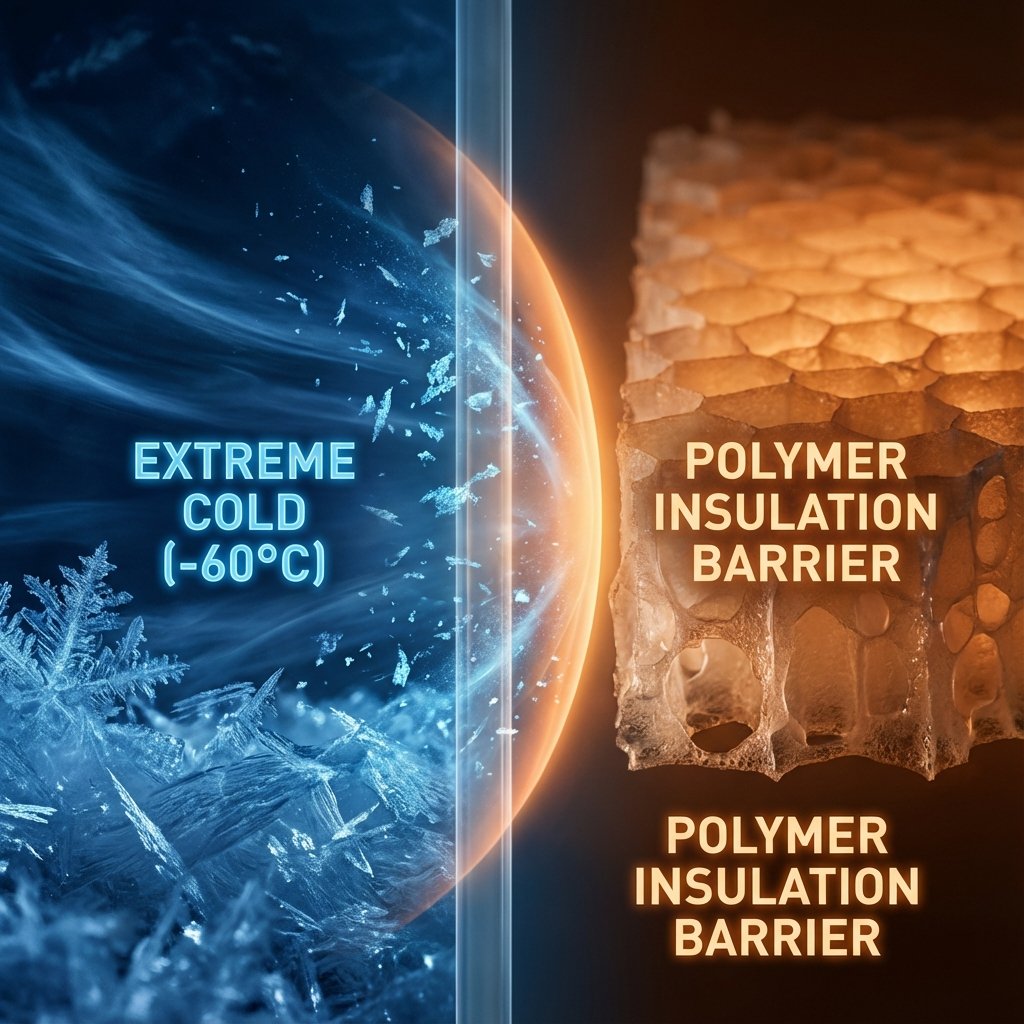
    It’s really cold outside. As temperatures drop and winter tightens its grip, we often retreat indoors or bundle up in layers. But have you ever stopped to consider what actually keeps you warm? More often than not, it’s a polymer.

    From the insulation in your walls to the fleece jacket on your back, plastics play a critical role in our ability to survive and thrive in freezing conditions.

    Polymers in Cold Weather

    The Science of Cold: Glass Transition

    Not all plastics like the cold. If you’ve ever left a cheap plastic garden chair out in freezing weather and seen it crack, you’ve witnessed the Glass Transition Temperature (Tg).

    Above its Tg, a polymer is flexible and rubbery. Below it, the molecular chains lose their ability to move freely, and the material becomes hard, glassy, and brittle. Designing polymers for cold environments—whether it’s for a ski boot or a pipeline in Alaska—requires carefully engineering the material to ensure its Tg is well below the operating temperature.

    Beating the Chill: Insulation

    The most effective way to combat cold is to trap heat. Polymers are the champions of thermal insulation.

    • Expanded Polystyrene (EPS): Commonly known as Styrofoam, this rigid foam is 98% air trapped within a polymer matrix. Since air is a poor conductor of heat, EPS is an excellent insulator used in building construction to keep homes warm and energy bills low.
    • Polyurethane (PU) Foam: This versatile foam expands to fill gaps and cracks, creating an airtight seal that prevents cold drafts from entering our living spaces.

    High-Tech Winter Wear

    Natural fibers like wool are great, but synthetic polymers have revolutionized winter clothing.

    • Polyester Fleece: Engineered to mimic the insulating properties of wool but at a fraction of the weight. The structure of the fibers traps pockets of warm air close to the body.
    • Waterproof Shells: Fabrics like Gore-Tex use a microporous membrane of PTFE (Polytetrafluoroethylene). The pores are small enough to stop liquid water (rain and snow) from getting in, but large enough to let water vapor (sweat) escape, keeping you dry and warm.

    Extreme Frontiers

    In the most unforgiving environments on Earth (and beyond), polymers are essential. Researchers are developing new „smart” polymers that can change their thermal properties on demand, or self-healing materials that recover from cold-induced cracking.

    So, as the temperature plunges this week, remember: that layer of warmth protecting you is likely a marvel of polymer science.