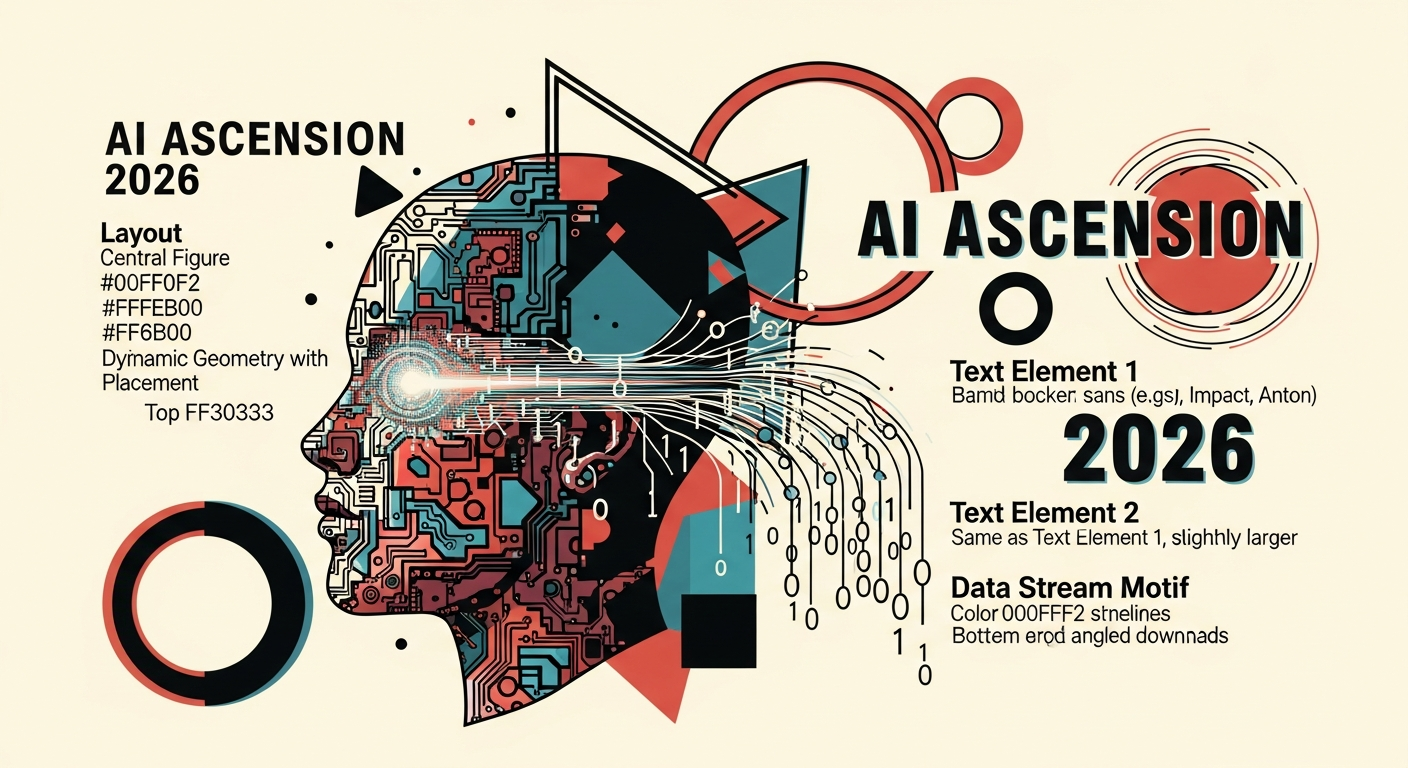
# The AI Horizon: What to Expect by January 15, 2026
The hum of technological progress has been a constant companion of the 21st century, but the past few years have felt like a true crescendo. Artificial intelligence, once relegated to the realms of science fiction, has rapidly permeated our daily lives, transforming industries and reshaping how we interact with the world. As we stand on the cusp of 2024, peering ahead to January 15, 2026, it’s crucial to understand the trajectory of AI and its potential impact. This isn’t just about predicting the future; it’s about preparing for it.
## The Current State of AI: A Quick Recap
Before diving into the future, let’s briefly acknowledge the landscape we’re starting from. 2023 and 2024 have been characterized by:
* **The Rise of Generative AI:** Large language models (LLMs) like GPT-4 and image generators such as DALL-E 3 have captured the public imagination, demonstrating impressive capabilities in content creation, code generation, and creative expression.
* **AI-Powered Automation:** Industries across the board are leveraging AI to automate tasks, improve efficiency, and reduce costs. From robotic process automation (RPA) in finance to AI-driven logistics in supply chain management, the impact is undeniable.
* **Increased Accessibility:** Cloud-based AI platforms and low-code/no-code solutions have made AI development and deployment more accessible to individuals and organizations without extensive technical expertise.
* **Ethical Concerns and Regulatory Scrutiny:** The rapid advancement of AI has also raised critical ethical considerations, including bias, privacy, job displacement, and the potential for misuse. Governments worldwide are grappling with the challenge of regulating AI to ensure responsible development and deployment.
## Key Trends Shaping the Future of AI by 2026
Looking ahead to January 15, 2026, several key trends are expected to shape the evolution of AI:
### 1. AI Hyperautomation: A New Level of Integration
Hyperautomation, the concept of automating as many business and IT processes as possible, will move beyond the buzzword phase and become a strategic imperative for organizations. By 2026, expect to see:
* **AI-Driven Process Discovery:** AI will be used to analyze business processes, identify automation opportunities, and generate code for robotic process automation (RPA) bots.
* **Intelligent Document Processing (IDP):** IDP solutions will become more sophisticated, capable of extracting insights from unstructured data sources (e.g., contracts, invoices, emails) with greater accuracy and efficiency.
* **Human-in-the-Loop Automation:** AI will augment human workers by automating routine tasks, freeing them up to focus on more complex and strategic activities. This will involve seamless collaboration between humans and AI systems.
### 2. Enhanced Generative AI Capabilities
Generative AI will continue to evolve, with significant improvements in:
* **Multimodal AI:** Models will be able to process and generate content across multiple modalities, including text, images, audio, and video. Imagine AI systems that can create entire marketing campaigns, including copywriting, visuals, and video content, based on a single prompt.
* **Personalization and Customization:** Generative AI will be used to create highly personalized experiences for individual users. This could include customized learning materials, personalized product recommendations, and AI-powered virtual assistants that adapt to individual preferences and needs.
* **Domain-Specific Expertise:** We’ll see the rise of generative AI models trained on specific industry data, enabling them to generate highly accurate and relevant content for specialized applications. For example, AI could design new drug candidates based on biological data or create realistic 3D models for architectural design.
* **Improved Reliability and Safety:** As generative AI becomes more powerful, efforts will be focused on mitigating risks such as bias, misinformation, and the generation of harmful content. This will involve developing techniques for detecting and mitigating bias in training data and implementing safeguards to prevent misuse.
### 3. AI at the Edge: Decentralized Intelligence
AI is moving beyond the cloud and closer to the source of data, enabling real-time processing and decision-making at the edge. By 2026, expect to see:
* **AI-Enabled IoT Devices:** Smart devices will become even smarter, with embedded AI chips that can analyze data locally and make decisions without relying on cloud connectivity. This will be crucial for applications such as autonomous vehicles, smart factories, and remote monitoring.
* **Edge Computing Infrastructure:** Robust edge computing infrastructure will be deployed to support the growing demand for AI at the edge. This will involve deploying servers and networking equipment closer to users and data sources, reducing latency and improving performance.
* **Federated Learning:** Federated learning, a technique that allows AI models to be trained on decentralized data without sharing the raw data, will become more widely adopted. This will enable organizations to collaborate on AI projects while protecting the privacy of their data.
### 4. Responsible AI and Ethical Governance
As AI becomes more pervasive, responsible AI practices and ethical governance will become increasingly important. By 2026, expect to see:
* **AI Ethics Frameworks:** Organizations will adopt comprehensive AI ethics frameworks that guide the development and deployment of AI systems. These frameworks will address key ethical considerations such as bias, fairness, transparency, accountability, and privacy.
* **AI Auditing and Certification:** Independent auditors will assess AI systems to ensure they comply with ethical standards and regulatory requirements. Certification programs will be established to recognize organizations that adhere to responsible AI practices.
* **Explainable AI (XAI):** XAI techniques will become more sophisticated, enabling users to understand how AI systems make decisions. This will be crucial for building trust in AI and ensuring accountability.
* **Regulatory Landscape:** Governments worldwide will continue to develop regulations governing the development and deployment of AI. These regulations will address issues such as data privacy, algorithmic bias, and the use of AI in sensitive applications. The EU AI Act, likely to be in full force by 2026, will be a major influence on global AI policy.
### 5. The Democratization of AI Development
Making AI accessible to a wider range of users will remain a priority. This will be achieved through:
* **Low-Code/No-Code AI Platforms:** These platforms will become even more powerful and user-friendly, enabling individuals and organizations without extensive technical expertise to build and deploy AI applications.
* **Automated Machine Learning (AutoML):** AutoML tools will automate the process of selecting, training, and deploying machine learning models, making it easier for non-experts to leverage the power of AI.
* **AI-Powered Development Tools:** AI will be integrated into software development tools, enabling developers to write code more efficiently, debug errors more quickly, and generate documentation automatically.
## The Impact Across Industries
The trends outlined above will have a profound impact across various industries:
* **Healthcare:** AI will be used to personalize treatment plans, accelerate drug discovery, improve diagnostics, and automate administrative tasks. Remote patient monitoring and telehealth services will become more sophisticated with AI-powered analytics.
* **Finance:** AI will be used to detect fraud, assess risk, personalize financial advice, and automate trading. Algorithmic trading will become more sophisticated, and AI-powered chatbots will provide customer support.
* **Manufacturing:** AI will be used to optimize production processes, predict equipment failures, and improve quality control. Smart factories will become more prevalent, with robots and AI systems working collaboratively to automate tasks.
* **Retail:** AI will be used to personalize customer experiences, optimize pricing, and improve supply chain management. AI-powered chatbots will provide customer support, and image recognition technology will be used to identify products on store shelves.
* **Transportation:** Autonomous vehicles will become more common, and AI will be used to optimize traffic flow and improve safety. Drones will be used for delivery and inspection, and AI-powered navigation systems will provide real-time traffic updates.
## Challenges and Opportunities
The future of AI is bright, but there are also challenges that need to be addressed:
* **Data Privacy and Security:** Protecting sensitive data will be crucial as AI becomes more pervasive. Organizations will need to implement robust data privacy and security measures to prevent data breaches and ensure compliance with regulations.
* **Skills Gap:** There is a growing demand for AI professionals, but there is also a shortage of skilled workers. Governments and educational institutions will need to invest in training and education programs to address this skills gap.
* **Job Displacement:** Automation powered by AI could lead to job displacement in some industries. Governments and organizations will need to develop strategies to mitigate the impact of job displacement, such as providing retraining programs and supporting entrepreneurship.
* **Bias and Fairness:** AI systems can perpetuate and amplify existing biases in society. It is crucial to develop techniques for detecting and mitigating bias in AI systems and ensuring that AI is used fairly and equitably.
Despite these challenges, the opportunities presented by AI are vast. By embracing responsible AI practices, investing in education and training, and addressing ethical concerns, we can unlock the full potential of AI and create a better future for all.
## Conclusion: Embracing the AI Revolution
The AI landscape by January 15, 2026, promises to be significantly more advanced and integrated than it is today. Hyperautomation, enhanced generative AI, edge computing, responsible AI practices, and the democratization of AI development will all contribute to a transformative shift across industries and our daily lives. While challenges remain, proactively addressing them will pave the way for a future where AI empowers us to solve complex problems, innovate faster, and create a more equitable and prosperous world. The time to prepare for this future is now. By understanding the trends, embracing the opportunities, and mitigating the risks, we can ensure that AI is a force for good in the years to come.
Parašykite komentarą