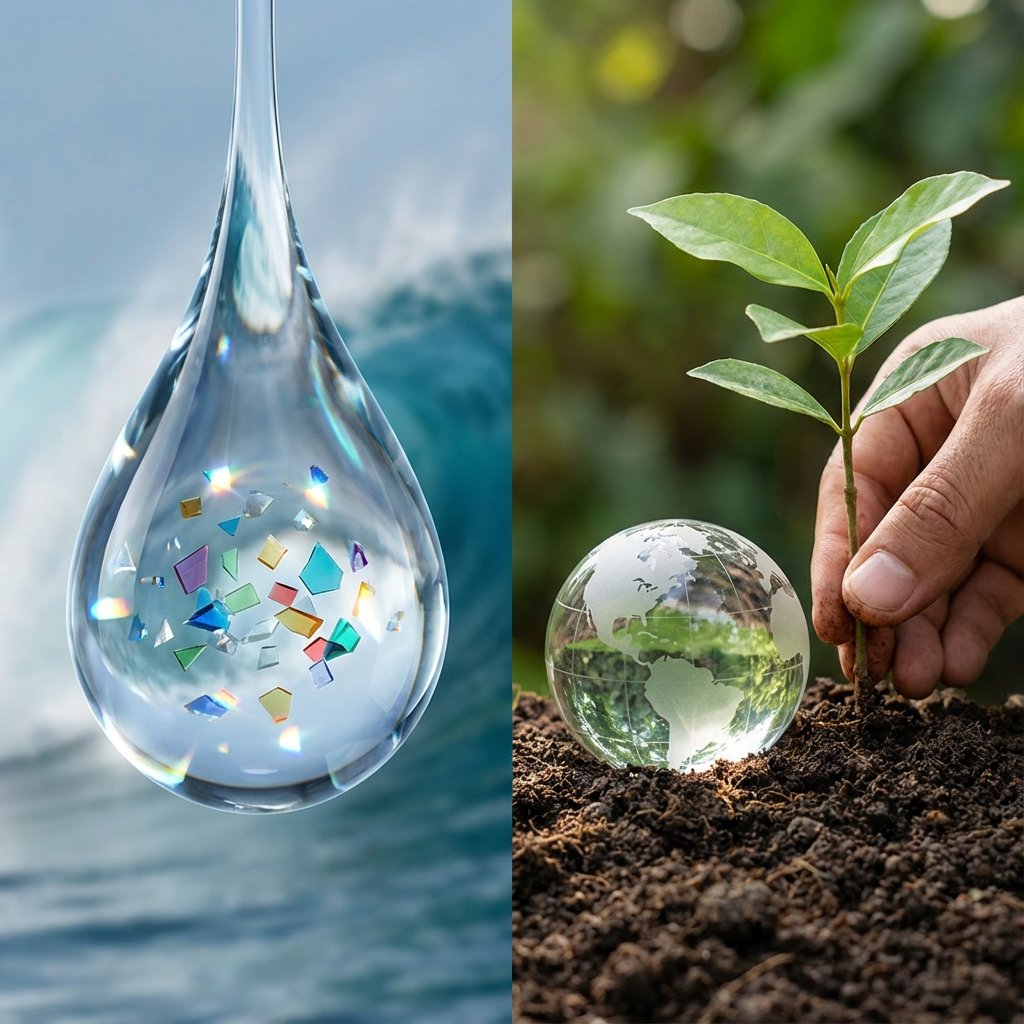
As the sun rises on January 1st, 2026, millions of resolutions are being made worldwide. We vow to exercise more, eat healthier, or learn a new skill. But this year, we invite you to add one more commitment to your list—one that extends beyond personal improvement to planetary healing.
Join us in a pledge to investigate, understand, and combat microplastics.
These tiny particles, less than 5mm in size, have infiltrated every corner of our globe, from the deepest ocean trenches to the summits of the highest mountains, and even into our own bodies. Information is power, and the first step to solving this crisis is understanding it.
The Pledge: „I Will Look Closer”
This New Year’s resolution isn’t about immediate perfection; it’s about persistent awareness. By taking the pledge, you commit to:
- Questioning the lifecycle of the products you buy.
- Reducing reliance on single-use items that degrade into microplastics.
- Supporting science and policies that aim to filter and remove these pollutants.
Investigating Causes: Where Do They Come From?
Microplastics are generally categorized into two types:
- Primary Microplastics: These are intentionally manufactured small particles, such as those found in some facial scrubs (microbeads) or the raw resin pellets (nurdles) used in plastic manufacturing.
- Secondary Microplastics: These form when larger plastic items—bottles, fishing nets, and bags—break down due to exposure to sun, wind, and waves.
However, some sources might surprise you. Synthetic textiles shed thousands of microfibers with every wash, and car tires release dust as they wear down on roads, which then washes into waterways.
Understanding Effects: The Invisible Impact
Why does size matter? Because their small scale allows microplastics to be ingested by marine life, from zooplankton to whales. They can block digestive tracts, reduce the urge to eat, and leach toxic chemicals into tissues. These toxins then travel up the food chain, eventually reaching our dinner plates.
Recent studies have even detected microplastics in human blood and lungs. While the long-term health implications are still being studied, the consensus is clear: plastic does not belong in our biology.
Seeking Solutions: A Roadmap for 2026
The situation is serious, but not hopeless. Innovation and collective action are turning the tide.
- Advanced Filtration: New washing machine filters are being developed to trap microfibers before they enter the sewage system.
- Bio-benign Materials: Research into biodegradable alternatives that break down harmlessly in natural environments is accelerating.
- Global Policy: International treaties are beginning to address the full lifecycle of plastics, holding producers accountable for the end-of-life of their products.
Your First Step
Today, on day one of 2026, take a moment to look at the materials around you. Choose natural fibers when you can. Carry a reusable bottle. Support brands that are transparent about their supply chain.
Let this be the year we not only see the problem but become part of the solution. Happy New Year! Here is to a cleaner, clearer future.




Parašykite komentarą