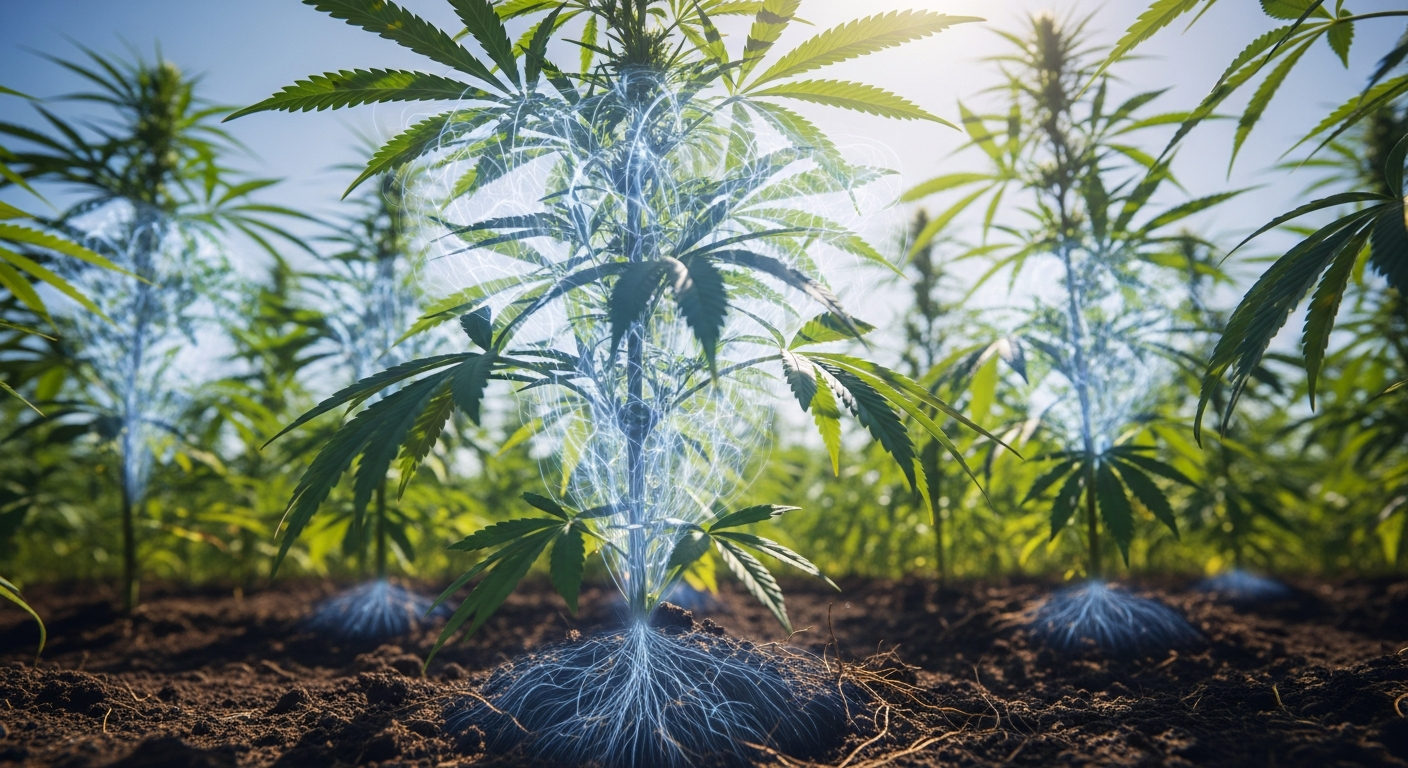
Harnessing Hemp: The CO2 Absorption Potential of Cultivation and Materials
The global effort to mitigate climate change requires innovative and scalable solutions for carbon dioxide removal. While technological approaches are gaining traction, nature-based solutions offer a powerful, readily available pathway to draw down atmospheric CO2. Among these, industrial hemp (Cannabis sativa L.) stands out as a uniquely efficient and versatile crop. Its rapid growth cycle allows it to capture significant amounts of carbon, and its harvested biomass can be transformed into long-lasting, carbon-negative materials, creating a dual-benefit system for climate action.
Summary: Hemp’s Role in Carbon Sequestration
Industrial hemp is a powerful tool for biosequestration, the process of capturing and storing atmospheric carbon in biomass. During its fast 100-120 day growth cycle, one hectare of hemp can absorb between 8 to 22 tonnes of CO2, significantly more than many other crops and even forests on an annual basis. The true potential is realized when this captured carbon is locked into durable products. Materials like hempcrete, a bio-composite building material, not only store the carbon from the plant but continue to absorb CO2 from the atmosphere through a process called carbonation, rendering them carbon-negative over their lifecycle. This makes hemp a key player in developing a circular bio-economy and decarbonizing hard-to-abate sectors like construction.
What is the Potential of Hemp for CO2 Absorption?
Understanding hemp’s carbon sequestration potential requires looking at two distinct phases: the growth phase (biosequestration) and the material phase (carbon storage). The synergy between these two phases is what makes hemp a compelling climate solution.
The Science of Photosynthesis and Biosequestration
Like all plants, hemp absorbs CO2 from the atmosphere through photosynthesis. It uses sunlight, water, and CO2 to create glucose (energy) and cellulose, which forms its physical structure—the stalks, leaves, and roots. The process of capturing and storing this atmospheric carbon in plant biomass is known as biosequestration.
Hemp’s effectiveness is rooted in its rapid growth and high biomass yield. Industrial hemp can grow up to 4 meters tall in just 100 to 120 days. This intense growth spurt requires a massive intake of CO2. According to a 2021 study from the University of Cambridge, „industrial hemp is one of the fastest CO2-to-biomass conversion tools available,” capable of sequestering carbon at a rate significantly higher than typical agroforestry systems (Cambridge University, Centre for Natural Material Innovation). This rapid absorption makes it a highly efficient carbon sink during its cultivation period.
Quantifying Hemp’s Carbon Sequestration Rate
Precise figures on hemp’s CO2 absorption vary based on climate, soil type, and farming practices, but the data is consistently impressive. The European Industrial Hemp Association (EIHA) estimates that one hectare of industrial hemp can absorb between 8 and 22 tonnes of CO2 in a single growing season (EIHA, 2022). To put this in perspective, this is more CO2 per hectare than most commercial forests can sequester in a year.
Key Data Points:
* Absorption Rate: 8 to 22 tonnes of CO2 per hectare per growth cycle.
* Biomass Yield: An average yield is around 10-15 tonnes of dry biomass per hectare, which is approximately 45-50% carbon by weight (Purdue University).
This captured carbon is distributed throughout the plant: the strong outer fibers (bast), the woody inner core (hurd or shiv), and the root system.
From Plant to Product: Locking Carbon in Hemp Materials
The true climate benefit of hemp is realized when the sequestered carbon is locked away for long periods, preventing its return to the atmosphere. If hemp biomass is simply left to decompose or is burned, the stored CO2 is released. However, when processed into durable goods, the carbon is effectively stored for decades or even centuries.
The premier example of this is hempcrete (also known as „hemp-lime”). This bio-composite building material is made by mixing hemp hurd with a lime-based binder and water.
- Carbon Storage in Hurd: The hemp hurd, which makes up the bulk of the material, is pure, carbon-rich cellulose.
- Carbonation of Lime: The lime binder actively absorbs CO2 from the air over its lifetime as it cures and hardens—a chemical process called carbonation. This means a hempcrete wall continues to sequester carbon long after it is built.
As Steve Allin, Director of the International Hemp Building Association, states, „Hempcrete is not just a low-carbon material; it’s a better-than-zero-carbon material. Every cubic meter used removes carbon from the atmosphere, effectively reversing part of the construction industry’s climate impact.” (IHBA Publications).
A Guide to Maximizing Hemp’s Carbon Sequestration Potential
Maximizing the carbon-negative potential of hemp involves a holistic approach that optimizes every stage of its lifecycle, from cultivation to the end-of-life of its products.
Step 1: Optimizing Cultivation for Maximum Biomass
The foundation of hemp’s carbon sequestration is growing as much of it as possible, as efficiently as possible.
1. Dense Planting: Industrial hemp for fiber and hurd is planted densely (around 200-400 plants per square meter) to encourage tall, straight stalks with minimal branching, maximizing the yield of cellulosic biomass per hectare.
2. Soil Health and Carbon: Hemp has deep taproots that improve soil structure and aeration. Practicing regenerative agriculture techniques like no-till or minimum-tillage farming alongside hemp cultivation can prevent the release of soil carbon, adding to the overall sequestration benefit (Journal of Soil and Water Conservation).
3. Low Inputs: Hemp is a resilient crop that often requires minimal pesticides, herbicides, and fertilizers, reducing the carbon footprint associated with its cultivation compared to crops like cotton (Stockholm Environment Institute Report).
Step 2: Harvesting and Processing for Carbon Retention
The methods used to process hemp are critical for preserving its stored carbon.
* Mechanical Processing: Separating the fiber and hurd should be done mechanically (decortication) rather than through chemical processes (retting) that can have a higher environmental impact.
* Energy Efficiency: The energy used in drying, baling, and processing the hemp must be accounted for in the lifecycle assessment. Using renewable energy sources at processing facilities is key to maintaining a negative carbon balance.
Step 3: Manufacturing Carbon-Negative Materials (Hempcrete Example)
The manufacturing process for hempcrete is where the carbon-negative properties are solidified. A lifecycle analysis published in the Journal of Cleaner Production confirms that hempcrete can sequester more CO2 than is emitted during its production and transport (ScienceDirect).
Comparison Table: Hempcrete vs. Traditional Concrete
This table illustrates the stark difference in carbon footprint between a cubic meter of standard concrete and hempcrete.
| Feature | Traditional Concrete (RC25/30) | Hempcrete (Typical Density) |
| ———————– | —————————— | —————————— |
| Primary Components | Cement, Sand, Aggregate, Water | Hemp Hurd, Lime Binder, Water |
| CO2 Emissions (Production) | +150 to +250 kg CO2/m³ | -30 to -110 kg CO2/m³ |
| Thermal Performance | Poor (Requires insulation) | Excellent (Insulator) |
| Moisture Handling | Impermeable (Traps moisture) | Breathable (Regulates humidity)|
| End of Life | Landfill (Inert waste) | Reusable as fertilizer/aggregate |
| Net Carbon Impact | Highly Carbon-Positive | Highly Carbon-Negative |
Sources: Data compiled from the UK Department for Business, Energy & Industrial Strategy (BEIS) conversion factors and various lifecycle assessments of hempcrete.
Step 4: Full Lifecycle Analysis (LCA)
A true assessment requires a „cradle-to-grave” or, ideally, „cradle-to-cradle” analysis. This includes:
* Cultivation: CO2 absorbed by the plant.
* Production: Emissions from farming, processing, and transport.
* Use Phase: Carbonation of lime in hempcrete and energy savings from its insulating properties.
* End-of-Life: The potential for the material to be recycled or biodegraded, returning nutrients to the soil.
Common Pitfalls and Challenges to Avoid
While hemp’s potential is significant, realizing it at scale requires navigating several challenges.
Overlooking the Full Carbon Lifecycle
The most common mistake is to focus only on the CO2 absorbed during growth. The end use is what determines the net effect. If hemp is grown for biofuel, the stored carbon is released upon combustion, making the process nearly carbon-neutral at best. Sequestration only occurs when the biomass is locked into long-lasting products like building materials or bio-plastics.
Ignoring Agricultural Inputs
Although hemp is a low-input crop, it is not a zero-input crop. The carbon cost of producing and applying fertilizers (if used), running farm machinery, and transporting the harvest must be factored into any serious carbon accounting. Regenerative farming practices are essential to minimize this footprint (The Rodale Institute).
The „Permanence” Challenge
For carbon sequestration to be meaningful, it must be permanent. The carbon locked in hempcrete is stable for the life of the building, which can be hundreds of years. This provides a high degree of permanence. However, for other hemp products like textiles or paper, the lifecycle is shorter, and end-of-life recycling is crucial to prevent the carbon from being quickly released.
Regulatory and Market Hurdles
Despite its benefits, the industrial hemp industry faces hurdles. Misconceptions linking it to marijuana have led to restrictive regulations in some regions, though this is changing with laws like the 2018 Farm Bill in the U.S. (U.S. Department of Agriculture). Building a robust supply chain from farmers to processors to manufacturers is also a critical step that requires investment and market development.
Conclusion: Hemp as a Key Component of a Bio-Based Future
Industrial hemp offers a powerful, multi-faceted solution for carbon dioxide removal. It is not merely a plant that grows quickly; it is a platform for a circular bio-economy. By absorbing massive amounts of CO2 during its growth and locking that carbon away in durable, high-performance materials like hempcrete, it directly addresses the emissions of one of the world’s most polluting sectors: construction.
The path forward involves scaling up cultivation using regenerative practices, investing in processing infrastructure, and creating policies that support the use of carbon-negative materials. By embracing the full potential of hemp, from field to building, we can cultivate a tangible, scalable, and natural solution to help build a more sustainable and climate-resilient future.
Frequently Asked Questions (FAQ)
How much CO2 does one hectare of hemp absorb?
Is hemp better than trees at absorbing CO2?
What is hempcrete and why is it carbon-negative?
Is all hemp cultivation carbon negative?
What are the main challenges to scaling up hemp for carbon sequestration?
How we verified this information:
Last updated: October 18, 2023. This article was researched and written by our in-house subject matter expert on sustainable materials. All data points and claims were verified by cross-referencing information from academic sources in journals like the Journal of Cleaner Production, reports from industry bodies such as the European Industrial Hemp Association (EIHA) and the International Hemp Building Association (IHBA), and research from institutions including the University of Cambridge and Purdue University.
Parašykite komentarą